Bruce W. Holsinger - Böcker
Visar alla böcker från författaren Bruce W. Holsinger. Handla med fri frakt och snabb leverans.
3 produkter
3 produkter
1 212 kr
Skickas inom 3-6 vardagar
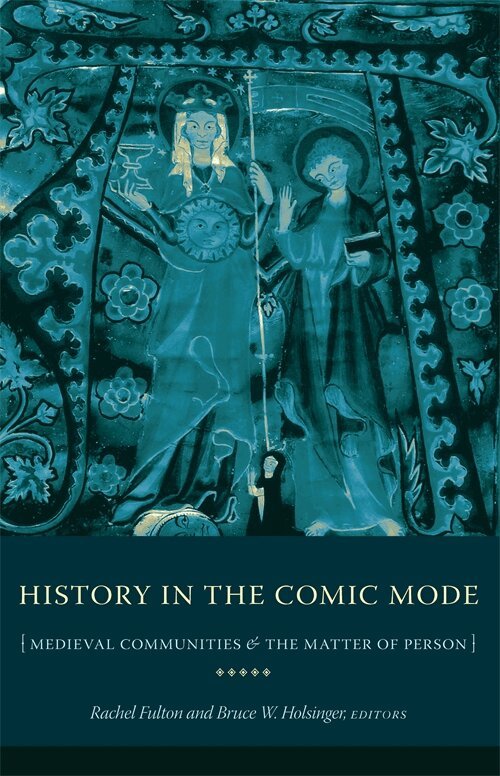
In this groundbreaking collection, twenty-one prominent medievalists discuss continuity and change in ideas of personhood and community and argue for the viability of the comic mode in the study and recovery of history. These scholars approach their sources not from a particular ideological viewpoint but with an understanding that all topics, questions, and explanations are viable. They draw on a variety of sources in Latin, Arabic, French, German, Middle English, and more, and employ a range of theories and methodologies, always keeping in mind that environments are inseparable from the making of the people who inhabit them and that these people are in part constituted by and understood in terms of their communities. Essays feature close readings of both familiar and lesser known materials, offering provocative interpretations of John of Rupescissa's alchemy; the relationship between the living and the saintly dead in Bernard of Clairvaux's sermons; the nomenclature of heresy in the early eleventh century; the apocalyptic visions of Robert of Uzes; Machiavelli's De principatibus; the role of "demotic religiosity" in economic development; and the visions of Elizabeth of Schonau.Contributors write as historians of religion, art, literature, culture, and society, approaching their subjects through the particular and the singular rather than through the thematic and the theoretical. Playing with the wild possibilities of the historical fragments at their disposal, the scholars in this collection advance a new and exciting approach to writing medieval history.
1 626 kr
Skickas inom 7-10 vardagar
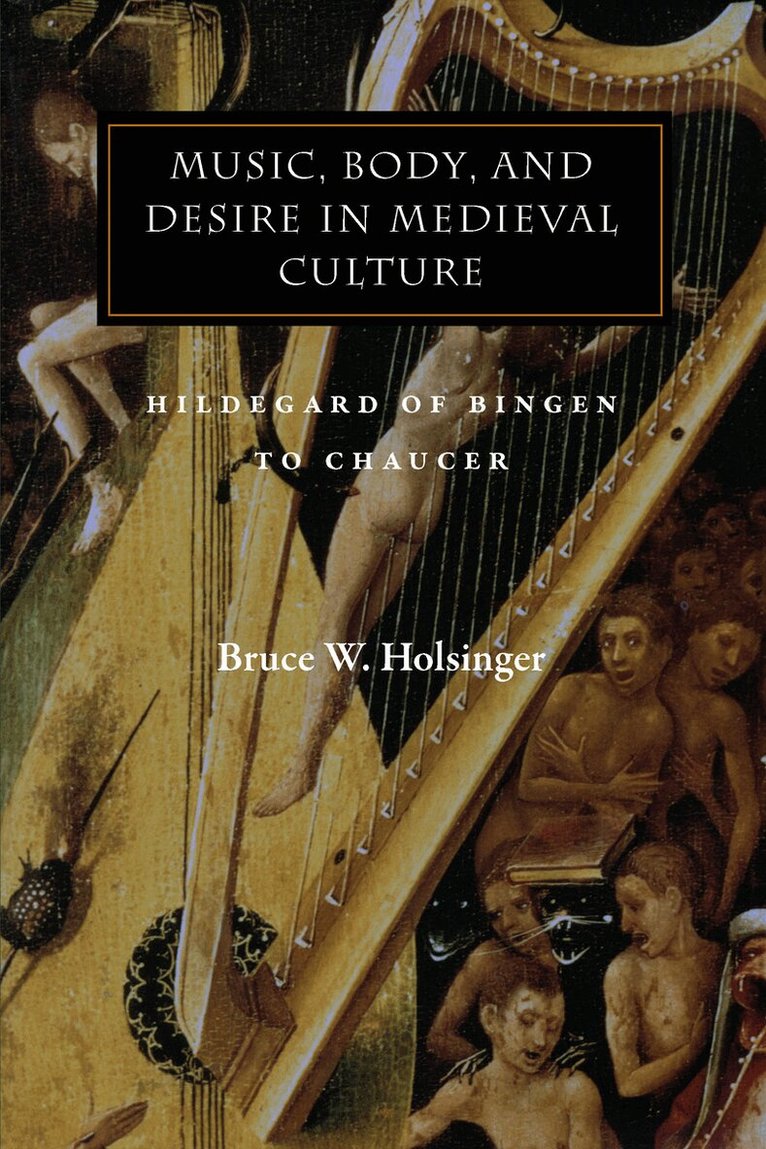
Ranging chronologically from the twelfth to the fifteenth centuries and thematically from Latin to vernacular literary modes, this book challenges standard assumptions about the musical cultures and philosophies of the European Middle Ages. Engaging a wide range of premodern texts and contexts, from the musicality of sodomy in twelfth-century polyphony to Chaucer's representation of pedagogical violence in the Prioress's Tale, from early Christian writings on the music of the body to the plainchant and poetry of Hildegard of Bingen, the author argues that medieval music was quintessentially a practice of the flesh.The book reveals a sonorous landscape of flesh and bone, pleasure and pain, a medieval world in which erotic desire, sexual practice, torture, flagellation, and even death itself resonated with musical significance and meaning. In its insistence on music as an integral part of the material cultures of the Middle Ages, the book presents a revisionist account of an important aspect of premodern European civilization that will be of compelling interest to historians of literature, music, religion, and sexuality, as well as scholars of cultural, gender, and queer studies.
425 kr
Skickas inom 7-10 vardagar
Ranging chronologically from the twelfth to the fifteenth centuries and thematically from Latin to vernacular literary modes, this book challenges standard assumptions about the musical cultures and philosophies of the European Middle Ages. Engaging a wide range of premodern texts and contexts, from the musicality of sodomy in twelfth-century polyphony to Chaucer's representation of pedagogical violence in the Prioress's Tale, from early Christian writings on the music of the body to the plainchant and poetry of Hildegard of Bingen, the author argues that medieval music was quintessentially a practice of the flesh.The book reveals a sonorous landscape of flesh and bone, pleasure and pain, a medieval world in which erotic desire, sexual practice, torture, flagellation, and even death itself resonated with musical significance and meaning. In its insistence on music as an integral part of the material cultures of the Middle Ages, the book presents a revisionist account of an important aspect of premodern European civilization that will be of compelling interest to historians of literature, music, religion, and sexuality, as well as scholars of cultural, gender, and queer studies.