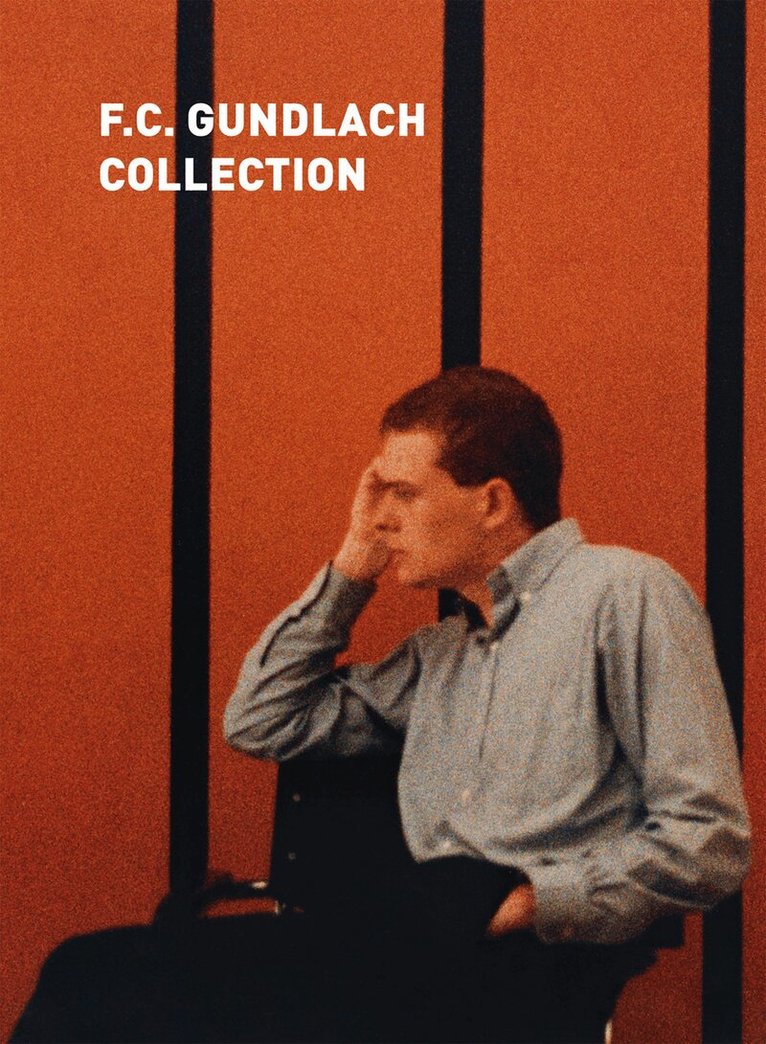
F.C. Gundlach, one of the most important German fashion photographers of the post-war period, has created a remarkable collection of photographs and multimedia art by famous contemporary artists. This publication provides the first opportunity to reconstruct the view of the medium of photography in juxtaposition with paintings and sculptures by these artists.“The medium of photography has the right to be thought provoking”: that was the extent of it according to Albert Oehlen’s view of the medium in 1986. This inspired the photographer and passionate collector F. C. Grundlach to make additional acquisitions by important artists, from Büttner to Förg and from Oehlen to Polke. Their anarchic will to express themselves, their wit and caustic criticism were shaped into works of art that span a variety of media. This publication uses numerous illustrations to provide an atmospheric insight into the spirit of the conditions under which they were produced and gives an overview of the fascinating breadth of the medium of photography.A Who’s Who of the “gods of contemporary art”: Georg Baselitz, Werner Büttner, Günther Förg, Richard Hamilton, Georg Herold, Hubert Kiecol, Martin Kippenberger, Jürgen Klauke, Meuser, Albert Oehlen, Sigmar Polke and Franz West.
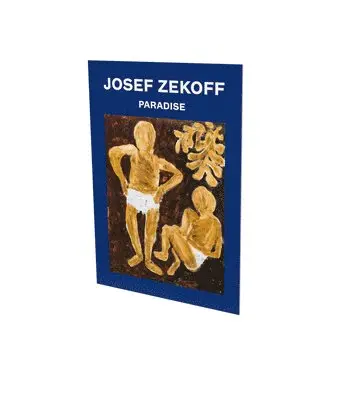
The facelessness of the protagonists in Josef Zekoff s paintings is one of their most distinctive features. From emblematic labyrinths he does also paint ornaments and maps to drawn stick figures, the in-between space occupied by these paintings encourages self-reflection, which does, however, require courage on the part of the viewer. Or as Florian Waldvogel writes in his introductory text: » Do the protagonists of his paintings seek an encounter with something that goes beyond the world of objects and fixed quantities? Is it, as Martin Heidegger writes in What is Metaphysics? , about an encounter with the nothing within dread ? Does the confrontation with nothing in Zekoff s paintings refer to our fear in the face of the original meaninglessness of the world, to the fact that it is existence that ascribes meanings to things?« The worldliness of the world, according to Heidegger, lies in this emptiness, and Zekoff s figures, unlike the viewers, do not dread nothingness. But as in Jacobean tragedy, fear needs the awareness of loss in order to survive. According to Marcel Proust, Florian Waldvogel concludes, the true paradises are those that have been lost.
F.C. Gundlach, one of the most important German fashion photographers of the post-war period, has created a remarkable collection of photographs and multimedia art by famous contemporary artists. This publication provides the first opportunity to reconstruct the view of the medium of photography in juxtaposition with paintings and sculptures by these artists.“The medium of photography has the right to be thought provoking”: that was the extent of it according to Albert Oehlen’s view of the medium in 1986. This inspired the photographer and passionate collector F. C. Grundlach to make additional acquisitions by important artists, from Büttner to Förg and from Oehlen to Polke. Their anarchic will to express themselves, their wit and caustic criticism were shaped into works of art that span a variety of media. This publication uses numerous illustrations to provide an atmospheric insight into the spirit of the conditions under which they were produced and gives an overview of the fascinating breadth of the medium of photography.A Who’s Who of the “gods of contemporary art”: Georg Baselitz, Werner Büttner, Günther Förg, Richard Hamilton, Georg Herold, Hubert Kiecol, Martin Kippenberger, Jürgen Klauke, Meuser, Albert Oehlen, Sigmar Polke and Franz West.
The facelessness of the protagonists in Josef Zekoff s paintings is one of their most distinctive features. From emblematic labyrinths he does also paint ornaments and maps to drawn stick figures, the in-between space occupied by these paintings encourages self-reflection, which does, however, require courage on the part of the viewer. Or as Florian Waldvogel writes in his introductory text: » Do the protagonists of his paintings seek an encounter with something that goes beyond the world of objects and fixed quantities? Is it, as Martin Heidegger writes in What is Metaphysics? , about an encounter with the nothing within dread ? Does the confrontation with nothing in Zekoff s paintings refer to our fear in the face of the original meaninglessness of the world, to the fact that it is existence that ascribes meanings to things?« The worldliness of the world, according to Heidegger, lies in this emptiness, and Zekoff s figures, unlike the viewers, do not dread nothingness. But as in Jacobean tragedy, fear needs the awareness of loss in order to survive. According to Marcel Proust, Florian Waldvogel concludes, the true paradises are those that have been lost.