Bruno Munari – författare
Visar alla böcker från författaren Bruno Munari. Handla med fri frakt och snabb leverans.
15 produkter
15 produkter
Häftad, Engelska, 2008
124 kr
Skickas
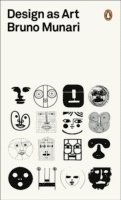
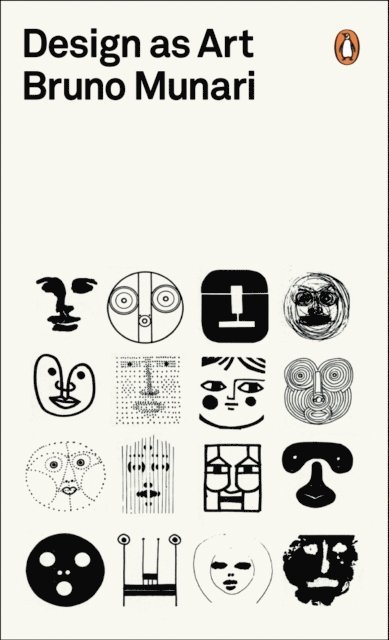
One of the last surviving members of the futurist generation, Bruno Munari's Design as Art is an illustrated journey into the artistic possibilities of modern design translated by Patrick Creagh published as part of the 'Penguin on Design' series in Penguin Modern Classics.'The designer of today re-establishes the long-lost contact between art and the public, between living people and art as a living thing'Bruno Munari was among the most inspirational designers of all time, described by Picasso as 'the new Leonardo'. Munari insisted that design be beautiful, functional and accessible, and this enlightening and highly entertaining book sets out his ideas about visual, graphic and industrial design and the role it plays in the objects we use everyday. Lamps, road signs, typography, posters, children's books, advertising, cars and chairs - these are just some of the subjects to which he turns his illuminating gaze. How do we see the world around us? The Penguin on Design series includes the works of creative thinkers whose writings on art, design and the media have changed our vision forever.Bruno Munari (1907-1998), born in Milan, was the enfant terrible of Italian art and design for most of the twentieth century, contributing to many fields of both visual (paint, sculpture, film, industrial design, graphics) and non-visual arts (literature, poetry). He was twice awarded the Compasso d'Oro design prize for excellence in his field.If you enjoyed Design as Art, you might like John Berger's Ways of Seeing, also available in Penguin Modern Classics.'One of the most influential designers of the twentieth century ... Munari has encouraged people to go beyond formal conventions and stereotypes by showing them how to widen their perceptual awareness'International Herald Tribune
Häftad, Engelska, 2026
331 kr
Skickas inom 5-8 vardagar
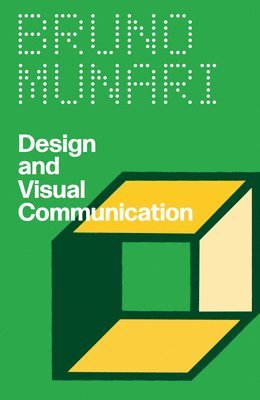
A long-overdue English translation of Munari's seminal tract on the everyday value of architecture and design educationThe first ever English translation of Bruno Munari's Design and Visual Communication (1968) fills a gap in Munari's output for the English-speaking world and provides a highly relevant guide to bridging architecture and design education and everyday life.Published in 1968 after Munari was invited to the Carpenter Center at Harvard to teach, the book transforms over 50 lessons, class materials and letters addressed to the city of Milan, into a book on the future of art, architecture and design. Conceived as a living volume, the book is written to inspire current and future designers to push beyond past events, however recent, and develop new tools to see and understand tomorrow's world.Accompanying the facsimile reproduction of the original volume are in-depth contextual annotations by Jeffrey Schnapp. As a Munari scholar and design historian, Schnapp has spent years unearthing the radical potential of critical historical material. His annotations and micro-interventions throughout the facsimile reprint seek to fulfill Munari's call for an evolution of the book in form and content and highlight how this work is as relevant today as when originally published.Bruno Munari (1907–98) was an Italian artist, designer and inventor who contributed fundamentals to many fields of visual arts (painting, sculpture, film, industrial design, graphic design) in modernism, futurism, and concrete art and in nonvisual arts (literature, poetry) with his research on games, didactic method, movement, tactile learning, kinesthetic learning and creativity.
E-bok
Engelska, 2008102 kr
Läs direkt efter köp
How do we see the world around us? The Penguin on Design series includes the works of creative thinkers whose writings on art, design and the media have changed our vision forever. Bruno Munari was among the most inspirational designers of all time, described by Picasso as ‘the new Leonardo’. Munari insisted that design be beautiful, functional and accessible, and this enlightening and highly entertaining book sets out his ideas about visual, graphic and industrial design and the role it plays in the objects we use everyday. Lamps, road signs, typography, posters, children’s books, advertising, cars and chairs – these are just some of the subjects to which he turns his illuminating gaze.
161 kr
Skickas inom 7-10 vardagar
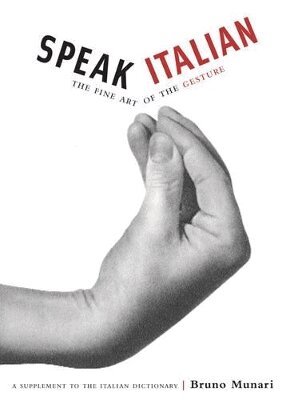
The Italians are the masters of speaking with their hands: think of a taxi driver in Rome stuck in traffic or a village gossip spreading the tale of a cuckolded husband. Bruno Munari's little handbook will help you decipher this language of gestures, an unspoken language you won't find in any dictionary.
Häftad, Engelska, 2015
228 kr
Skickas inom 7-10 vardagar
Circle: “God is a circle whose center is everywhere but whose circumference is nowhere.” Circle means perfection, cyclicity, superiority of the divinity, but also instability and movement. In nature soap bubbles are spherical and internal trees’ rings are circular; the legend tells that Giotto drew a perfect O, while perfection is tangible on Michelangelo’s Tondo Doni and Botticelli’s Vergine col Bambino. King Arthur’s knights were pairs around a round table, and nowadays people sit in circle to make a decision or watch a show. Bruno Munari selects and describes in this little, extraordinary encyclopedia, several uses of this fascinating and mysterious form, unstable and hieratic at the same time.Square:Square has much importance in man's life: a lot of churches, monuments, games (like chess), and fonts are square-based. But man seems not to realise it... one more time Bruno Munari amazes us with an historical, anthropological, scientific square book.Triangle:From the vegetable structure of the coconut to the diagram of human settlements by Le Corbusier, one can frequently find the shape of the equilateral triangle in many different occurrences, both in a natural environment and in artificial works. Along with the circle and the square, the equilateral triangle is one of the three basic forms, and is suitable to be combined in modular frameworks to generate a structured field in which endless other combinatorial forms may be constructed. From classical Arab and Japanese decorations to the contemporary architecture of Buckminster Fuller and Wright, the familiarity with the equilateral triangle, in all its formal and structural resources, generates curious and fascinating experimentations. After the books of the same collection dedicated to the circle and the square, a new reprint by Bruno Munari about the many uses of this evocative shape throughout the centuries.These studies were originally published in 1976 in the series Quaderni di design, curated by Munari himself for Zanichelli.
Inbunden, Engelska, 2027
238 kr
Kommande
Inbunden, Tyska, 2018
239 kr
Skickas inom 3-6 vardagar
Inbunden, Tyska
213 kr
Skickas inom 3-6 vardagar
Häftad, Tyska, 2023
327 kr
Skickas inom 3-6 vardagar
E-bok
PDF, Spanska, 2016166 kr
Läs direkt efter köp
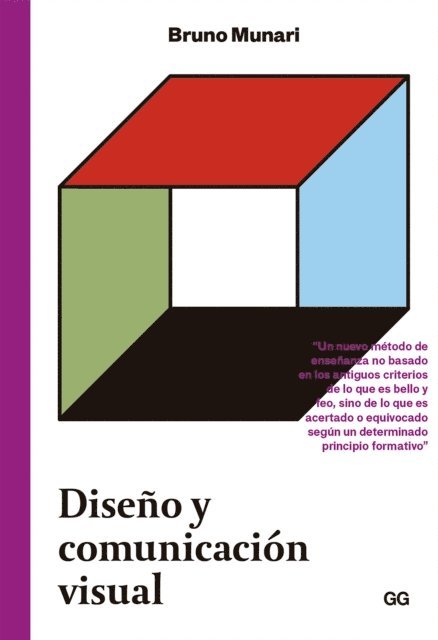
¿Qué es un buen diseño? ¿Algo bello o algo idóneo? Este libro compila las 50 lecciones que Bruno Munari impartió en la década de los sesenta en el Carpenter Center for the Visual Arts de Cambridge (Massachusetts). Eran años de rápidas transformaciones para el diseño gráfico, que apenas había empezado a profesionalizarse y ya debía abordar cuestiones fundamentales como la relación entre arte y diseño o entre artesanía e industria.Munari planteó un profundo cambio de marco al tratar de superar el academicismo y su binomio bello/feo y abogar, en cambio, por los principios de coherencia formal y funcional y el binomio acertado/erróneo. Los elementos de esa transformación se tradujeron en una nueva aproximación a los principios, leyes y posibles realizaciones del diseño gráfico, y a una oportuna reflexión sobre las metodologías didácticas de la comunicación visual.Con casi cincuenta años de historia, este libro forma parte ya del imaginario de varias generaciones de diseñadores y docentes. Esta nueva edición, revisada y actualizada, recupera pues una aportación histórica y fundamental para entender la investigación y la práctica del diseño en su sentido más amplio.
E-bok
Spanska, 2016166 kr
Läs direkt efter köp
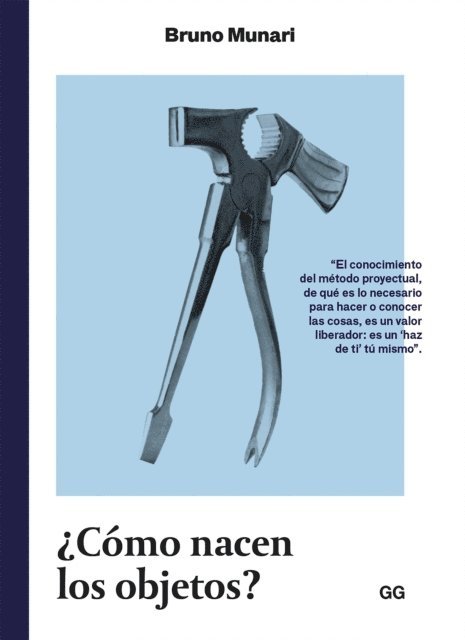
¿Cómo nacen los objetos? analiza el trayecto que un diseñador recorre desde que se enfrenta a un problema funcional hasta que logra la proyección y configuración de su solución material.A partir de su experiencia como pedagogo y valiéndose de un rico repertorio de ejemplos e ilustraciones, Bruno Munari plantea a modo de apuntes algunas de las cuestiones clave que entran en juego en el proceso de diseño, al tiempo que proporciona iluminadoras reflexiones sobre diferentes aspectos del desarrollo de un proyecto, desde su planteamiento como problema-solución o la realización de bocetos, hasta el uso de maquetas o fichas de análisis.Esta obra imprescindible de Munari, que ha sido totalmente revisada, actualizada y rediseñada para esta nueva edición, es ante todo un inteligente análisis de casos reales que arrojan nueva luz sobre la naturaleza de la metodología proyectual. Un clásico que no debería faltar en ninguna biblioteca de diseño.
143 kr
Läs direkt efter köp
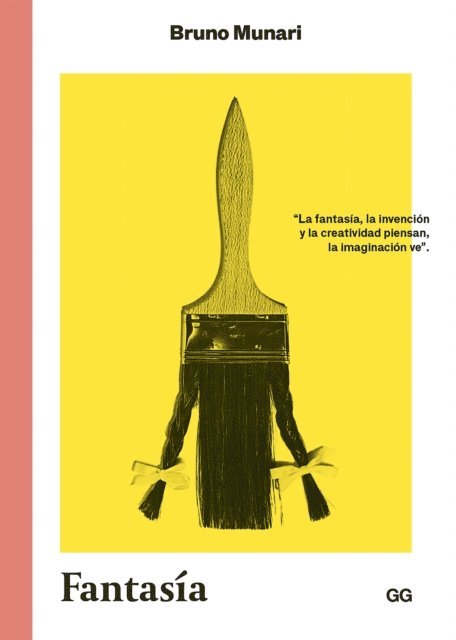
La fantasía, la invención y la creatividad no son patrimonio de unos pocos iniciados -los artistas-, sino facultades esenciales del ser humano que todos deberíamos comprender. Con la generosidad y la vocación pedagógica que siempre lo caracterizó, Bruno Munari desvela en este ensayo pionero, traducido por primera vez al castellano, algunos de los secretos de estas tres capacidades básicas que hoy englobaríamos bajo la palabra creatividad.La fantasía, nos cuenta Munari, nace de la libertad. La invención y la creatividad nacen, en cambio, de la función y la necesidad. Pero a la hora de generar nuevos mundos, en todas ellas la inteligencia, la memoria y la imaginación juegan un papel crucial. ¿Qué mecanismos se activan para alumbrar una idea o construir una obra de arte? ¿Cómo podemos potenciar -en lugar de coartar- la creatividad infantil? ¿Cómo fomentar la elasticidad del pensamiento para que este no se quede estancado en fórmulas prefijadas? Munari responde a estas y otras preguntas con un estudio delicioso, a caballo entre la erudición y el divertimento, que no solo pretende potenciar nuestra capacidad creativa, sino contribuir a nuestro desarrollo integral como personas.
E-bok
Spanska, 2019119 kr
Läs direkt efter köp
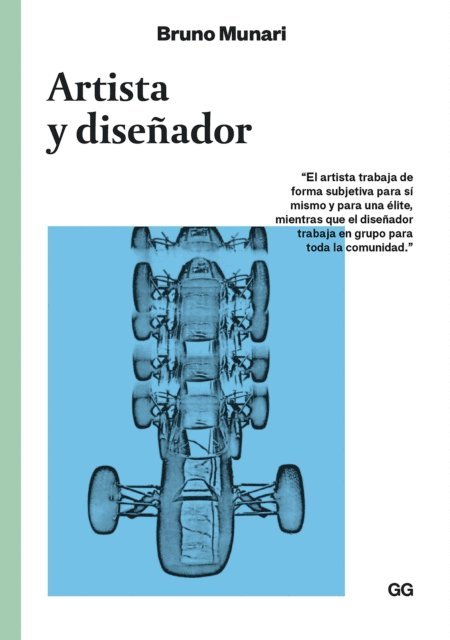
El lenguaje visual ha creado dos universos -el del arte y el del diseño- que a menudo confluyen y se entrelazan, pero que en otras ocasiones se distancian y se ignoran. El mundo del arte es el del estilo personal, la crítica, la fantasía, la belleza. El del diseño, en cambio, es el del profesional, la industria, la creatividad, la funcionalidad. Son mundos paralelos que Bruno Munari disecciona magistralmente en estas páginas, permitiéndonos intuir la naturaleza profunda de dos de las actividades humanas más estrechamente vinculadas a nuestra facultad creativa. Un iluminador ensayo que sacudirá la mente de cualquier persona vinculada al ámbito de la creatividad.
E-bok
Spanska, 2020143 kr
Läs direkt efter köp
Escrito en 1966, El arte como oficio se ha convertido en el gran ensayo clásico de entre todos los que escribió Bruno Munari. Este libro es un valioso y singular intento por situar la importancia de los "nuevos productores de formas" del mundo contemporáneo en relación con el arte y con la experiencia personal de nuestra vida cotidiana. Con ello, Munari logra hacernos observar de una manera activa y tomar conciencia del mundo formal que nos rodea al tiempo que pone en valor la labor de los diseñadores, personajes que no solo se erigen como responsables de la creación de objetos funcionales y estéticos, sino que ejercen de auténticos moldeadores "democráticos" del gusto.Repleto de ejemplos y referencias a nuestra vida diaria, esta obra nos invita constantemente a detenernos y a repensar las formas que nos rodean. Desde la visualidad de las letras escritas o dibujadas hasta la versatilidad de un material como el bambú, pasando por el valor de una cuchara o unos peldaños desgastados por el uso, o el brutal contraste entre las ostentosas cuberterías europeas y la modestia de los palillos japoneses, Munari nos introduce con la facilidad y la sencillez de los grandes maestros a las grandes cuestiones teóricas de las disciplinas del diseño y la creatividad.
Häftad, Engelska, 2005
338 kr
Skickas