Bryan Ellis – författare
Visar alla böcker från författaren Bryan Ellis. Handla med fri frakt och snabb leverans.
6 produkter
6 produkter
3 361 kr
Skickas inom 10-15 vardagar
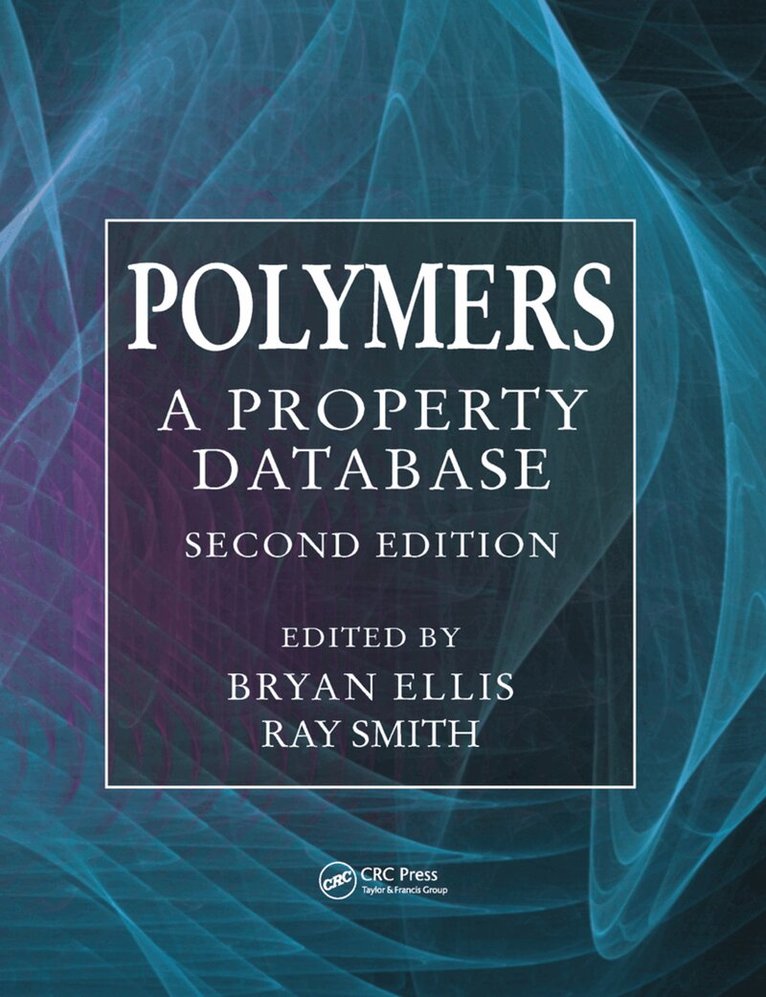
Scientific and Commercial Information for More Than 1,000 PolymersPolymers: A Property Database, Second Edition offers a central and reliable source for scientific and commercial information on more than 1,000 polymers. Revised and updated throughout, this edition features 25% new material, including 50 entirely new entries that reflect advances in areas such as conducting polymers, hydrogels, nano-polymers, and biomaterials. The second edition also comes with unlimited access to a complete, fully searchable Web version of the reference. Powerful retrieval software allows users to customize their searches and refine results. Each entry includes trade names, properties, manufacturing processes, commercial applications, supplier details, references, and links to constituent monomers.Buy the latest print edition and gain access to a complete, fully searchable Web version of the reference, enhanced with powerful retrieval software that allows you to customize searches and refine results. Unlimited access to the Online Version for the lifetime of the Second EditionRevised, Updated, and Expanded with 25% New MaterialIncludes 50 entirely new entries reflecting the latest polymer advances Special Introductory Price! Buy today and SAVE!Purchase the NEW Edition in Print AND Online –For One Price!
16 612 kr
Skickas inom 11-20 vardagar
Suitable for scientists in the field of polymers, this title provides scientific and commercial information for over 1,000 Polymers. It includes entries that reflect the developments in areas such as: conductive & light-emitting polymers; hydrogels; bio- & nano-polymers; and controlled-release formulations for drug delivery.
206 kr
Skickas inom 5-8 vardagar
1 947 kr
Tillfälligt slut
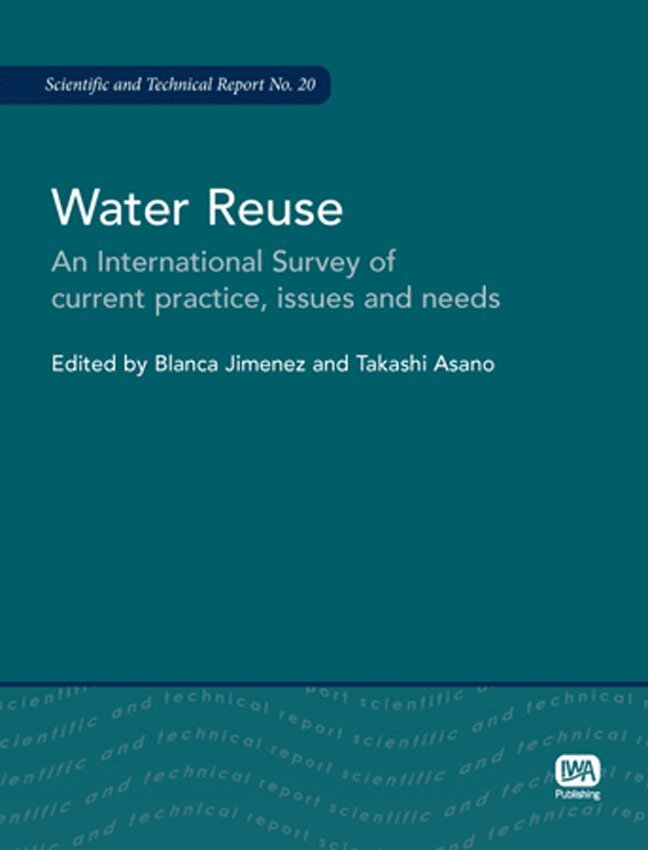
Water Reuse: An International Survey of current practice, issues and needs examines water reuse practices around the world from different perspectives. The objective is to show how differently wastewater reuse is conceived and practised around the world as well as to present the varied needs and possibilities for reusing wastewater. In the first section water reuse practices around the world are described for regions having common water availability, reuse needs and social aspects. The second section refers to the “stakeholders” point of view. Each reuse purpose demands different water quality, not only to protect health and the environment but also to fulfil the requirements of the specific reuse. Reuses considered are agricultural, urban agriculture as a special case of the former, municipal and industrial. Alongside these uses, the indirect reuse for human consumption through aquifer recharge is also discussed. The third section deals with emerging and controversial topics. Ethical and economical dilemmas in the field are presented as a subject not frequently addressed in this field. The role of governments in respect of public policy in reuse is discussed as well as the different international criteria and standards for reusing wastewater. The importance of public acceptance and the way to properly handle it is also considered. The fourth section of the book presents contrasting case studies; typical situations in the developed world (Japan and Germany) are compared to those in developing countries (Pakistan and Brazil) for agricultural and industrial reuse. Indirect planned reuse for human consumption (Germany) is compared with an unplanned one (Mexico). The Windhoek, Namibia case study is presented to emphasize why if the direct reuse of wastewater for human consumption has been performed with success for more than 35 years it is still the only example of this type around the world. To illustrate the difficulties of having a common framework for regulating water reuse in several countries, the Mediterranean situation is described. Other case studies presented refer to the reuse situation in Israel, Spain, Cameroon, Nepal and Vietnam, these latter countries being located in water rich areas. This book will be an invaluable information source for all those concerned with water reuse including water utility managers, wastewater policy makers and water resources planners as well as researchers and students in environmental engineering, water resources planning and sanitary engineering. Scientific and Technical Report No. 20
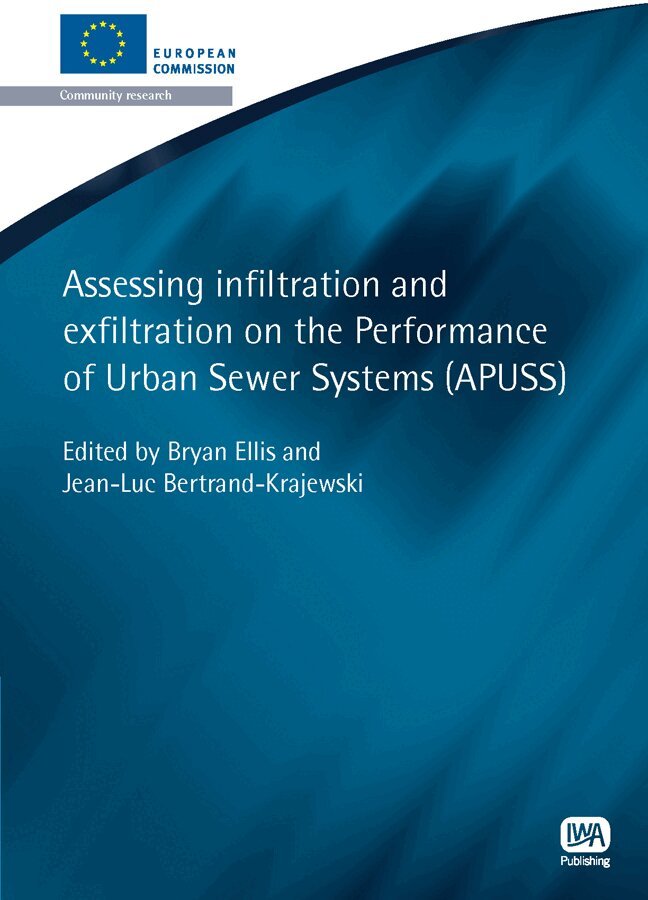
Assessing Infiltration and Exfiltration on the Performance of Urban Sewer Systems
Häftad, Engelska, 2010
1 509 kr
Tillfälligt slut
Sewer systems constitute a very significant heritage in European cities. Their structural quality and functional efficiency are key parameters to guarantee the transfer of domestic and industrial wastewater to treatment plants without infiltration nor exfiltration. Infiltration of groundwater is particularly detrimental to treatment plant efficiency, while exfiltration of wastewater can lead to groundwater contamination. The European research project APUSS (Assessing infiltration and exfiltration on the Performance of Urban Sewer Systems) was devoted to sewer infiltration and exfiltration questions. It was structured in three main Work Areas dealing respectively with i) the development of new measurement methods based on tracer experiments and accounting for detailed uncertainty analyses, ii) the implementation of models and software tools to integrate structural and experimental data and to facilitate data display, operational management and decision-making processes and iii) the integration of economic and operational questions by means of cost estimation, economic evaluation, performance indicators and multi-criteria methods applied to investment/rehabilitation strategies. This final report describes the objectives, methods and main results for each Work Area. References to detailed methods, protocols, reports and tools are given in this final report which will be an invaluable source of information for all those concerned with the performance of urban sewer systems.
794 kr
Skickas inom 10-15 vardagar
Epoxy resins have been commercially available for about 45 years and now have many major industrial applications, especially where technical advantages warrant their somewhat higher costs. The chemistry of these resins is fascinating and has attracted study by many very able scientists. The technological applications of the epoxy resins are very demanding and there are many new developments each year. The aims of the present book are to present in a compact form both theoretical and practical information that will assist in the study, research and innovations in the field of epoxy resin science and technology. The literature on epoxy resins is so vast that it is not possible to be encyclopaedic and that is not the function of the present text. It is the editor's hope that the selection of topics discussed will provide an up-to-date survey. There is some overlap in the chapters but this is minimal and so each chapter is essentially self contained. As with all chemicals there are toxicological and other hazards. These are not dealt with in this text since a little knowledge can be dangerous, but material supplied can provide information regarding any safety precautions that may be necessary. However, often these precautions are not onerous and epoxy resins, or more specifically the hardeners, can be handled readily. It is hoped that this text will provide an up-to-date outline of the science and technology of epoxy resins and stimulate further research into unsolved problems and assist further technological developments.