Bryon D. Anderson - Böcker
Visar alla böcker från författaren Bryon D. Anderson. Handla med fri frakt och snabb leverans.
4 produkter
4 produkter
224 kr
Skickas inom 5-8 vardagar
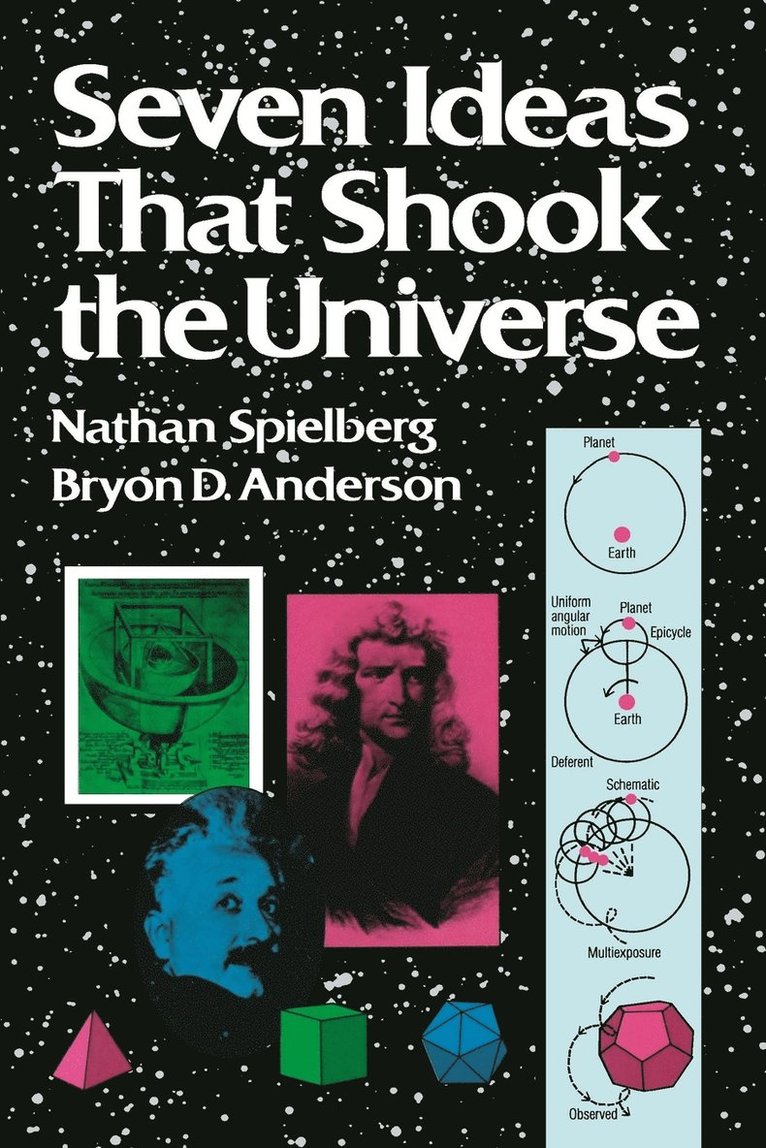
Is there an objective world, or is everything relative? Do matter, time and space change, or do they remain constant everywhere in the universe? Is there always a relationship between cause and effect, or do some things "just happen?" Many of our basic ideas about the world have been shaped by science--but seldom are such discoveries accepted easily or willingly. Here are seven of the most important ideas in physics--ideas that shattered the assumptions of dogmatists, philosophers and scientists--explained simply and elegantly. And you don't need a background in mathematics or science to enjoy this fascinating book. Seven Ideas That Shook the Universe explores the history of seven important themes in physics: Copernican astronomy, Newtonian mechanics, energy and entropy, relativity, quantum theory, and conservation principles and symmetries. Together these discoveries form the foundation of our understanding of the physical world. Nathan Spielberg and Bryon Anderson explain each concept in a simple, straightforward narrative style, considering each in the context of its times and assessing its impact on the way we think about time, space, matter, even existence itself. For the science lover and the intellectually curious, Seven Ideas That Shook the Universe brings the drama of scientific discovery to vivid life.
1 276 kr
Skickas inom 10-15 vardagar
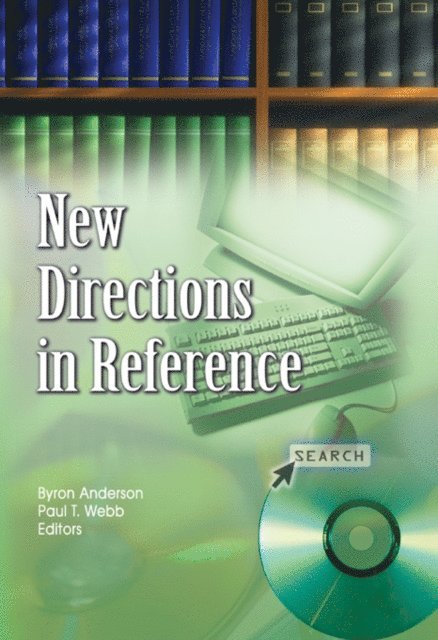
Design and deliver traditional reference services in new and innovative waysLibrarians work in an environment of constant change created by new technology, budget restraints, inflationary costs, and rising user expectations. New Directions in Reference examines how they can use new and innovative methods to design and deliver traditional reference services in a wide range of settings. The book’s contributors relate first-hand experiences in libraries large and small, public and academic, and urban and rural dealing with a variety of changes, including virtual reference, music reference, self-service interlibrary loan, e-mail reference, and copyright law.Change isn’t new to libraries but the accelerated pace of change is. Traditional lines that have existed between library departments have been erased and traditional notions about general and specialized reference services have been reconsidered. New Directions in Reference documents how librarians are re-thinking their roles and responsibilities to keep pace with the ongoing process of evolution that borders on revolution. New Directions in Reference examines:the skills needed to manage and evaluate virtual reference services the basics of modern copyright law and the Digital Millennium Copyright Act (DMCA) the changes in users, sources, and modes of access in music reference services the use of interlibrary loan management software that allows patrons to request, track, and renew borrowed materials online the Ask-A-Librarian e-mail reference service the Government Printing Office and government information online and much more!New Directions in Reference also includes case studies involving the new Martin Luther King Jr. Library in San Jose, California, and the impact of Personal Digital Assistants (PDAs) in providing references services for medical libraries. This important book is an essential professional resource for public, academic, and special librarians, especially those providing reference services.
461 kr
Skickas inom 10-15 vardagar
Design and deliver traditional reference services in new and innovative waysLibrarians work in an environment of constant change created by new technology, budget restraints, inflationary costs, and rising user expectations. New Directions in Reference examines how they can use new and innovative methods to design and deliver traditional reference services in a wide range of settings. The book’s contributors relate first-hand experiences in libraries large and small, public and academic, and urban and rural dealing with a variety of changes, including virtual reference, music reference, self-service interlibrary loan, e-mail reference, and copyright law.Change isn’t new to libraries but the accelerated pace of change is. Traditional lines that have existed between library departments have been erased and traditional notions about general and specialized reference services have been reconsidered. New Directions in Reference documents how librarians are re-thinking their roles and responsibilities to keep pace with the ongoing process of evolution that borders on revolution. New Directions in Reference examines:the skills needed to manage and evaluate virtual reference services the basics of modern copyright law and the Digital Millennium Copyright Act (DMCA) the changes in users, sources, and modes of access in music reference services the use of interlibrary loan management software that allows patrons to request, track, and renew borrowed materials online the Ask-A-Librarian e-mail reference service the Government Printing Office and government information online and much more!New Directions in Reference also includes case studies involving the new Martin Luther King Jr. Library in San Jose, California, and the impact of Personal Digital Assistants (PDAs) in providing references services for medical libraries. This important book is an essential professional resource for public, academic, and special librarians, especially those providing reference services.
181 kr
Skickas
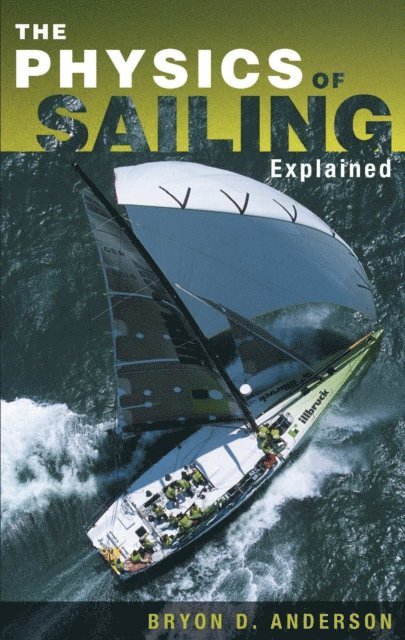
What is the best shape for a sailboat? How does turbulence affect a sailboat's movement through the water? Why do some keels have wings? Is it true that some sailboats can sail faster upwind than downwind?Authoritative yet accessible, The Physics of Sailing Explained is the perfect book for all those sailors who want to enhance their understanding and enjoyment of life at sea. It will enable cruisers and racers alike to better grasp how sails, keels, and hulls work together to keep boats afloat, and will sharpen their skills with a more subtle and thorough appreciation of why various boat design features are present and why certain tactics work in certain situations. Anderson outlines the science behind sailing in a way that anyone can understand and benefit from without having to trudge through a physics text or became a naval architect. Concepts are conveyed simply, concisely, and with many examples and illustrations.With the help of this invaluable book, sailors will be better prepared to handle any situations that might arise on the water.