B.U. Haq – författare
Visar alla böcker från författaren B.U. Haq. Handla med fri frakt och snabb leverans.
10 produkter
10 produkter
E-bok
PDF, Engelska, 19981 978 kr
Läs direkt efter köp
This beautifully illustrated text book, with state-of-the-art illustrations, is useful not only for an introduction to the subject, but also for the application of marine microfossils in paleoceanographic, paleoenvironmental and biostratigraphic analyses. The recent revival of interest in marine micropaleontology worldwide in the wake of the development of sequence stratigraphic models has led to the decision to reissue the volume in its original, but paperback, form. The ideas expressed in various chapters of this second edition remain as valid today as they were when the book was first issued. The text, however, includes an updated Phanerozoic geologic time which has been considerably modified since the 1980s.
Inbunden, Engelska, 1995
1 622 kr
Skickas inom 10-15 vardagar
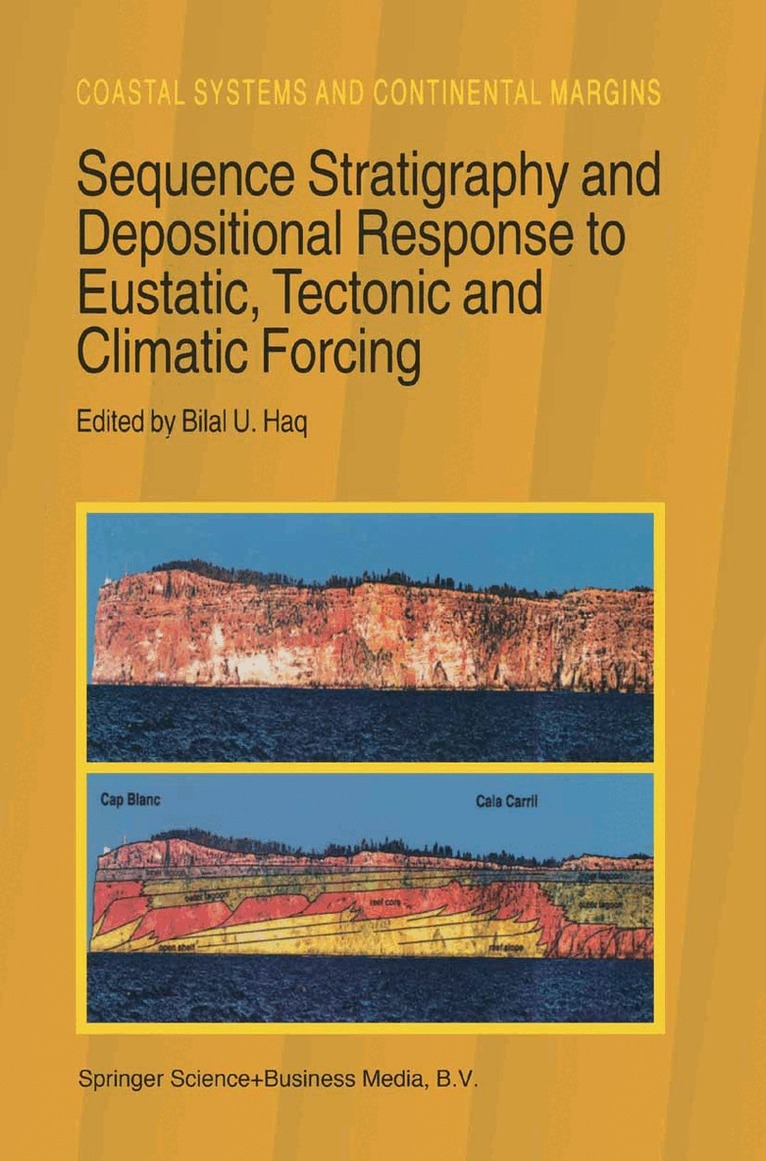
Sequence stratigraphy has advanced considerably since the early applications of the concepts on seismic data. It attempts to discern the migration of facies re sulting from changes in a combination of factors such as, sea level, tectonics, climate and sediment flux, and integrates it with a meaningful chronostratigraphy. The stratigraphic record is envisioned as a framework of repetitive packages of genetically-related strata, formed in response to the shifting base level, in which the locus of deposition of various sediment types may be anticipated. This attribute is rapidly promoting sequence stratigraphy as an indispensable tool for prediction of facies in exploration and production geology. In hydrocarbon exploration the application of sequence stratigraphy has ranged from anticipating reservoir- and source-rock distribution to predicting carbonate diagenesis, porosity and permeability. The capability to anticipate vertical and lateral distribution of facies and reservoir sands in the basinal, shoreface, incised valley-fill and regressive settings alone has been a great asset for exploration. In frontier areas, where data are often limited to seismic lines, sequence-stratigraphic methodology has helped determine the timing and of types of unconformities and anticipate transgressive- and regressive-prone intervals. In production it is aiding in field development by providing improved source and seal predictions for secondary oil recovery. A recognition of stratigraphic causes of poor recovery through improved understanding of internal stratal architecture can lead to new well recompletions and enhanced exploitation in existing fields. The sequence-stratigraphic discipline is in a state of rapid expansion.
Del 2 - Coastal Systems and Continental Margins
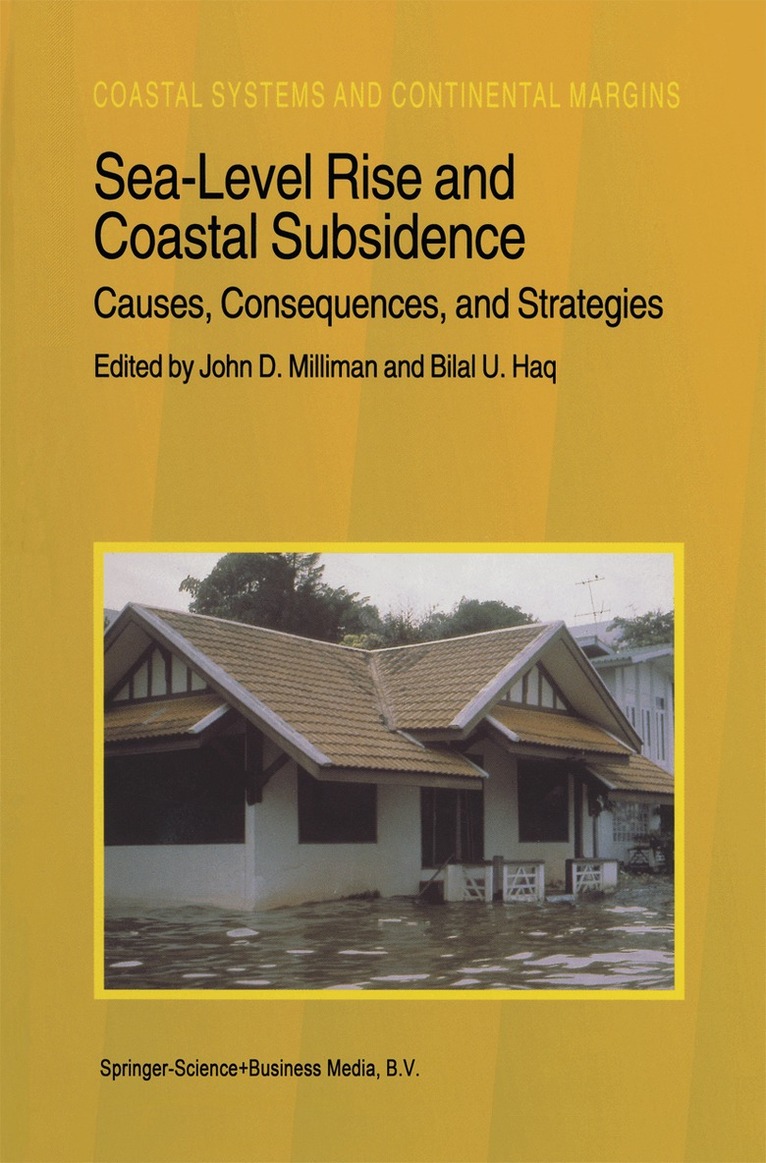
Sea-Level Rise and Coastal Subsidence: Causes, Consequences, and Strategies
Inbunden, Engelska, 1996
1 622 kr
Skickas inom 10-15 vardagar
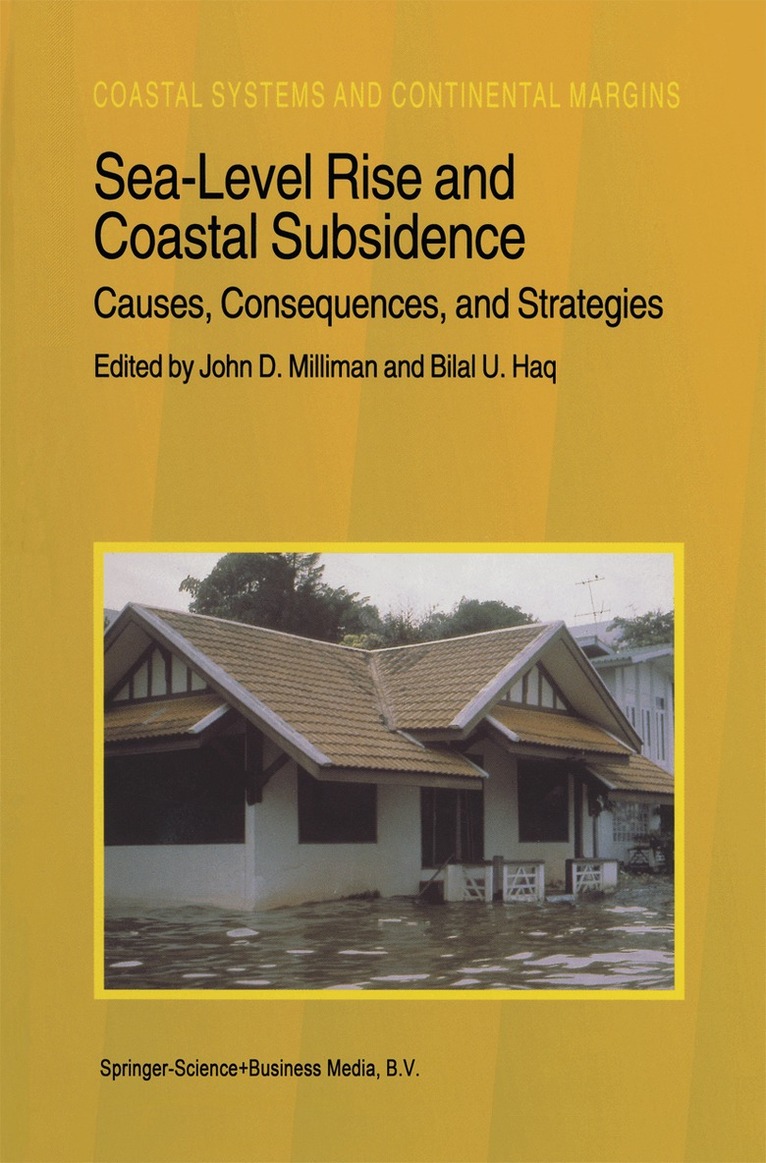
Greenhouse-induced climate warming increasingly appears to be a reality, and the warming climate will be accompanied by an accelerated sea level rise - as much as 60-100cm over the next century. What is commonly absent in the discussion of rising sea level, however, is the role played by the subsidence of low-lying coastal areas, which can have a far greater local effect than the eustatic rise of the sea. The combined sea-level rise and land subsidence will almost certainly make the greatest impact on coastal societies in the densely populated regions of southern Asia, but its effects will be felt globally. This volume explores the concepts of sea-level rise and coastal subsidence, both natural and anthropogenically accelerated, in the form of a series of case studies in such diverse locations as Bangkok, Bangladesh, Venice, and the Niger and Mississippi deltas, as well as a discussion of the economic, engineering and policy responses that must be considered if the effects of local sea-level rise are to be mitigated.
Inbunden, Engelska, 1997
2 375 kr
Skickas inom 10-15 vardagar
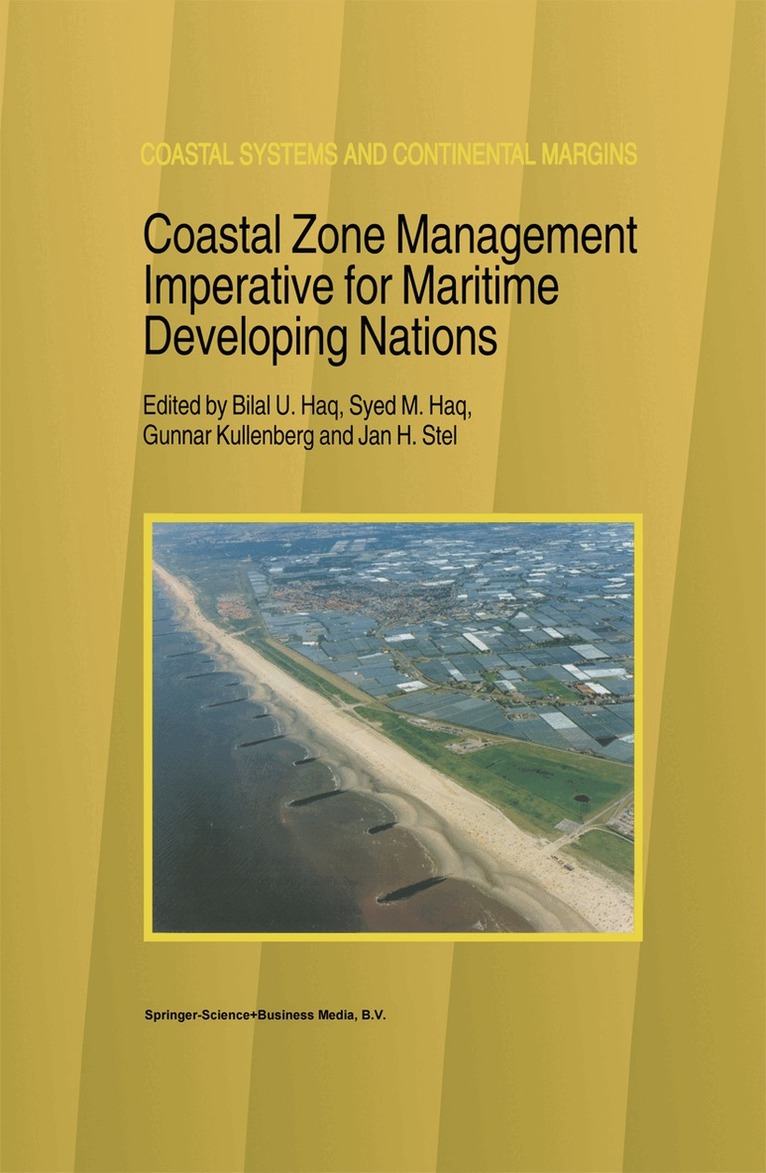
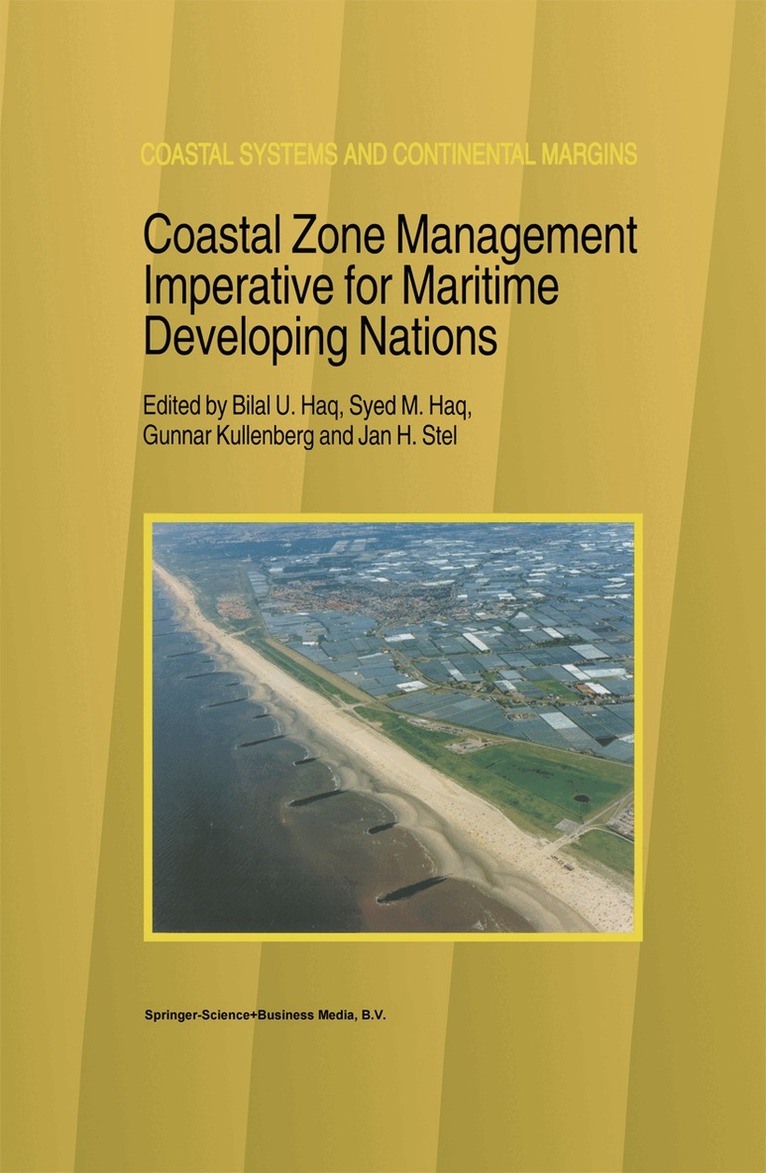
Anthropogenic transformation of the coastal zone continues at a steady pace, especially in the developing maritime countries, where coastal resources are often crucial to national economies. However, exploitation of these resources is often indiscriminate, ill planned, or carried out without adequate scientific knowledge. This leads to rapid resource depletion, and often irreversible environmental degradation. The 1992 Rio de Janeiro UN Conference on Environment and Development recognized the expediency of an integrated and sustainable use of all coastal resources, functions and services grounded on sound scientific data. The present volume is based on the 1994 international workshop Integrated Coastal Zone Management, and brings together contributions by leading specialists both on basic concepts and on applications of coastal management. The work is divided into six parts, dealing with the conceptual framework of ICZM; regional and global aspects of coastal management; environmental assessment in ICZM; capacity building and technology transfer; monitoring and environmental analysis; and case studies and status of ICZM plans. The book also incorporates an interactive ICZM planning module, COSMO, which can be of use in designing a management plan for a coast. Attention is also given to long-term environmental effects of present-day actions. It is hoped that COSMO will prove an additional learning tool for ICZM practitioners and enhance the value of the book. This work is intended to give a broad coverage of conceptual and technical aspects of ICZM, and will be of use to operational executives as well as students of ICZM, environmental economists, policy-makers and senior managers in the international development agencies and governmental and non-governmental organizations. It can be recommended as a textbook and as a reference work.
Häftad, Engelska, 2011
1 620 kr
Skickas inom 10-15 vardagar
Sequence stratigraphy has advanced considerably since the early applications of the concepts on seismic data. It attempts to discern the migration of facies re sulting from changes in a combination of factors such as, sea level, tectonics, climate and sediment flux, and integrates it with a meaningful chronostratigraphy. The stratigraphic record is envisioned as a framework of repetitive packages of genetically-related strata, formed in response to the shifting base level, in which the locus of deposition of various sediment types may be anticipated. This attribute is rapidly promoting sequence stratigraphy as an indispensable tool for prediction of facies in exploration and production geology. In hydrocarbon exploration the application of sequence stratigraphy has ranged from anticipating reservoir- and source-rock distribution to predicting carbonate diagenesis, porosity and permeability. The capability to anticipate vertical and lateral distribution of facies and reservoir sands in the basinal, shoreface, incised valley-fill and regressive settings alone has been a great asset for exploration. In frontier areas, where data are often limited to seismic lines, sequence-stratigraphic methodology has helped determine the timing and of types of unconformities and anticipate transgressive- and regressive-prone intervals. In production it is aiding in field development by providing improved source and seal predictions for secondary oil recovery. A recognition of stratigraphic causes of poor recovery through improved understanding of internal stratal architecture can lead to new well recompletions and enhanced exploitation in existing fields. The sequence-stratigraphic discipline is in a state of rapid expansion.
Häftad, Engelska, 2010
1 620 kr
Skickas inom 10-15 vardagar
Greenhouse-induced climate warming increasingly appears to be a reality, and the warming climate will be accompanied by an accelerated sea level rise - as much as 60-100 cm over the next century. What is commonly absent in the discussion of rising sea level, however, is the role played by the subsidence of low-lying coastal areas, which can have a far greater local effect than the eustatic rise of the sea. The combined sea-level rise and land subsidence will almost certainly make the greatest impact on coastal societies in the densely populated regions of southern Asia, but its effects will be felt globally. This volume explores the concepts of sea-level rise and coastal subsidence, both natural and anthropogenically accelerated, in the form of a series of case studies in such diverse locations as Bangkok, Bangladesh, Venice, and the Niger and Mississippi deltas, as well as a discussion of the economic, engineering and policy responses that must be considered if the effects of local sea-level rise are to be mitigated.
Häftad, Engelska, 2010
2 373 kr
Skickas inom 10-15 vardagar
Anthropogenic transformation of the coastal zone continues at a steady pace, especially in the developing maritime countries, where coastal resources are often crucial to national economies. However, exploitation of these resources is often indiscriminate, ill planned, or carried out without adequate scientific knowledge. This leads to rapid resource depletion, and often irreversible environmental degradation. The 1992 Rio de Janeiro UN Conference on Environment and Development recognized the expediency of an integrated and sustainable use of all coastal resources, functions and services grounded on sound scientific data. The present volume is based on the 1994 international workshop Integrated Coastal Zone Management, and brings together contributions by leading specialists both on basic concepts and on applications of coastal management. The work is divided into six parts, dealing with the conceptual framework of ICZM; regional and global aspects of coastal management; environmental assessment in ICZM; capacity building and technology transfer; monitoring and environmental analysis; and case studies and status of ICZM plans. The book also incorporates an interactive ICZM planning module, COSMO, which can be of use in designing a management plan for a coast. Attention is also given to long-term environmental effects of present-day actions. It is hoped that COSMO will prove an additional learning tool for ICZM practitioners and enhance the value of the book. This work is intended to give a broad coverage of conceptual and technical aspects of ICZM, and will be of use to operational executives as well as students of ICZM, environmental economists, policy-makers and senior managers in the international development agencies and governmental and non-governmental organizations. It can be recommended as a textbook and as a reference work.
E-bok
PDF, Engelska, 20132 049 kr
Läs direkt efter köp
Sequence stratigraphy has advanced considerably since the early applications of the concepts on seismic data. It attempts to discern the migration of facies re sulting from changes in a combination of factors such as, sea level, tectonics, climate and sediment flux, and integrates it with a meaningful chronostratigraphy. The stratigraphic record is envisioned as a framework of repetitive packages of genetically-related strata, formed in response to the shifting base level, in which the locus of deposition of various sediment types may be anticipated. This attribute is rapidly promoting sequence stratigraphy as an indispensable tool for prediction of facies in exploration and production geology. In hydrocarbon exploration the application of sequence stratigraphy has ranged from anticipating reservoir- and source-rock distribution to predicting carbonate diagenesis, porosity and permeability. The capability to anticipate vertical and lateral distribution of facies and reservoir sands in the basinal, shoreface, incised valley-fill and regressive settings alone has been a great asset for exploration. In frontier areas, where data are often limited to seismic lines, sequence-stratigraphic methodology has helped determine the timing and of types of unconformities and anticipate transgressive- and regressive-prone intervals. In production it is aiding in field development by providing improved source and seal predictions for secondary oil recovery. A recognition of stratigraphic causes of poor recovery through improved understanding of internal stratal architecture can lead to new well recompletions and enhanced exploitation in existing fields. The sequence-stratigraphic discipline is in a state of rapid expansion.
E-bok
PDF, Engelska, 20132 049 kr
Läs direkt efter köp
Greenhouse-induced climate warming increasingly appears to be a reality, and the warming climate will be accompanied by an accelerated sea level rise - as much as 60-100 cm over the next century. What is commonly absent in the discussion of rising sea level, however, is the role played by the subsidence of low-lying coastal areas, which can have a far greater local effect than the eustatic rise of the sea. The combined sea-level rise and land subsidence will almost certainly make the greatest impact on coastal societies in the densely populated regions of southern Asia, but its effects will be felt globally. This volume explores the concepts of sea-level rise and coastal subsidence, both natural and anthropogenically accelerated, in the form of a series of case studies in such diverse locations as Bangkok, Bangladesh, Venice, and the Niger and Mississippi deltas, as well as a discussion of the economic, engineering and policy responses that must be considered if the effects of local sea-level rise are to be mitigated.
E-bok
PDF, Engelska, 20133 046 kr
Läs direkt efter köp
Anthropogenic transformation of the coastal zone continues at a steady pace, especially in the developing maritime countries, where coastal resources are often crucial to national economies. However, exploitation of these resources is often indiscriminate, ill planned, or carried out without adequate scientific knowledge. This leads to rapid resource depletion, and often irreversible environmental degradation. The 1992 Rio de Janeiro UN Conference on Environment and Development recognized the expediency of an integrated and sustainable use of all coastal resources, functions and services grounded on sound scientific data. The present volume is based on the 1994 international workshop Integrated Coastal Zone Management, and brings together contributions by leading specialists both on basic concepts and on applications of coastal management. The work is divided into six parts, dealing with the conceptual framework of ICZM; regional and global aspects of coastal management; environmental assessment in ICZM; capacity building and technology transfer; monitoring and environmental analysis; and case studies and status of ICZM plans. The book also incorporates an interactive ICZM planning module, COSMO, which can be of use in designing a management plan for a coast. Attention is also given to long-term environmental effects of present-day actions. It is hoped that COSMO will prove an additional learning tool for ICZM practitioners and enhance the value of the book. This work is intended to give a broad coverage of conceptual and technical aspects of ICZM, and will be of use to operational executives as well as students of ICZM, environmental economists, policy-makers and senior managers in the international development agencies and governmental and non-governmental organizations. It can be recommended as a textbook and as a reference work.