Budati Anil Kumar - Böcker
Visar alla böcker från författaren Budati Anil Kumar. Handla med fri frakt och snabb leverans.
8 produkter
8 produkter
1 551 kr
Skickas inom 10-15 vardagar
The scarcity of radio spectrum is one of the most urgent issues at the forefront of future network research that is yet to be addressed. To address the problem of spectrum usage efficiency, the cognitive radio (CR) concept was proposed. The challenges of employing CRs include ensuring secure device operations and data transmission with advanced computing techniques. Successful development of CR systems will involve attainment of the following key objectives: Increasing the rate and capacity of CR-based networks How the power is utilized in CR hardware devices with CMOS circuits How the framework is needed in complex networks Vedic multipliers on CR networks Spatial analysis and clustering methods for traffic management To transmit a large volume of data like video compression Swarm optimization algorithms Resource sharing in peer-to-peer networkingThis book gathers the latest research works focusing on the issues, challenges, and solutions in the field of Cognitive Radio Networks, with various techniques. The chapters in this book will give solutions to the problems that Industry 4.0 faces, and will be an essential resource for scholars in all areas of the field.
644 kr
Skickas inom 10-15 vardagar
The scarcity of radio spectrum is one of the most urgent issues at the forefront of future network research that is yet to be addressed. To address the problem of spectrum usage efficiency, the cognitive radio (CR) concept was proposed. The challenges of employing CRs include ensuring secure device operations and data transmission with advanced computing techniques. Successful development of CR systems will involve attainment of the following key objectives: Increasing the rate and capacity of CR-based networks How the power is utilized in CR hardware devices with CMOS circuits How the framework is needed in complex networks Vedic multipliers on CR networks Spatial analysis and clustering methods for traffic management To transmit a large volume of data like video compression Swarm optimization algorithms Resource sharing in peer-to-peer networkingThis book gathers the latest research works focusing on the issues, challenges, and solutions in the field of Cognitive Radio Networks, with various techniques. The chapters in this book will give solutions to the problems that Industry 4.0 faces, and will be an essential resource for scholars in all areas of the field.
1 752 kr
Skickas inom 10-15 vardagar
Smart communications are the concept in which smart appliances and devices are integrated into an application that runs in a smart hand-held device. The residents of a smart home can have complete control over their home’s electronic gadgets using wireless communications. These technologies can help people control gadgets in the home/office remotely and often simultaneously, which increases convenience and reduces time spent on these tasks. However, problems can arise in the security systems associated with these smart devices; security may be compromised when there are loopholes or human mistakes. When security credentials are lost, overall security can also be lost. This is because smart technology is made up of plenty of devices that are integrated with Internet of Things (IoT) technology and the cloud. This environment can introduce many security issues, as discussed in this text. Blockchain is a promising technology that operates in a decentralized environment to protect devices and the data collected by devices from security and privacy issues by using wireless communication technology. Blockchain-enabled IoT can be used to achieve end-to-end security. Blockchain technology is already used in wireless sensor/communication networks to estimate and predict house data and civil structures.IoT-integrated innovative applications like smart homes present unique security and privacy challenges. Scalability is the main problem as the current centralized IoT platforms have message routing mechanisms that create a bottleneck in scaling up too many devices used in IoT. As many devices are participating in generating data, such a setup may also be subjected to Distributed Denial of Service (DDoS) attacks. Lack of data standards is another cause of concern as it leads to interoperability problems. Blockchain technology for IoT and wireless communications offers a promising solution for smart devices. These technologies can provide end-to-end security and overcome the aforementioned problems. The usage of open-standard distributed IoT solutions can solve many problems that are associated with centralized approaches. Blockchain technology is nothing but a distributed ledger of transactions. It offers direct communication to connected devices. Such devices collect data, and all legitimate participants can access said data. Thus, decentralized blockchain networks can provide improved security for IoT-based solutions.
657 kr
Skickas inom 10-15 vardagar
Smart communications are the concept in which smart appliances and devices are integrated into an application that runs in a smart hand-held device. The residents of a smart home can have complete control over their home’s electronic gadgets using wireless communications. These technologies can help people control gadgets in the home/office remotely and often simultaneously, which increases convenience and reduces time spent on these tasks. However, problems can arise in the security systems associated with these smart devices; security may be compromised when there are loopholes or human mistakes. When security credentials are lost, overall security can also be lost. This is because smart technology is made up of plenty of devices that are integrated with Internet of Things (IoT) technology and the cloud. This environment can introduce many security issues, as discussed in this text. Blockchain is a promising technology that operates in a decentralized environment to protect devices and the data collected by devices from security and privacy issues by using wireless communication technology. Blockchain-enabled IoT can be used to achieve end-to-end security. Blockchain technology is already used in wireless sensor/communication networks to estimate and predict house data and civil structures.IoT-integrated innovative applications like smart homes present unique security and privacy challenges. Scalability is the main problem as the current centralized IoT platforms have message routing mechanisms that create a bottleneck in scaling up too many devices used in IoT. As many devices are participating in generating data, such a setup may also be subjected to Distributed Denial of Service (DDoS) attacks. Lack of data standards is another cause of concern as it leads to interoperability problems. Blockchain technology for IoT and wireless communications offers a promising solution for smart devices. These technologies can provide end-to-end security and overcome the aforementioned problems. The usage of open-standard distributed IoT solutions can solve many problems that are associated with centralized approaches. Blockchain technology is nothing but a distributed ledger of transactions. It offers direct communication to connected devices. Such devices collect data, and all legitimate participants can access said data. Thus, decentralized blockchain networks can provide improved security for IoT-based solutions.
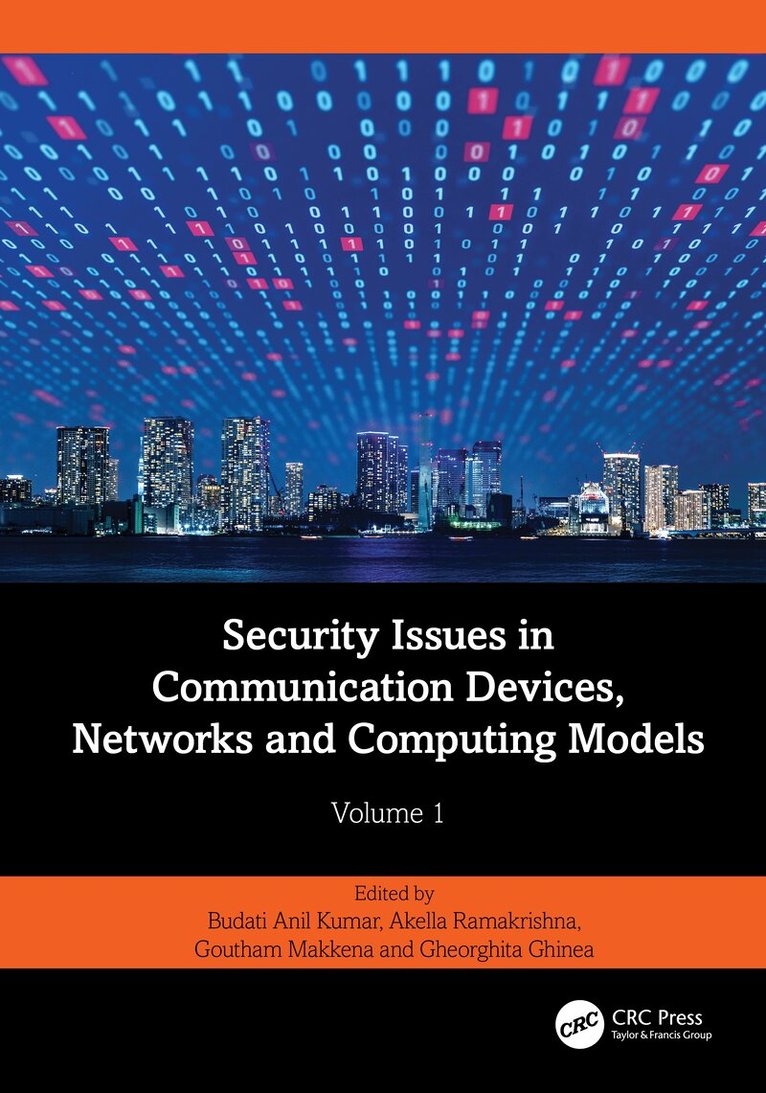
Security Issues in Communication Devices, Networks and Computing Models
Volume 1
Inbunden, Engelska, 2025
1 685 kr
Skickas inom 10-15 vardagar
The importance of addressing security issues in communication devices, networks, and computing models in Industry 5.0 cannot be overstated. Industry 5.0 represents the next phase in the evolution of manufacturing and industrial processes, characterized by increased connectivity, automation, and the integration of smart technologies. Here are several reasons why security is crucial in this context: Industry 5.0 involves the convergence of information technology (IT) and operational technology (OT), making industrial control systems susceptible to cyber threats. A breach in security could compromise critical infrastructure such as power grids, transportation systems, and water treatment plants. Securing computing models and networks is vital for protecting critical infrastructure and ensuring the safety and stability of essential services.Industry 5.0 encourages the use of advanced technologies such as the Industrial Internet of Things (IIoT) and edge computing, leading to increased data exchange and collaboration. Security issues could result in the theft or manipulation of intellectual property, proprietary designs, and sensitive business information. Robust security measures are necessary to safeguard intellectual property, maintain a competitive edge, and foster innovation within Industry 5.0 ecosystems. Communication devices and networks in Industry 5.0 transmit vast amounts of sensitive data, including production data, supply chain information, and operational metrics. Ensuring the integrity and confidentiality of this data is crucial for informed decision-making and maintaining a competitive advantage. Security breaches could lead to data manipulation, unauthorized access, and exposure of sensitive information, jeopardizing the trust of stakeholders and partners. Industry 5.0 involves interconnected supply chains, where multiple entities collaborate and share data. Weaknesses in communication devices and networks can be exploited to compromise the integrity of the entire supply chain, impacting product quality and safety. Securing communication channels and computing models is vital for maintaining the trustworthiness of the supply chain, ensuring product quality, and minimizing the risk of counterfeit components.In summary, addressing security issues in communication devices, networks, and computing models is fundamental to the successful implementation of Industry 5.0. It not only protects the assets and operations of organizations but also contributes to the overall safety, reliability, and sustainability of advanced industrial systems.
Security Issues in Communication Devices, Networks and Computing Models
Volume 2
Inbunden, Engelska, 2025
1 550 kr
Skickas inom 10-15 vardagar
The importance of addressing security issues in communication devices, networks, and computing models in Industry 5.0 cannot be overstated. Industry 5.0 represents the next phase in the evolution of manufacturing and industrial processes, characterized by increased connectivity, automation, and the integration of smart technologies. Here are several reasons why security is crucial in this context: Industry 5.0 involves the convergence of information technology (IT) and operational technology (OT), making industrial control systems susceptible to cyber threats. A breach in security could compromise critical infrastructure such as power grids, transportation systems, and water treatment plants. Securing computing models and networks is vital for protecting critical infrastructure and ensuring the safety and stability of essential services.Industry 5.0 encourages the use of advanced technologies such as the Industrial Internet of Things (IIoT) and edge computing, leading to increased data exchange and collaboration. Security issues could result in the theft or manipulation of intellectual property, proprietary designs, and sensitive business information. Robust security measures are necessary to safeguard intellectual property, maintain a competitive edge, and foster innovation within Industry 5.0 ecosystems. Communication devices and networks in Industry 5.0 transmit vast amounts of sensitive data, including production data, supply chain information, and operational metrics. Ensuring the integrity and confidentiality of this data is crucial for informed decision-making and maintaining a competitive advantage. Security breaches could lead to data manipulation, unauthorized access, and exposure of sensitive information, jeopardizing the trust of stakeholders and partners. Industry 5.0 involves interconnected supply chains, where multiple entities collaborate and share data. Weaknesses in communication devices and networks can be exploited to compromise the integrity of the entire supply chain, impacting product quality and safety. Securing communication channels and computing models is vital for maintaining the trustworthiness of the supply chain, ensuring product quality, and minimizing the risk of counterfeit components.In summary, addressing security issues in communication devices, networks, and computing models is fundamental to the successful implementation of Industry 5.0. It not only protects the assets and operations of organizations but also contributes to the overall safety, reliability, and sustainability of advanced industrial systems.
1 746 kr
Skickas inom 7-10 vardagar
COGNITIVE COMPUTING MODELS IN COMMUNICATION SYSTEMS A concise book on the latest research focusing on problems and challenges in the areas of data transmission technology, computer algorithms, AI-based devices, computer technology, and their solutions. The book provides a comprehensive overview of state-of-the-art research work on cognitive models in communication systems and computing techniques. It also bridges the gap between various communication systems and solutions by providing the current models and computing techniques, their applications, the strengths and limitations of the existing methods, and the future directions in this area. The contributors showcase their latest research work focusing on the issues, challenges, and solutions in the field of data transmission techniques, computational algorithms, artificial intelligence (AI)-based devices, and computing techniques. Readers will find in this succinctly written and unique book: Topics covering the applications of advanced cognitive devices, models, architecture, and techniques.A range of case studies and applications that will provide readers with the tools to apply cutting-edge models and algorithms.In-depth information about new cognitive computing models and conceptual frameworks and their implementation.Audience The book is designed for researchers and electronics engineers, computer science engineers, industrial engineers, and mechanical engineers (both in academia and industry) working in the fields of machine learning, cognitive computing, mobile communication, and wireless network system.
2 243 kr
Skickas inom 7-10 vardagar
The book explores the latest quantum computing research focusing on problems and challenges in the areas of data transmission technology, computer algorithms, artificial intelligence-based devices, computer technology, and their solutions. Future quantum machines will exponentially boost computing power, creating new opportunities for improving cybersecurity. Both classical and quantum-based cyberattacks can be proactively identified and stopped by quantum-based cybersecurity before they harm. Complex math-based problems that support several encryption standards could be quickly solved by using quantum machine learning. This comprehensive book examines how quantum machine learning and quantum computing are reshaping cybersecurity, addressing emerging challenges. It includes in-depth illustrations of real-world scenarios and actionable strategies for integrating quantum-based solutions into existing cybersecurity frameworks. A range of topics are examined, including quantum-secure encryption techniques, quantum key distribution, and the impact of quantum computing algorithms. Additionally, it talks about machine learning models and how to use machine learning to solve problems. Through its in-depth analysis and innovative ideas, each chapter provides a compilation of research on cutting-edge quantum computer techniques, like blockchain, quantum machine learning, and cybersecurity. Audience This book serves as a ready reference for researchers and professionals working in the area of quantum computing models in communications, machine learning techniques, IoT-enabled technologies, and various application industries such as finance, healthcare, transportation and utilities.