Burhan al-Din al-Marghinani – författare
Visar alla böcker från författaren Burhan al-Din al-Marghinani. Handla med fri frakt och snabb leverans.
4 produkter
4 produkter
817 kr
Skickas inom 7-10 vardagar
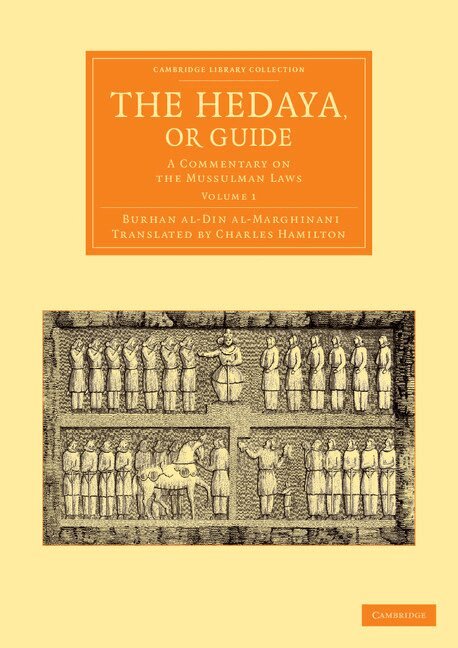
Composed in the twelfth century by the leading Muslim jurist Burhan al-Din al-Marghinani (1135-97), the original Arabic al-Hidāyah remains a central text of Islamic personal law. This English translation, from a Persian version of the work, was prepared by the orientalist Charles Hamilton (c.1752-92) for the East India Company in 1791. Although since superseded, it remains a fascinating document in the history of colonial jurisprudence. The legal system was central to the entrenchment of British rule in India, providing the framework for active control of civil administration and the courts. Translations of Islamic texts were intended to remove the language barrier for colonial officials, and blurred British and native law for the first time. Hamilton's text is one such, and its dedication to Warren Hastings and lengthy preliminary section outline its purpose and composition. Volume 1 contains sections on zakat (alms), marriage, fosterage, divorce, slavery, and vows.
901 kr
Skickas inom 7-10 vardagar
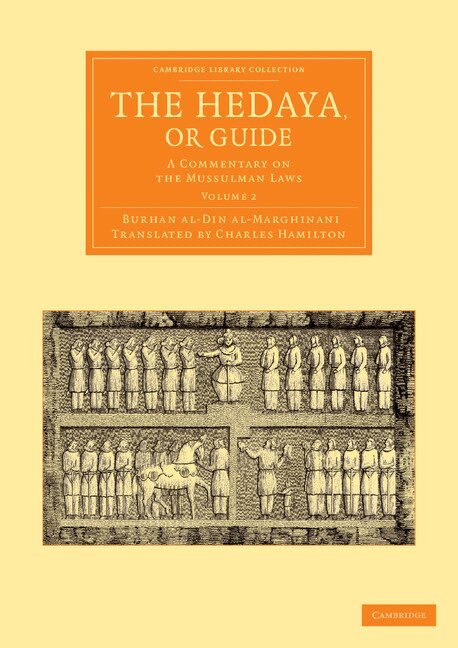
Composed in the twelfth century by the leading Muslim jurist Burhan al-Din al-Marghinani (1135-97), the original Arabic al-Hidāyah remains a central text of Islamic personal law. This English translation, from a Persian version of the work, was prepared by the orientalist Charles Hamilton (c.1752-92) for the East India Company in 1791. Although since superseded, it remains a fascinating document in the history of colonial jurisprudence. The legal system was central to the entrenchment of British rule in India, providing the framework for active control of civil administration and the courts. Translations of Islamic texts were intended to remove the language barrier for colonial officials, and blurred British and native law for the first time. Volume 2 contains sections on punishments, larceny, the rules of war, foundlings, the absconding of slaves, missing persons, partnerships, sales, bail, the transfer of debts, the duties of judges, and evidence.
817 kr
Skickas inom 7-10 vardagar
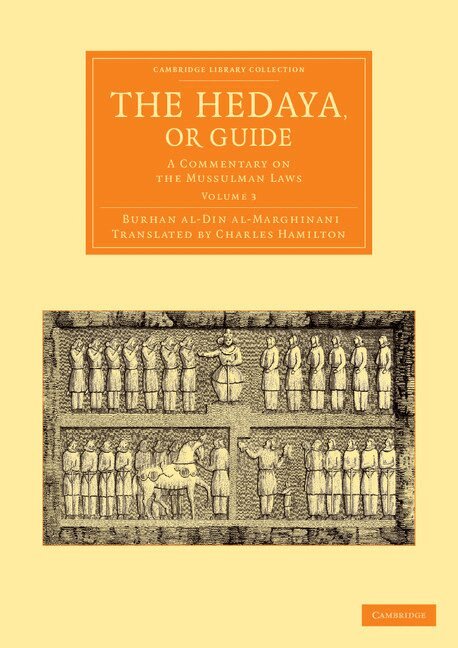
Composed in the twelfth century by the leading Muslim jurist Burhan al-Din al-Marghinani (1135-97), the original Arabic al-Hidāyah remains a central text of Islamic personal law. This English translation, from a Persian version of the work, was prepared by the orientalist Charles Hamilton (c.1752-92) for the East India Company in 1791. Although since superseded, it remains a fascinating document in the history of colonial jurisprudence. The legal system was central to the entrenchment of British rule in India, providing the framework for active control of civil administration and the courts. Translations of Islamic texts were intended to remove the language barrier for colonial officials, and blurred British and native law for the first time. Volume 3 contains sections on agency, claims, laws of business, deposits, loans, gifts, the hiring of slaves, freed slaves, and disputed land sales.
817 kr
Skickas inom 7-10 vardagar
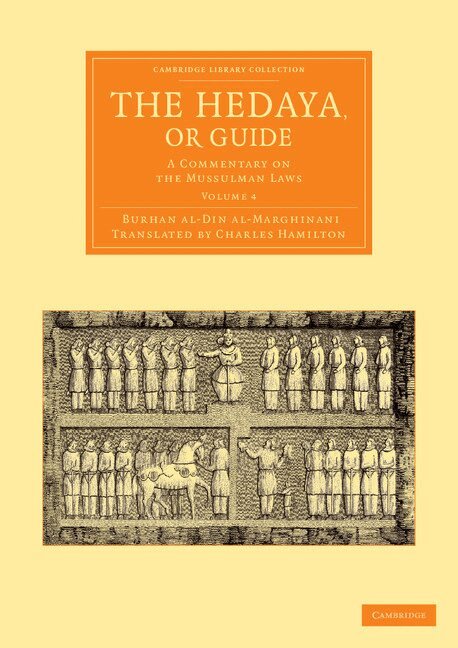
Composed in the twelfth century by the leading Muslim jurist Burhan al-Din al-Marghinani (1135-97), the original Arabic al-Hidāyah remains a central text of Islamic personal law. This English translation, from a Persian version of the work, was prepared by the orientalist Charles Hamilton (c.1752-92) for the East India Company in 1791. Although since superseded, it remains a fascinating document in the history of colonial jurisprudence. The legal system was central to the entrenchment of British rule in India, providing the framework for active control of civil administration and the courts. Translations of Islamic texts were intended to remove the language barrier for colonial officials, and blurred British and native law for the first time. Volume 4 contains sections on the partition of property, the eating of meat, sacrifice, abominations, the cultivation of wasteland, prohibited drinks, hunting, pawning, crimes against the person, fines, wills, and hermaphrodites.