Byunghan Kim – författare
Visar alla böcker från författaren Byunghan Kim. Handla med fri frakt och snabb leverans.
6 produkter
Simplicity Theory
Av Byunghan Kim
E-bok, 2013
1375 kr
Lägg i varukorg
Model theory, a major branch of mathematical logic, plays a key role connecting logic and other areas of mathematics such as algebra, geometry, analysis, and combinatorics. Simplicity theory, a subject of model theory, studies a class of mathematical structures, called simple. The class includes …
Simplicity Theory
Av Byunghan Kim
Inbunden, 2013
1647 kr
Lägg i varukorg
Model theory, a major branch of mathematical logic, plays a key role connecting logic and other areas of mathematics such as algebra, geometry, analysis, and combinatorics. Simplicity theory, a subject of model theory, studies a class of mathematical structures, called simple. The class includes …
PROCEEDINGS OF THE 14TH AND 15TH ASIAN LOGIC CONFERENCES
Av Kim Byunghan, Byunghan Kim m. fl.
Inbunden, 2019
1709 kr
Lägg i varukorg
The Asian Logic Conference (ALC) is a major international event in mathematical logic. It features the latest scientific developments in the fields of mathematical logic and its applications, logic in computer science, and philosophical logic. The ALC series also aims to promote mathematical logic …
PROCEEDINGS OF THE 11TH ASIAN LOGIC CONFERENCE: IN HONOR OF PROFESSOR CHONG CHITAT ON HIS 60TH BIRTHDAY
Av Arai Toshiyasu, Toshiyasu Arai m. fl.
Inbunden, 2011
1498 kr
Lägg i varukorg
The Asian Logic Conference is part of the series of logic conferences inaugurated in Singapore in 1981. It is normally held every three years and rotates among countries in the Asia-Pacific region. The 11th Asian Logic Conference was held at the National University of Singapore, in honor of …
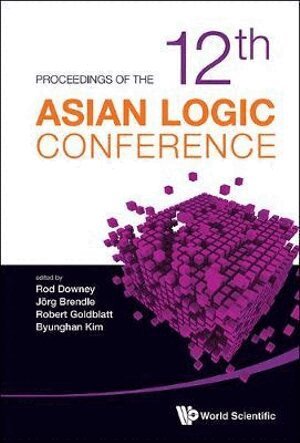
PROCEEDINGS OF THE 12TH ASIAN LOGIC CONFERENCE
Av Downey Rod, Rod Downey m. fl.
Inbunden, 2013
1848 kr
Lägg i varukorg
The Asian Logic Conference is the most significant logic meeting outside of North America and Europe, and this volume represents work presented at, and arising from the 12th meeting. It collects a number of interesting papers from experts in the field. It covers many areas of logic.
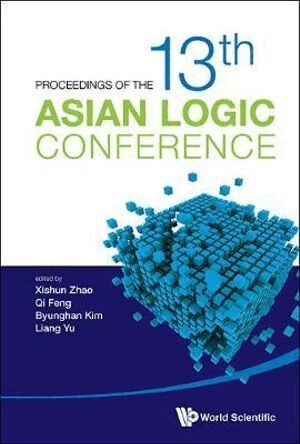
PROCEEDINGS OF THE 13TH ASIAN LOGIC CONFERENCE
Av Zhao Xishun, Xishun Zhao m. fl.
Inbunden, 2015
1593 kr
Lägg i varukorg
This volume provides a forum which highlights new achievements and overviews of recent developments of the thriving logic groups in the Asia-Pacific region. It contains papers by leading logicians and also some contributions in computer science logics and philosophic logics.