C. A. Hooker - Böcker
Visar alla böcker från författaren C. A. Hooker. Handla med fri frakt och snabb leverans.
4 produkter
4 produkter
1 057 kr
Tillfälligt slut
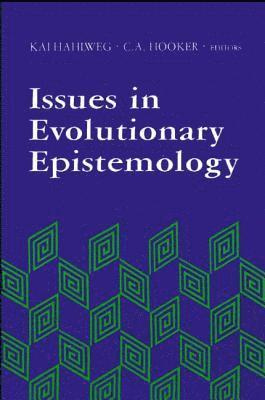
This book provides the fullest philosophical examination of theories of evolutionary epistemology now available. Here for the first time are found major statements of new theories, new applications, and many new critical explorations.The book is divided into four parts: Part I introduces several new approaches to evolutionary epistemology; Part II attempts to widen the scope of evolutionary epistemology, either by tackling more traditional epistemological issues, or by applying evolutionary models to new areas of inquiry such as the evolution of culture or of intentionality; Part III critically discusses specific problems in evolutionary epistemology; and Part IV deals with the relationship of evolutionary epistemology to the philosophy of mind.Because of its intellectual depth and its breadth of coverage, Issues in Evolutionary Epistemology will be an important text in the field for many years to come.
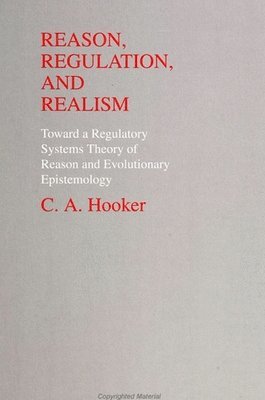
Reason, Regulation, and Realism
Towards a Regulatory Systems Theory of Reason and Evolutionary Epistemology
Häftad, Engelska, 1995
416 kr
Tillfälligt slut
This book develops a new naturalist theory of reason and scientific knowledge from a synthesis of philosophy and the new sciences of complex adaptive systems. In particular, the theory of partially self-organizing regulatory systems is now emerging as central to all the life and social sciences, and this book shows how these ideas can be used to illuminate and satisfyingly reconstruct our basic philosophical concepts and principles.Evolutionary epistemology provides a unifying subject for the book. It is taken as proposing some important commonality between cognitive biological and cognitive epistemic processes. Here, that commonality is found by embedding both in a common model of complex adaptive system dynamics.New reconstructions are offered on the theories of Jean Piaget, Karl Popper, and Nicholas Rescher which show how their ideas are more deeply illuminated from this perspective in contrast to the formal rationalist interpretations standard among philosophers and scientists.
416 kr
Tillfälligt slut
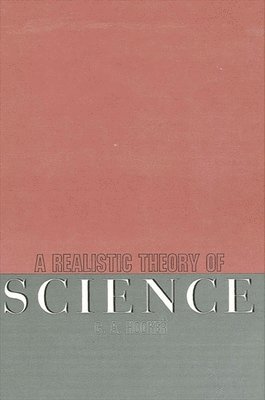
This book presents a clear and critical view of the orthodox logical empiricist tradition, pointing the way to significant developments for the understanding of science both as research and as culture. It summarizes the present confused and highly polarized status of the orthodox philosophy of science. It exhibits clearly the fundamental metaphysical and global presuppositions and confusions that have led to this status. It provides a positive point of view from which progress can be made toward understanding science as research done by real scientists rather than science as exemplifying some prior epistemological program created by philosophers. And it leads directly to an understanding of science as a dynamic force within our society with consequences for the environment and public policy.
1 252 kr
Skickas inom 10-15 vardagar
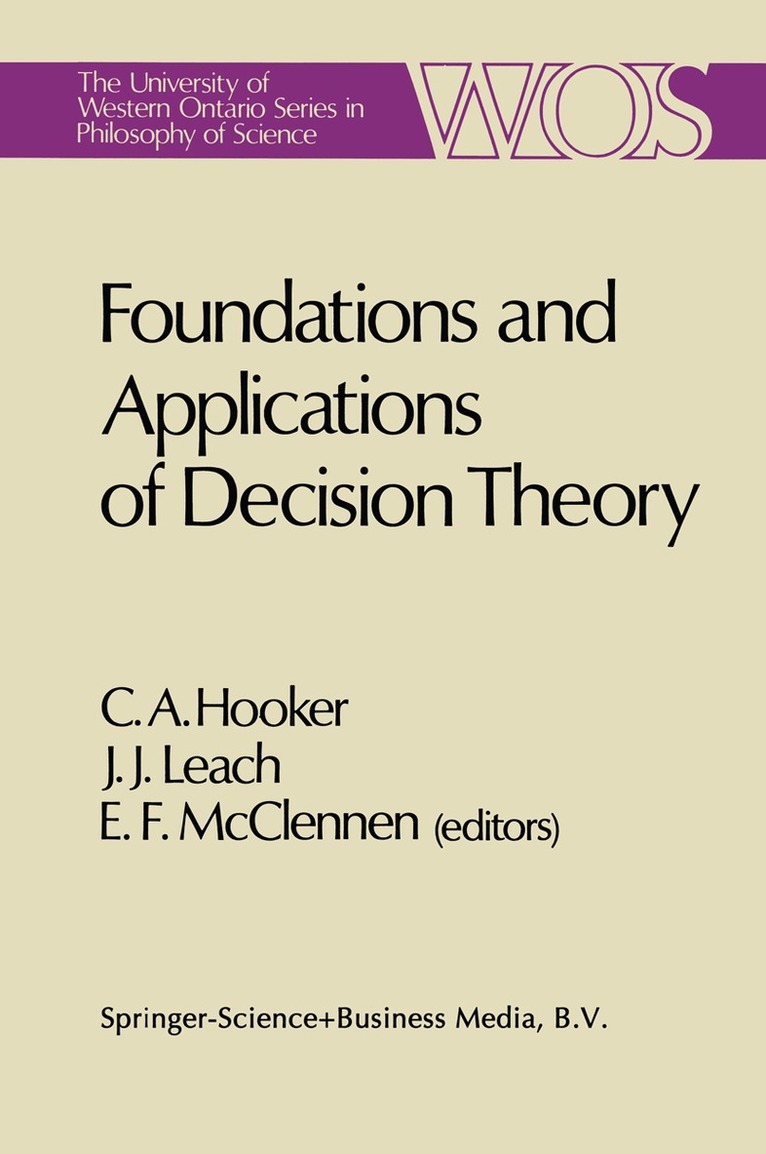
1. INTRODUCTION In the Spring of 1975 we held an international workshop on the Foundations and Application of Decision Theory at the University of Western Ontario. To help structure the workshop into ordered and manageable sessions we distri buted the following statement of our goals to all invited participants. They in turn responded with useful revisions and suggested their own areas of interest. Since this procedure provided the eventual format of the sessions, we include it here as the most appropriate introduction to these collected papers result ing from the workshop. The reader can readily gauge the approximation to our mutual goals. 2. STATEMENT OF OBJECTIVES AND RATIONALE (Attached to this statement is a bibliography; names of persons cited in the statement and writing in this century will be found referenced in the biblio graphy-certain 'classics' aside. ) 2 . 1. Preamble We understand in the following the Theory of Decisions in a broader sense than is presently customary, construing it to embrace a general theory of decision-making, including social, political and economic theory and applica tions. Thus, we subsume the Theory of Games under the head of Decision Theory, regarding it as a particularly clearly formulated version of part of the general theory of decision-making.