C. Crissman - Böcker
Visar alla böcker från författaren C. Crissman. Handla med fri frakt och snabb leverans.
2 produkter
2 produkter
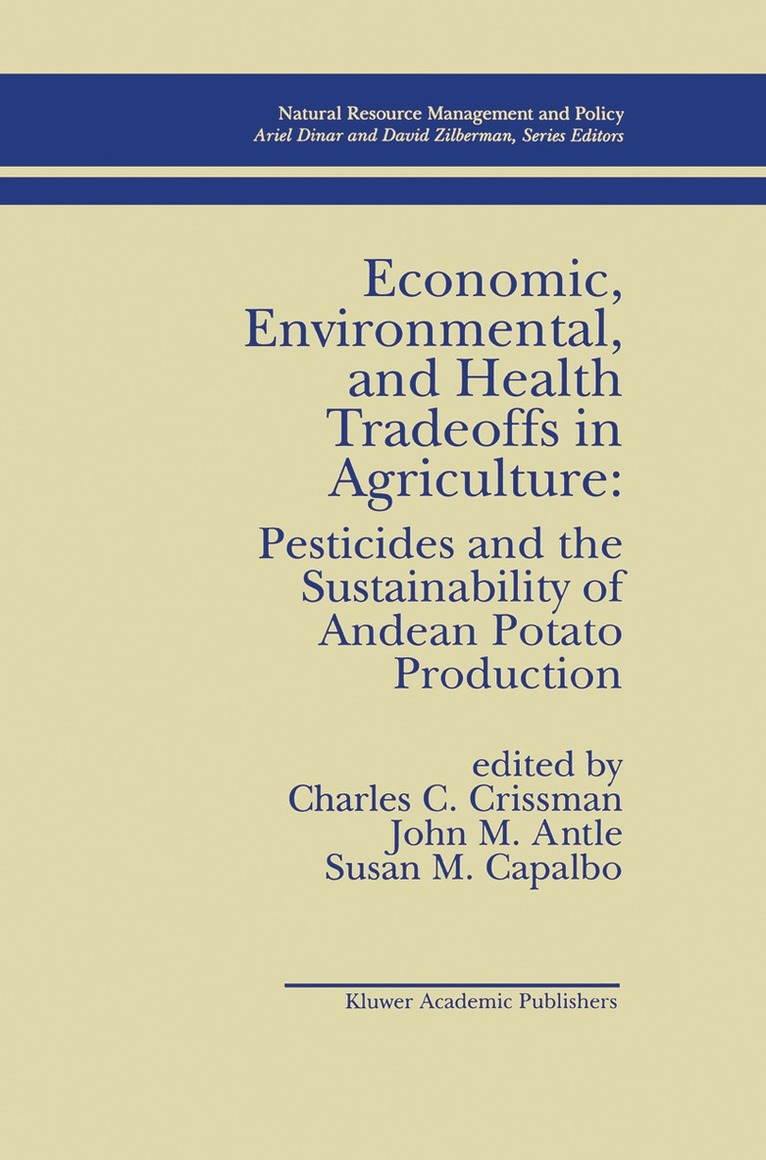
Economic, Environmental, and Health Tradeoffs in Agriculture: Pesticides and the Sustainability of Andean Potato Production
Inbunden, Engelska, 1997
2 111 kr
Skickas inom 10-15 vardagar
Today the goal of designing highly productive, sustainable agricultural production systems is at the forefront of agricultural research agendas around the world. This text argues the key to designing sustainable agricultural production technologies is in understanding their economic, environmental, and human health impacts. It presents a methodology designed to quantify such impacts and to represent them as tradeoffs. This tradeoff methodology is proposed as an approach to accomplish two elements in achieving agricultural sustainability. First, the tradeoffs method is a key to the design of successful interdisciplinary research projects for assessing sustainability of production systems. Second, the tradeoffs method provides a means of communicating research findings to policy makers and the public.
Economic, Environmental, and Health Tradeoffs in Agriculture: Pesticides and the Sustainability of Andean Potato Production
Häftad, Engelska, 2012
2 111 kr
Skickas inom 10-15 vardagar
Today the goal of designing highly productive, sustainable agricultural produc tion systems is at the forefront of the agricultural research agenda around the world. The key to designing sustainable agricultural production technologies is in understanding their economic, environmental, and human health impacts. This volume presents a methodology designed to quantify such impacts and to represent them as tradeoff's. We propose this tradeoff' methodology as an approach to accomplish two essential elements in achieving agricultural sustainability. First, the tradeoff's method is a key to the design of successful interdisciplinary research projects to assess sustainability of production systems. Second, the tradeoff's method provides a successful means to communicate research findings to policy makers and the public. To put this effort into perspective, we would like to explain its origins and reflect on its implications for conducting future research. In 1987, the Rockefeller Foundation commissioned a report that set out to ascertain why, in view ofthe extensive literatures on certain classes of agricul tural pollution, there had been few if any attempts to incorporate pollution externalities into the rather voluminous literature on the assessment of agricultural research impacts (Antle and Capalbo, 1988; see also Antle, 1994).