C. David Marsden – författare
Visar alla böcker från författaren C. David Marsden. Handla med fri frakt och snabb leverans.
5 produkter
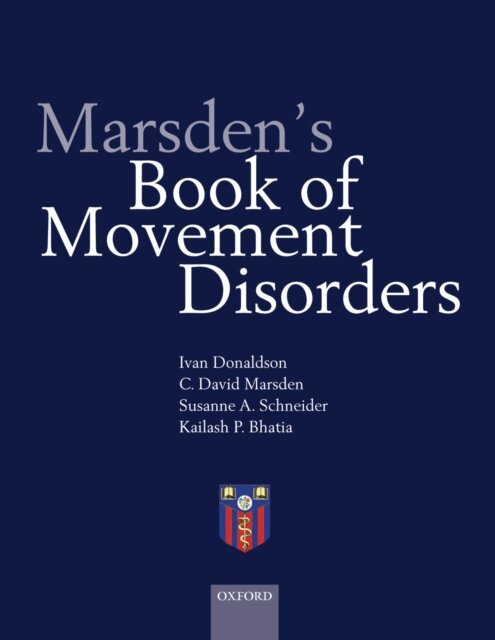
Marsden's Book of Movement Disorders
Av Kailash Bhatia, Susanne Schneider m. fl.
E-bok, 2012
4701 kr
Lägg i varukorg
This book represents the final work of the late Professor C. David Marsden, who was the most influential figure in the field of movement disorders, in terms of his contributions to both research and clinical practice, in the modern era. It was conceived and written by David Marsden and his …
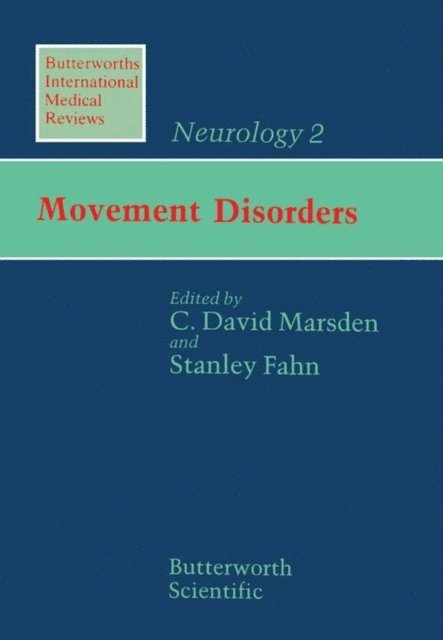
Movement Disorders
Neurology
Av Stanley Fahn, C. David Marsden
E-bok, 2013
831 kr
Lägg i varukorg
Neurology, Volume 2: Movement Disorders is a part of an international series of critical reviews of topics in neurology. This volume focuses on Parkinsonism and dyskinesia, a condition characterized by abnormal involuntary movements. Organized into 18 chapters, this book first elucidates the …
Fifty Neurological Cases from the National Hospital
Av Adrian J. Wills, C. David Marsden
Häftad, 1998
1372 kr
Lägg i varukorg
Utilizing the wealth of material which has been presented by clinicians at the Grand Rounds at the National Hospital for Neurology and Neurosurgery over the years, the editors have selected fifty cases on which consultant neurologists at this well-known institution have provided their expert …
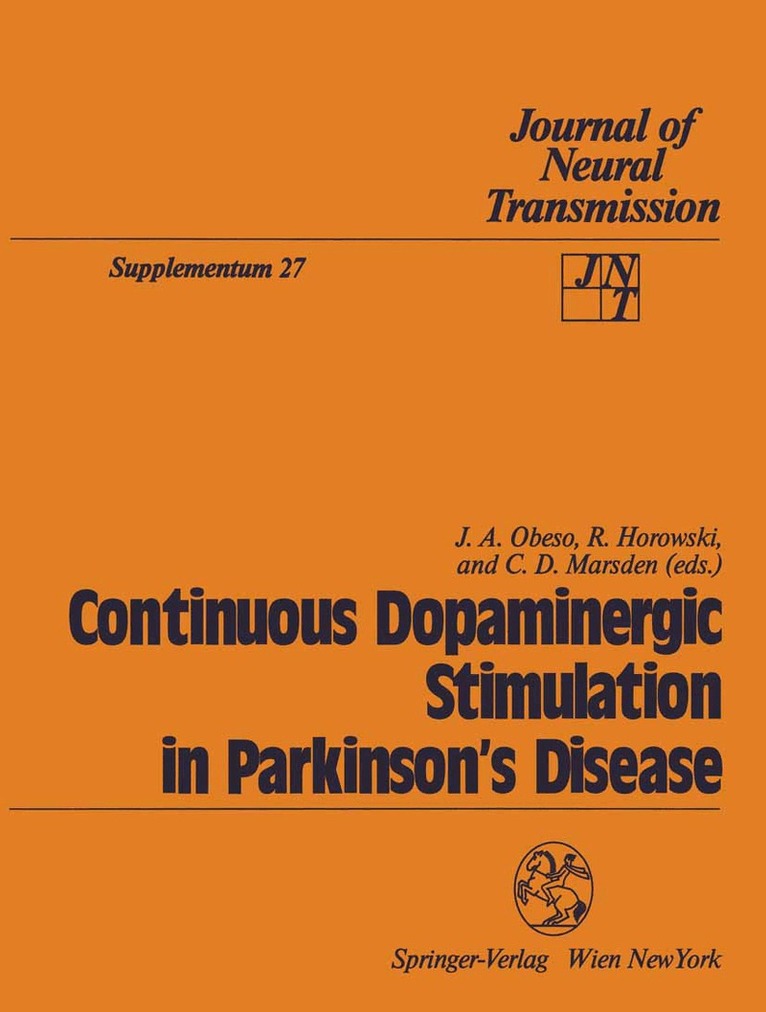
Continuous Dopaminergic Stimulation in Parkinson’s Disease
Proceedings of the Workshop in Alicante, Spain, September 22–24, 1986
Av Jose A. Obeso, Reinhard Horowski m. fl.
Häftad, 1988
569 kr
Lägg i varukorg
At this meeting, a number of critical groups confirmed and extended the original findings by J.A. Obeso and his colleagues. These authors found that continuous s.c. infusion of lisuride, a watersoluble dopaminergic 8- -aminoergoline with dopaminergic properties which can be injected or infused, can …
Continuous Dopaminergic Stimulation in Parkinson's Disease
Proceedings of the Workshop in Alicante, Spain, September 22–24, 1986
Av C. David Marsden, Reinhard Horowski m. fl.
E-bok, 2013
755 kr
Lägg i varukorg
At this meeting, a number of critical groups confirmed and extended the original findings by J.A. Obeso and his colleagues. These authors found that continuous s.c. infusion of lisuride, a watersoluble dopaminergic 8- -aminoergoline with dopaminergic properties which can be injected or infused, can …