C. de Bergh – författare
Visar alla böcker från författaren C. de Bergh. Handla med fri frakt och snabb leverans.
3 produkter
3 produkter
3 815 kr
Skickas inom 10-15 vardagar
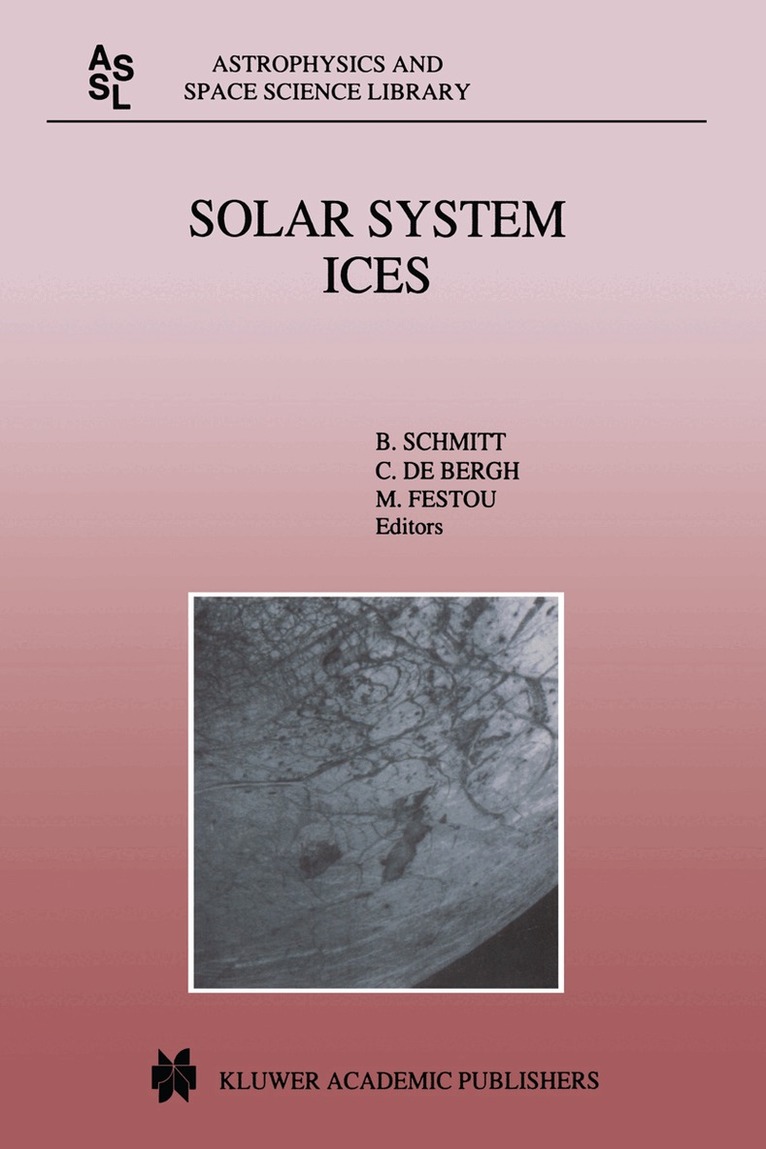
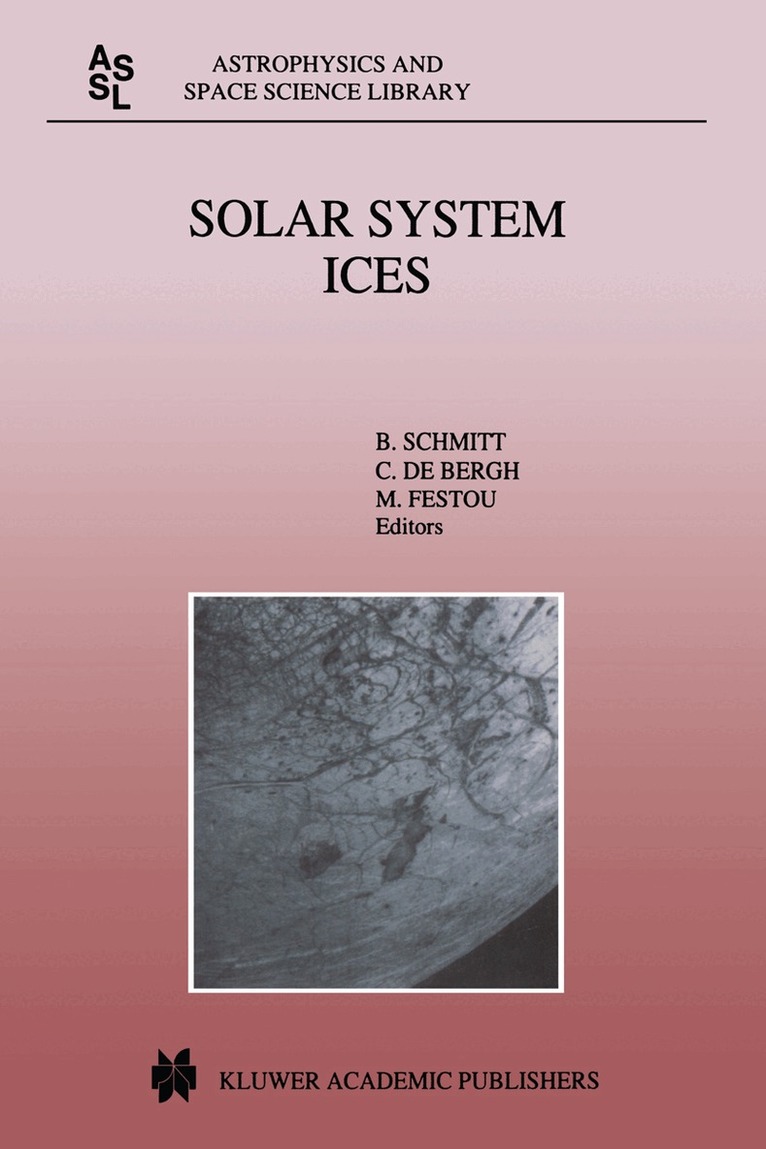
Predicted long ago to be present on the surface of planetary bodies by theoreticians and recently shown by interplanetary spacecraft and ground-based instruments to be ubiquitous in the Solar System, ices in a broad sense have become an extremely important subject in planetary research. Ices found on objects formed in the remote parts of the Solar System contain a message about the composition and mode of formation of our planetary system. There are also objects that contain icy materials that bear signatures of past events on a geological timescale. Their study is one of the best means of inquiring about the origins, accessing the past and anticipating the future of our Solar System. The reviews in this book collect together a series of papers covering the physics and chemistry of ices, as well as the geology of icy surfaces. They present an extensive summary of their chemical and physical properties relevant to planetary astronomy. They also provide an overview of planetary bodies that contain ices and the outstanding problems of the field. Audience: The book is intended to become a reference for researchers and graduate students.It is accessible to senior graduate students with a background in planetary science.
Del 227 - Astrophysics and Space Science Library
Solar System Ices
Based on Reviews Presented at the International Symposium “Solar System Ices” held in Toulouse, France, on March 27–30, 1995
Häftad, Engelska, 2012
3 260 kr
Skickas inom 10-15 vardagar
Predicted long ago to be present on the surface of planetary bodies by theoreticians and recently shown by interplanetary spacecraft and ground- based instruments to be ubiquitous in the Solar System, ices in a broad sense have become an extremely important subject in planetary research. Ices found on objects formed in the remote parts of the Solar System contain a message about the composition and mode of formation of our planetary system. There are also objects that contain icy materials that bear signatures of past events on a geological timescale. Their study is one of the best means of inquiring about the origins, accessing the past and anticipating the future of our Solar System. The reviews in this book collect together a series of papers covering the physics and chemistry of ices, as well as the geology of icy surfaces. They present an extensive summary of their chemical and physical properties relevant to planetary astronomy. They also provide an overview of planetary bodies that contain ices and the outstanding problems of the field. Audience: The book is intended to become a reference for researchers and graduate students. It is accessible to senior graduate students with a background in planetary science.
E-bok
PDF, Engelska, 20123 817 kr
Läs direkt efter köp
Predicted long ago to be present on the surface of planetary bodies by theoreticians and recently shown by interplanetary spacecraft and ground- based instruments to be ubiquitous in the Solar System, ices in a broad sense have become an extremely important subject in planetary research. Ices found on objects formed in the remote parts of the Solar System contain a message about the composition and mode of formation of our planetary system. There are also objects that contain icy materials that bear signatures of past events on a geological timescale. Their study is one of the best means of inquiring about the origins, accessing the past and anticipating the future of our Solar System. The reviews in this book collect together a series of papers covering the physics and chemistry of ices, as well as the geology of icy surfaces. They present an extensive summary of their chemical and physical properties relevant to planetary astronomy. They also provide an overview of planetary bodies that contain ices and the outstanding problems of the field. Audience: The book is intended to become a reference for researchers and graduate students. It is accessible to senior graduate students with a background in planetary science.