C. DeWitt-Morette – författare
Visar alla böcker från författaren C. DeWitt-Morette. Handla med fri frakt och snabb leverans.
3 produkter
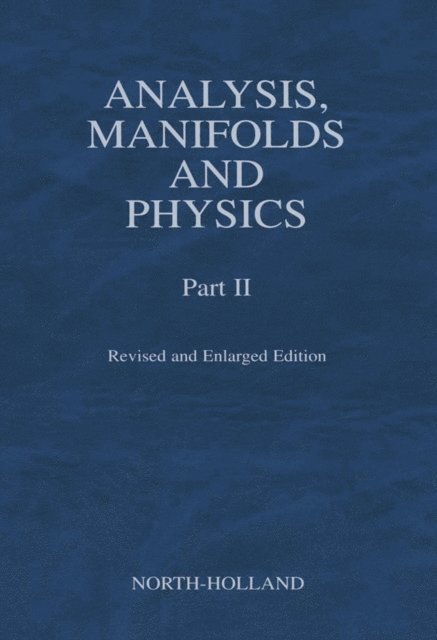
Analysis, Manifolds and Physics, Part II - Revised and Enlarged Edition
Av Y. Choquet-Bruhat, C. DeWitt-Morette
E-bok, 2000
1595 kr
Lägg i varukorg
Twelve problems have been added to the first edition; four of them are supplements to problems in the first edition. The others deal with issues that have become important, since the first edition of Volume II, in recent developments of various areas of physics. All the problems have their …
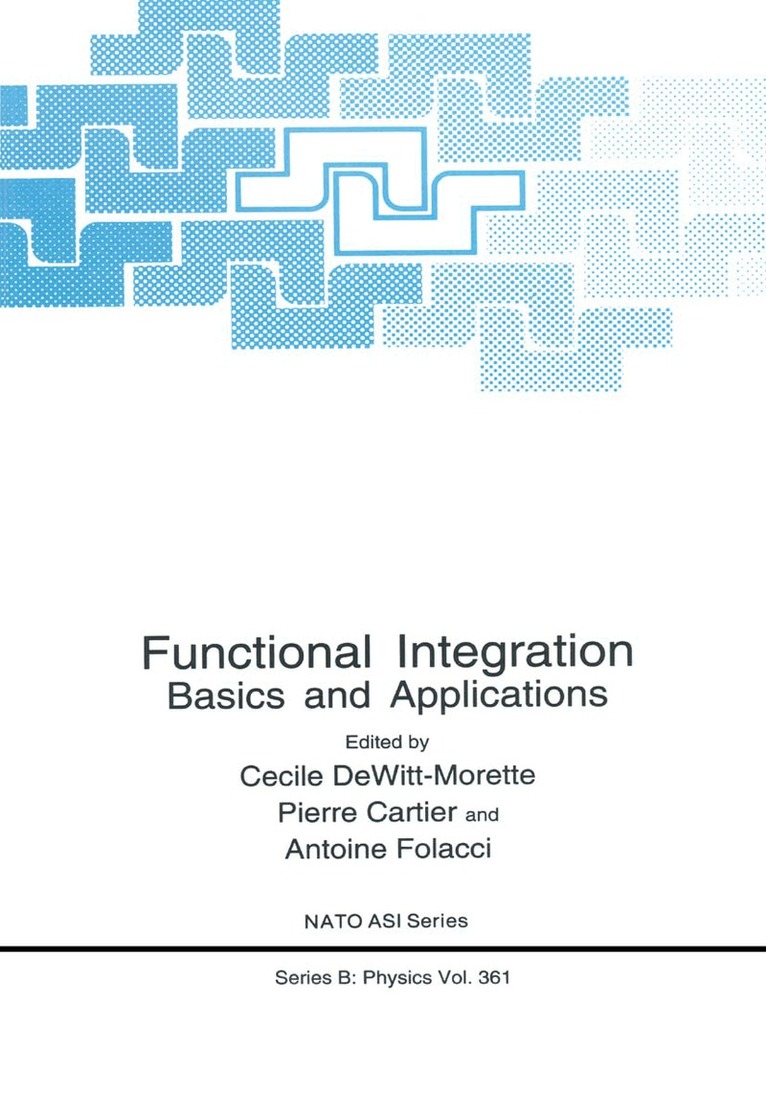
Functional Integration
Basics and Applications
Av C. DeWitt-Morette, P. Cartier m. fl.
Inbunden, 1997
2185 kr
Lägg i varukorg
The program of the Institute covered several aspects of functional integration -from a robust mathematical foundation to many applications, heuristic and rigorous, in mathematics, physics, and chemistry. It included analytic and numerical computational techniques. One of the goals was to encourage …
Analysis, Manifolds and Physics, Part II - Revised and Enlarged Edition
Av Y. Choquet-Bruhat, C. DeWitt-Morette
Inbunden, 2000
5,0 utav 5 stjärnor. Totalt antal röster: (1)
1560 kr
Lägg i varukorg
Twelve problems have been added to the first edition; four of them are supplements to problems in the first edition. The others deal with issues that have become important, since the first edition of Volume II, in recent developments of various areas of physics. All the problems have their …