C. F. Goodey - Böcker
Visar alla böcker från författaren C. F. Goodey. Handla med fri frakt och snabb leverans.
4 produkter
4 produkter
2 289 kr
Skickas inom 10-15 vardagar
The social position of learning disabled people has shifted rapidly over the last 20 years, from long-stay institutions, first into community homes and day centres, and now to a currently emerging goal of "ordinary lives" for individuals using person-centred support and personal budgets. These approaches promise to replace a century and a half of "scientific" pathological models based on expert assessment, and of the accompanying segregated social administration which determined how and where people led their lives, and who they were.This innovative volume explains how concepts of learning disability, intellectual disability and autism first came about, describes their more recent evolution in the formal disciplines of psychology, and shows the direct relevance of this historical knowledge to present and future policy, practice and research. Goodey argues that learning disability is not a historically stable category and different people are considered "learning disabled" as it changes over time. Using psychological and anthropological theory, he identifies the deeper lying pathology as "inclusion phobia", in which the tendency of human societies to establish an in-group and to assign out-groups reaches an extreme point. Thus the disability we call "intellectual" is a concept essential only to an era in which to be human is essentially to be deemed intelligent, autonomous and capable of rational choice.Interweaving the author's historical scholarship with his practice-based experience in the field, Learning Disability and Inclusion Phobia challenges myths about the past as well as about present-day concepts, exposing both the historical continuities and the radical discontinuities in thinking about learning disability.
817 kr
Skickas inom 10-15 vardagar
The social position of learning disabled people has shifted rapidly over the last 20 years, from long-stay institutions, first into community homes and day centres, and now to a currently emerging goal of "ordinary lives" for individuals using person-centred support and personal budgets. These approaches promise to replace a century and a half of "scientific" pathological models based on expert assessment, and of the accompanying segregated social administration which determined how and where people led their lives, and who they were.This innovative volume explains how concepts of learning disability, intellectual disability and autism first came about, describes their more recent evolution in the formal disciplines of psychology, and shows the direct relevance of this historical knowledge to present and future policy, practice and research. Goodey argues that learning disability is not a historically stable category and different people are considered "learning disabled" as it changes over time. Using psychological and anthropological theory, he identifies the deeper lying pathology as "inclusion phobia", in which the tendency of human societies to establish an in-group and to assign out-groups reaches an extreme point. Thus the disability we call "intellectual" is a concept essential only to an era in which to be human is essentially to be deemed intelligent, autonomous and capable of rational choice.Interweaving the author's historical scholarship with his practice-based experience in the field, Learning Disability and Inclusion Phobia challenges myths about the past as well as about present-day concepts, exposing both the historical continuities and the radical discontinuities in thinking about learning disability.
1 271 kr
Skickas inom 5-8 vardagar
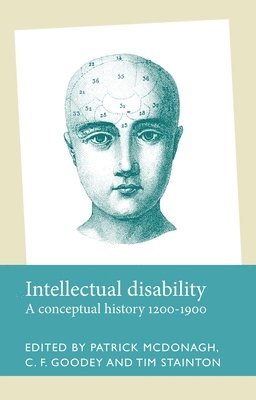
This collection explores the historical origins of our modern concepts of intellectual or learning disability. The essays, from some of the leading historians of ideas of intellectual disability, focus on British and European material from the Middle Ages to the late-nineteenth century and extend across legal, educational, literary, religious, philosophical and psychiatric histories. They investigate how precursor concepts and discourses were shaped by and interacted with their particular social, cultural and intellectual environments, eventually giving rise to contemporary ideas. The collection is essential reading for scholars interested in the history of intelligence, intellectual disability and related concepts, as well as in disability history generally.
364 kr
Skickas inom 5-8 vardagar
This collection explores the historical origins of our modern concepts of intellectual or learning disability. The essays, from some of the leading historians of ideas of intellectual disability, focus on British and European material from the Middle Ages to the late-nineteenth century and extend across legal, educational, literary, religious, philosophical and psychiatric histories. They investigate how precursor concepts and discourses were shaped by and interacted with their particular social, cultural and intellectual environments, eventually giving rise to contemporary ideas. Intellectual disability is essential reading for scholars interested in the history of intelligence, intellectual disability and related concepts, as well as in disability history generally.