C. Kenneth Dodd, Jr. - Böcker
Visar alla böcker från författaren C. Kenneth Dodd, Jr.. Handla med fri frakt och snabb leverans.
3 produkter
3 produkter
1 975 kr
Skickas inom 5-8 vardagar
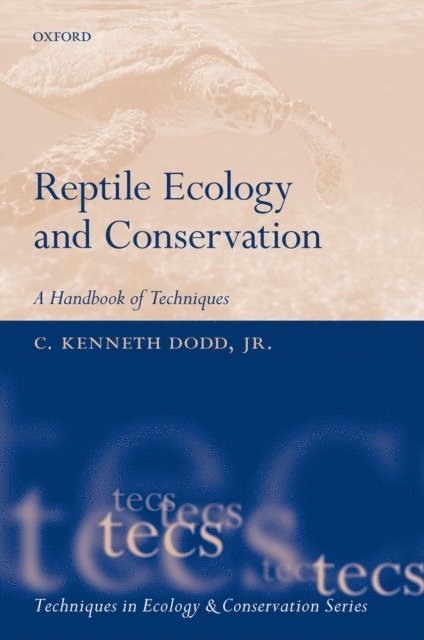
This practical handbook of reptile field ecology and conservation brings together a distinguished, international group of reptile researchers to provide a state-of-the-art review of the many new and exciting techniques used to study reptiles. The authors describe ecological sampling techniques and how they are implemented to monitor the conservation status and population trends of snakes, lizards, tuatara, turtles, and crocodilians throughout the world. Emphasis is placed on the extent of statistical inference and the biases associated with different techniques and analyses.The chapters focus on the application of field research and data analysis for achieving an understanding of reptile life history, population dynamics, movement patterns, thermal ecology, conservation status, and the relationship between reptiles and their environment. The book emphasises the need for thorough planning, and demonstrates how a multi-dimensional approach incorporates information related to morphology, genetics, molecular biology, epidemiology, statistical modelling, animal welfare, and biosecurity. Although accentuating field sampling, sections on experimental applications in laboratories and zoos, thermal ecology, genetics, landscape ecology, disease and biosecurity, and management options are included. Much of this information is scattered in the scientific literature or not readily available, and the intention is to provide an affordable, comprehensive synthesis for use by graduate students, researchers, and practising conservationists worldwide.
773 kr
Skickas inom 5-8 vardagar
This practical handbook of reptile field ecology and conservation brings together a distinguished, international group of reptile researchers to provide a state-of-the-art review of the many new and exciting techniques used to study reptiles. The authors describe ecological sampling techniques and how they are implemented to monitor the conservation status and population trends of snakes, lizards, tuatara, turtles, and crocodilians throughout the world. Emphasis is placed on the extent of statistical inference and the biases associated with different techniques and analyses.The chapters focus on the application of field research and data analysis for achieving an understanding of reptile life history, population dynamics, movement patterns, thermal ecology, conservation status, and the relationship between reptiles and their environment. The book emphasises the need for thorough planning, and demonstrates how a multi-dimensional approach incorporates information related to morphology, genetics, molecular biology, epidemiology, statistical modelling, animal welfare, and biosecurity. Although accentuating field sampling, sections on experimental applications in laboratories and zoos, thermal ecology, genetics, landscape ecology, disease and biosecurity, and management options are included. Much of this information is scattered in the scientific literature or not readily available, and the intention is to provide an affordable, comprehensive synthesis for use by graduate students, researchers, and practising conservationists worldwide.
883 kr
Skickas inom 7-10 vardagar
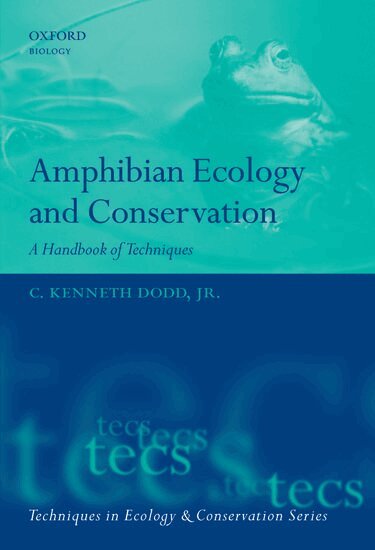
This practical manual of amphibian ecology and conservation brings together a distinguished, international group of amphibian researchers to provide a state-of-the-art review of the many new and exciting techniques used to study amphibians and to track their conservation status and population trends. The integration of ecology and conservation is a natural outcome of the types of questions posed by these disciplines: how amphibians can and should be sampled, marked, and followed through time; how abundance and population trends are measured; what are the robust statistical methods that can be used in ecology and conservation; what roles do amphibians play in community structure and function; how do animals function in their environment; and what affects the long-term persistence of species assemblages?Although emphasizing field ecology, sections on physiological ecology, genetics, landscape ecology, and disease analysis are also included. The book describes the latest statistical approaches in amphibian field ecology and conservation, as well as the use of models in interpreting field research. Much of this information is scattered in the scientific literature or not readily available, and the intention is to provide an affordable, comprehensive synthesis for use by graduate students, researchers, and practising conservationists worldwide.