C L Sonnichsen - Böcker
Visar alla böcker från författaren C L Sonnichsen. Handla med fri frakt och snabb leverans.
9 produkter
9 produkter
145 kr
Skickas inom 5-8 vardagar
163 kr
Skickas inom 10-15 vardagar
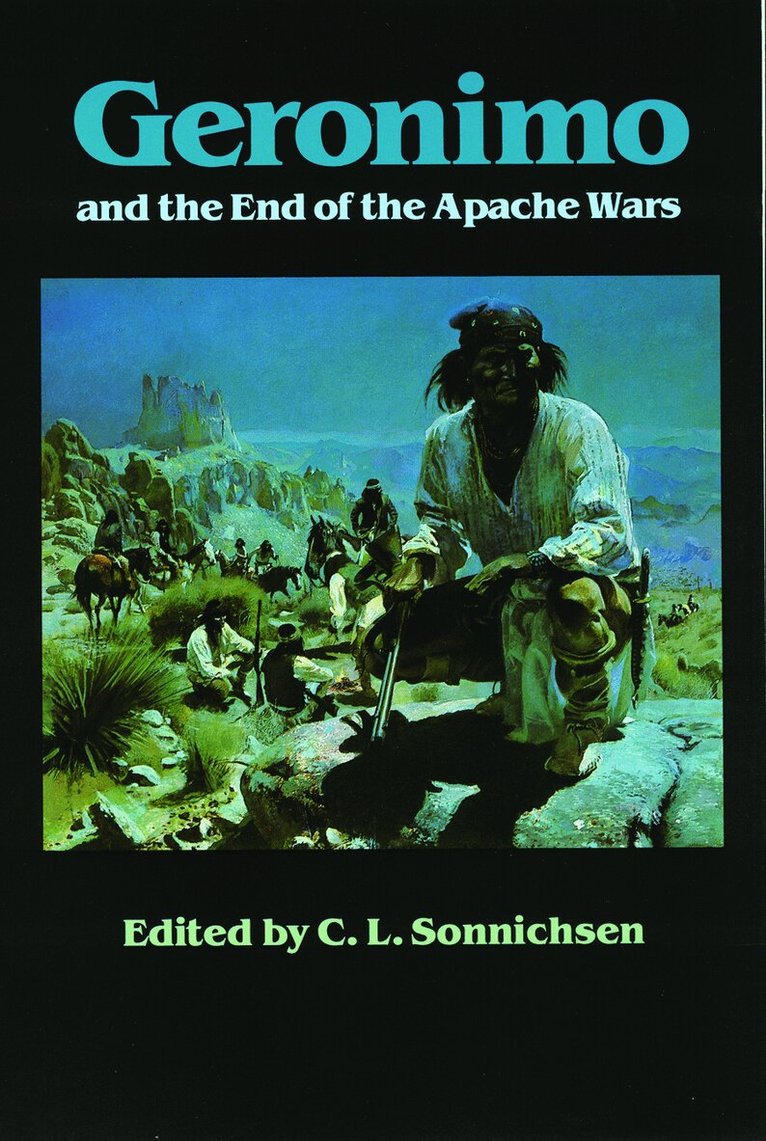
After prolonged resistance against tremendous odds, Geronimo, the Apache shaman and war leader, and Naiche, the hereditary Chiricahua chief, surrendered to General Nelson A. Miles near the Mexican border on September 4, 1886. It was the beginning of a new day for white settlers in the Southwest and of bitter exile for the Indians. In Geronimo and the End of the Apache Wars Lieutenant Charles B. Gatewood, an emissary of General Miles, describes in vivid circumstantial detail his role in the final capture of Geronimo at Skeleton Canyon. Gatewood offers many intimate glimpses of the Apache chief in an important account published for the first time in this collection. Another first-person narration is by Samuel E. Kenoi, who was ten years old when Geronimo went on his last warpath. A Chiricahua Apache, Kenoi recalls the removal of his people to Florida after the surrender. In other colorful chapters Edwin R. Sweeney writes about the 1851 raid of the Mexican army that killed Geronmio's mother, wife, and children; and Albert E. Wratten relates the life of his father, George Wratten, a government scout, superintendent on three reservations, and defender of the rights of the Apaches.
208 kr
Skickas inom 5-8 vardagar
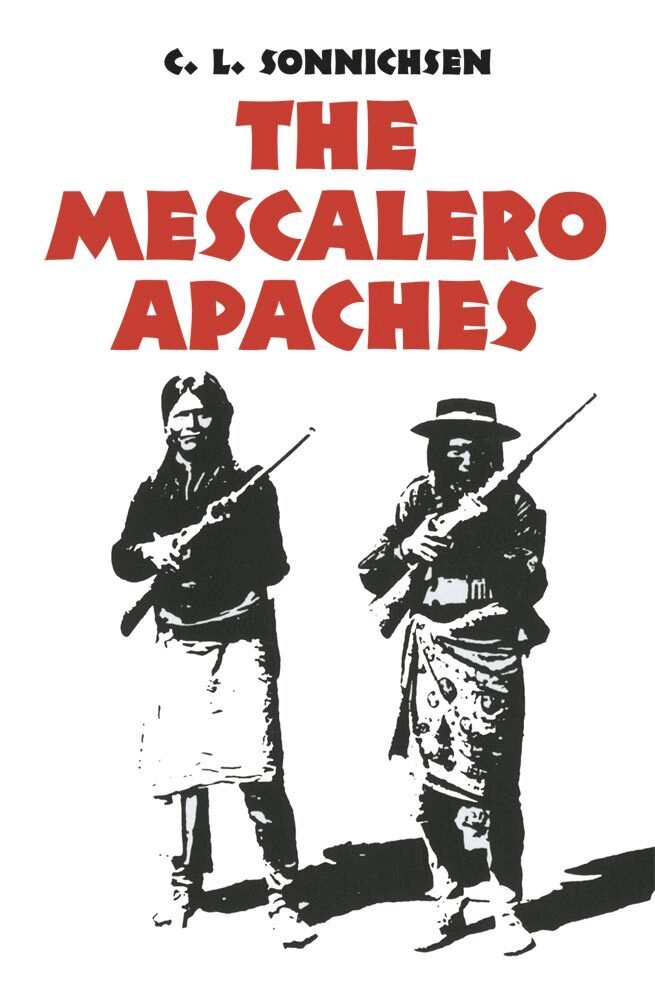
Frederick Webb Hodge remarked that the Eastern Apache tribe called the Mescaleros were ""never regarded as so warlike"" as the Apaches of Arizona. But the Mescaleros' history is one of hardship and oppression alternating with wars of revenge. They were friendly to the Spaniards until victimized, and friendly to Americans until they were betrayed again. For three hundred years Mescaleros fought the Spaniards and Mexicans. They fought Americans for forty more, before subsiding into lethargy and discouragement. Only since 1930 have the Mescaleros been able to make tribal progress.C. L. Sonnichsen tells the story of the Mescalero Apaches from the earliest records to the modern day, from the Indian's point of view. In early days the Mescaleros moved about freely. Their principal range was between the Río Grande and the Pecos in New Mexico, but they hunted into the Staked Plains and southward into Mexico. They owned nothing and everything. Today the Mescaleros are American citizens and own their reservation in the Tularosa country of New Mexico. While the Mescalero Apaches still struggle to retain their traditions and bridge the gap between their old life and the new, their people have made amazing progress.
231 kr
Skickas inom 5-8 vardagar
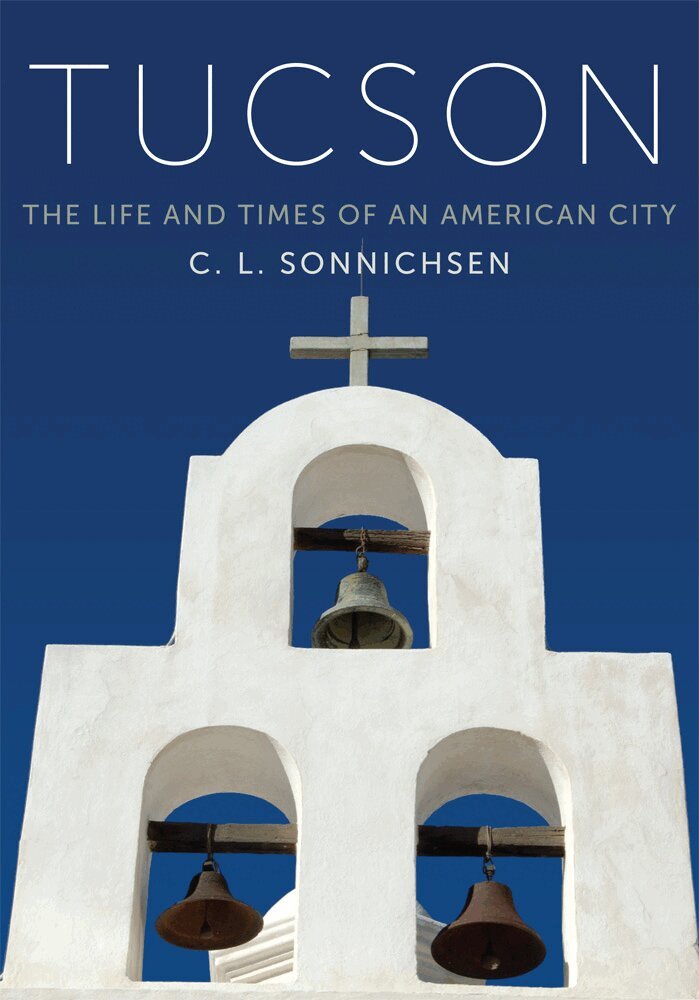
Dedicated to all those living elsewhere who would rather be in TucsonTucson is the first comprehensive history of a unique corner of America, a city with its roots in Indian and Spanish colonial history; its skies broken by the towers of a Sunbelt metropolis.In these pages C. L. Sonnichsen, dean of southwestern historians-and a Tucsonan by adoption - chronicles with humor and affection the growth over two centuries of one of the region's most colorful communities.Today's metropolitan Tucson is a city of half a million people. Set along the Santa Cruz River in the Lower Sonoran Desert in a great basin surrounded by soaring mountain ranges, it is different in many ways from any other city in the United States. Like all other Sunbelt centers, however, it is growing by great leaps and bounds. A popular winter resort, it attracts fugitives from the frozen North. The site of the University of Arizona, it draws many with an intellectual bent. For artists the attractions of the ""Old Pueblo"" are all but endless. The city booms with new people, industries, shopping centers, and subdivisions.Newcomers tend to bring along their ideas, life-styles, and landscapes, including Bermuda grass and mulberry trees, and have moved Tucson closer to the familiar patterns of urban America. But tradition and geography limit their efforts, for Tucson has always been the center of a separate world, with a history, population, and character of its own. It was an oasis far from other Indian cultural centers a thousand years ago.It was a remote outpost in 1776, when the Spaniards founded a presidio there. It was not far from the edge of the world when Anglos began settling along the Santa Cruz not long before the Civil War. Even with the coming of the railroad, the airplane, and television, Tucson has remained insulated from the rest of the country by distance and by special habits of mind. Much of Tucson's charm derives from this insulation.Beyond the separateness, says the author, is a fact too often overlooked: Deserts Were Not Made for People. Technological skills make survival possible for most of the population; only the long-resident Papago Indians are truly at home there. In such a difficult environment early-day white settlers had to make do with little, undergo much, and be prepared for the worst.Today their successors live in what is essentially an artificial environment, using their natural resources as if they were inexhaustible - for water Tucson depends entirely on underground sources-and continue to enjoy the genial, if sometimes superheated, climate, the casual life-style and western friendliness of the population, the Indian-Spanish-Mexican cultural and historical ambience, and the artistic and intellectual life. The problems of other great American cities are Tucson's also. Perhaps it is those very problems and the uncertainty of the future that add a special urgency to the savoring of life in this special corner of America.
240 kr
Skickas inom 10-15 vardagar
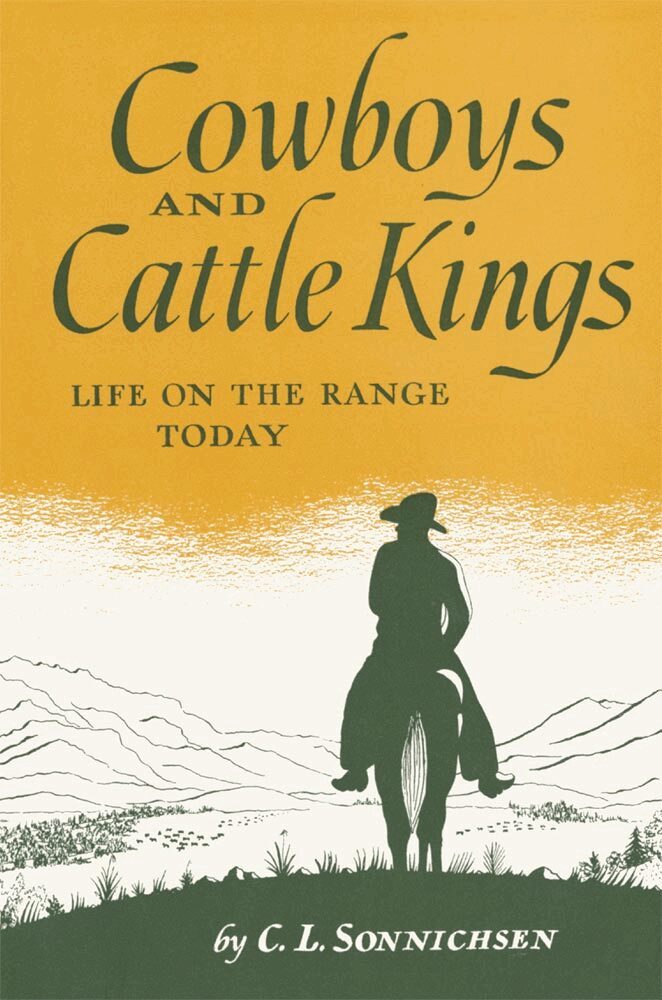
The cattleman didn't vanish with the fencing of the open range. He is very much with us today - this two-fisted, hard-driving citizen of the pastures from El Paso to Butte. He is a very special kind of American, not solely because of the romantic history of his kind, but because of the way he looks at things.C. L. Sonnichsen, who talks the language of cow country folk, has written an absorbing account of the modern cattleman - full of anecdotes and the good, profane dialogue that gives warmth and vigor to western conversation. Above all, it has the quality of wit and humor.Cowboys and Cattle Kings evaluates the cattle raiser of the High Plains and Rocky Mountain areas since the fencing of the open range - how he lives, what he thinks, and how he conducts his business. Sonnichsen considers the roots and background of the present-day cowman and describes modern ranch children, ranch women, cowboys, managers, and others in the business. He clarifies the cowman's position in recent controversies concerning grazing and lease rights and control of the range.From the enormous ""ranch empires"" to the small enterprises, from the strongholds of the old-time ranchman to the popular dude ranches for tourists, Sonnichsen touches every segment of the industry. Most important, perhaps, is his sympathetic account of the troubles of modern ranching - blizzards, droughts, rustlers, financial burdens - and the counterbalancing advantages of ranching as a way of life.
202 kr
Skickas inom 3-6 vardagar
592 kr
Skickas inom 3-6 vardagar
482 kr
Skickas inom 3-6 vardagar
297 kr
Skickas inom 3-6 vardagar