C. Lumley - Böcker
Visar alla böcker från författaren C. Lumley. Handla med fri frakt och snabb leverans.
7 produkter
7 produkter
1 640 kr
Skickas inom 10-15 vardagar
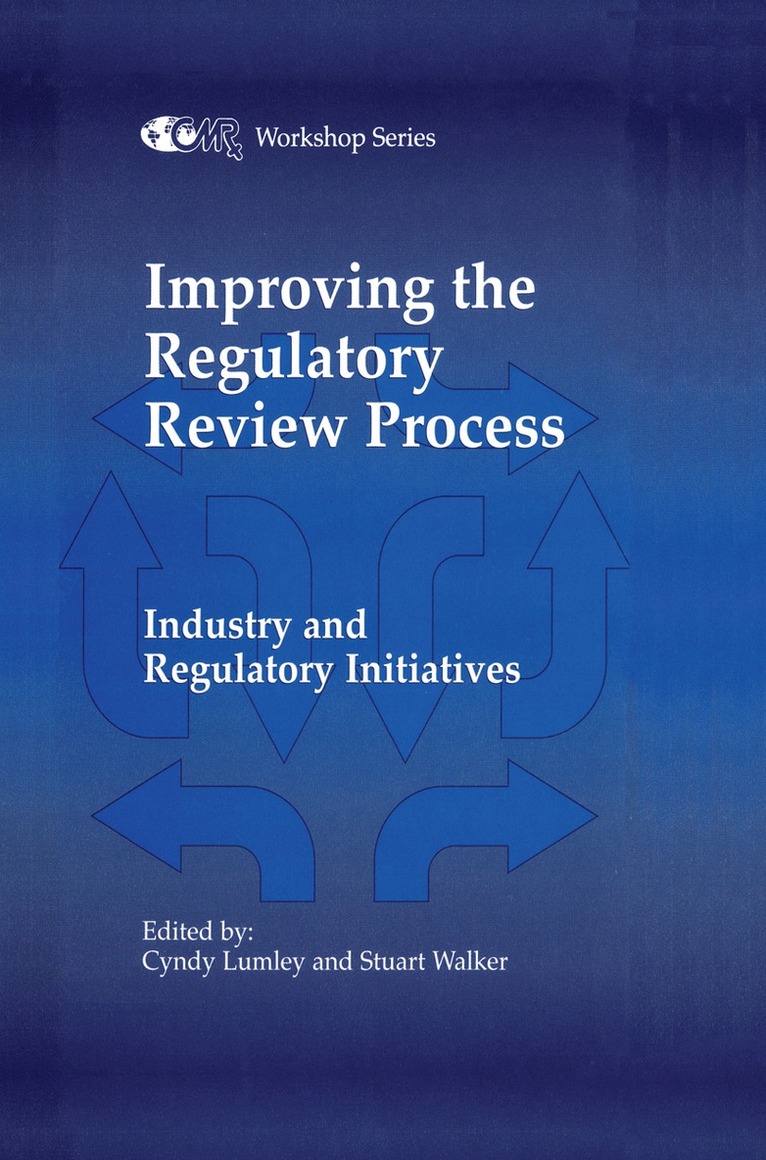
Regulatory review is the last major development hurdle that must be passed by a new medicine before it reaches the market. At a time when pharmaceutical companies are reviewing their R&D strategies, and attempting to reduce drug development times, it is extremely important that the review process is made as efficient as possible. The 11th CMR Workshop, held in September 1995, provided the opportunity for regulatory authority and industry personnel from Europe, North America, Australia and Japan to openly discuss views and exchange experiences on the subject of improving the review process. The proceedings of this meeting provide a comprehensive overview of the current review process around the world. The contributors describe the present situation and highlight company strategies and regulatory initiatives to improve the review process. This volume also summarises the suggestions that were developed by the participants, covering many facets of this process, including the quality and size of the dossier, dialogue, submission strategies, feedback and the response to questions.
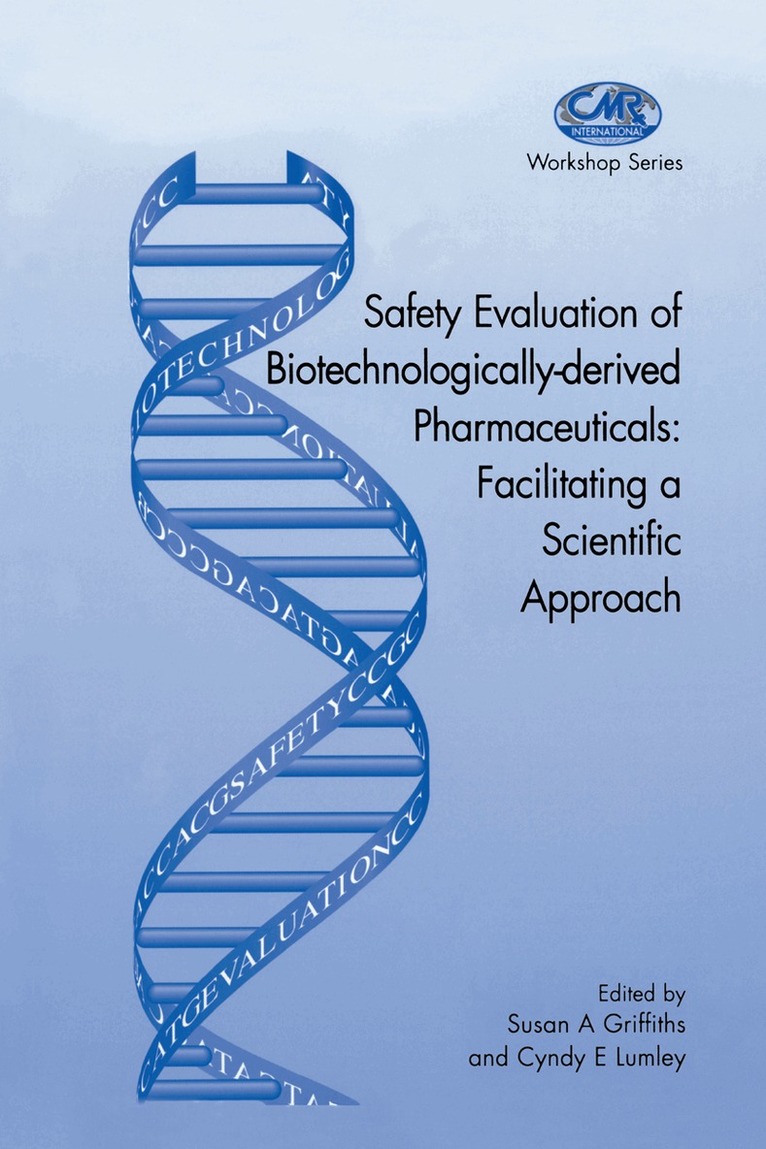
Safety Evaluation of Biotechnologically-derived Pharmaceuticals
Facilitating a Scientific Approach
Inbunden, Engelska, 1998
1 096 kr
Skickas inom 10-15 vardagar
Considerable investment has been made by both pharmaceutical and biotechnology companies in pharmaceutical products of biotechnology. However, because relatively few of these products have been marketed, lack of relevant experience means that uncertainty still surrounds the most appropriate strategy for their safety evaluation. The 13th CMR International Workshop, held in February 1997, provided the opportunity for regulatory authority and industry experts from Europe, Japan and the USA to share their experiences of designing safety evaluation programmes for specific product classes: colony stimulating factors, growth factors, hormones, interferons, interleukins, monoclonal antibodies for therapeutic use, and gene therapy products. Participants worked together to recommend those studies that should be considered for such safety evaluation, and those that may be unnecessary. These recommendations subsequently made a valuable contribution to the ICH guideline "Safety Studies for Biotechnological Products", which was finalized at ICH 4 in Brussels in July 1997.
1 096 kr
Skickas inom 10-15 vardagar
The timing of toxicological studies in relation to the clinical evaluation of new medicines is a key topic for strategic planners in the industry and those involved with harmonization. Resolving the anomalies between different regulatory authorities should eliminate redundant testing on animals and improve the efficiency of the developmental process by encouraging single international strategies. To aid industry in reaching a consensus, the Centre for Medicines Research has brought together representatives of the pharmaceutical industry from Europe, Japan and the USA to give a comprehensive account of current international industry positions on the subject. The contributions in this text review the situation and address the clinical and strategic requirements of the pre-clinical programme. Personal and consensus proposals on the toxicity studies required to initiate clinical investigations, the timing of reproductive toxicity tests and the duration of repeat-dose studies to support clinical development are provided.
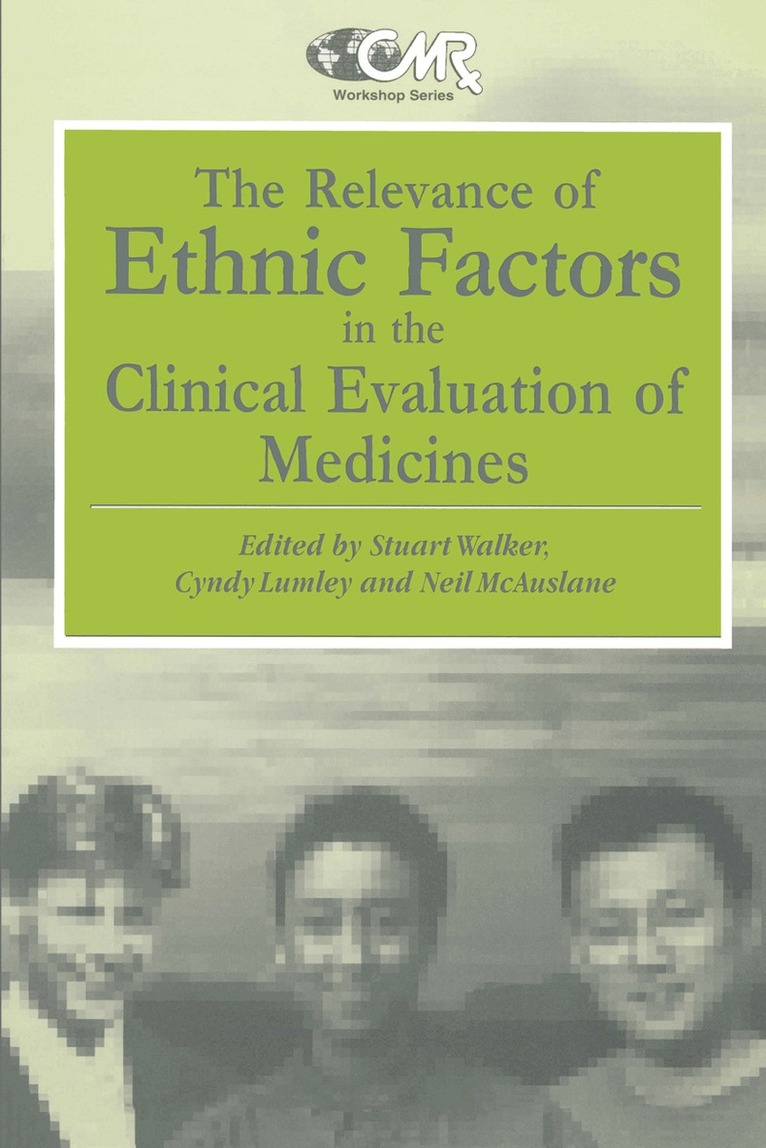
Relevance of Ethnic Factors in the Clinical Evaluation of Medicines
Proceedings of a Workshop held at The Medical Society of London, UK, 7th and 8th July, 1993
Häftad, Engelska, 2012
552 kr
Skickas inom 10-15 vardagar
For a research-based pharmaceutical company to be successful in the 1990s. it must have a strategic plan for the global development of new chemical entities. Global development can be defined as an attempt to reach all major markets as rapidly as possible and for many companies these will include the United States. Japan. Germany. France. Italy. UK and Canada. which together represent approximately 85% of the pharmaceutical market in the developed world. The mutual acceptance of foreign clinical data would reduce the time and resources required to develop a new medicine for the international market by eliminating the requirement for the routine repetition of clinical studies in local populations. In Japan this has been largely based on the belief that genetic differences in respon siveness may result in a different benefit/risk assessment for a new mediCine. while requests in Europe and the United States for local data relate mainly to methodological and cultural considerations. The importance of this issue has been recognised internationally as it was one of the topics discussed at the International Conference on Harmonisation in Orlando (October 1993) and it is currently on the programme for ICH3 which will be convened in Yokohama in Japan in November 1995.
1 096 kr
Skickas inom 10-15 vardagar
Over the past twelve years, the Centre for Medicines Research has held a series of Workshops on a number of topics related to the drug discovery and development process. The major objective of these Workshops has been to provide an international forum for regula tory, academic and industry representatives to debate together, and suggest solutions to, specific problems. The meeting reported in this volume represents a departure from this approach, in that the par ticipants were drawn largely from the pharmaceutical industry. Senior clinicians, pharmacologists and toxicologists from companies in Europe, the USA and Japan met in May 1994 to discuss a scientific rationale for the conduct of toxicity studies to support the clinical development of new medicines, and to begin to work towards an industry consensus. Achievement of such a consensus is seen as an important step in the process leading towards international harmon isation of the recommendations on the timing of toxicity studies in relation to clinical trials.
Safety Evaluation of Biotechnologically-derived Pharmaceuticals
Facilitating a Scientific Approach
Häftad, Engelska, 2012
979 kr
Skickas inom 10-15 vardagar
Considerable investment has been made by both pharmaceutical and biotechnology companies in pharmaceutical products of biotechnology. However, because relatively few of these products have been marketed, lack of relevant experience means that uncertainty still surrounds the most appropriate strategy for their safety evaluation. The 13th CMR International Workshop, held in February 1997, provided the opportunity for regulatory authority and industry experts from Europe, Japan and the USA to share their experiences of designing safety evaluation programmes for specific product classes: colony stimulating factors, growth factors, hormones, interferons, interleukins, monoclonal antibodies for therapeutic use, and gene therapy products. Participants worked together to recommend those studies that should be considered for such safety evaluation, and those that may be unnecessary. These recommendations subsequently made a valuable contribution to the ICH guideline `Safety Studies for Biotechnological Products', which was finalised at ICH 4 in Brussels in July 1997. The Workshop proceedings not only describe the recommendations but also provide the reader with an appreciation of the science behind safety evaluation strategies used by experts, the influence of different regulatory systems on these strategies, and the type of data required by both toxicologists and clinicians before they have sufficient confidence to administer pharmaceutical products of biotechnology to humans.
1 465 kr
Skickas inom 10-15 vardagar
Regulatory review is the last major development hurdle that must be passed by a new medicine before it reaches the market. At a time when pharmaceutical companies are reviewing their R&D strategies, and attempting to reduce drug development times, it is extremely important that the review process is made as efficient as possible. The 11th CMR Workshop, held in September 1995, provided the opportunity for regulatory authority and industry personnel from Europe, North America, Australia and Japan to openly discuss views and exchange experiences on the subject of improving the review process. The proceedings of this meeting provide a comprehensive overview of the current review process around the world. The contributors describe the present situation and highlight company strategies and regulatory initiatives to improve the review process. This volume also summarises the suggestions that were developed by the participants, covering many facets of this process, including the quality and size of the dossier, dialogue, submission strategies, feedback and the response to questions.