C. R. Calladine – författare
Visar alla böcker från författaren C. R. Calladine. Handla med fri frakt och snabb leverans.
5 produkter
5 produkter
Häftad, Engelska, 1989
908 kr
Skickas inom 7-10 vardagar
Shell structures form key components in a very wide range of engineering enterprise. The theory of shell structures is an old and large subject, with a huge literature. However, this book is not a compilation of results from the past. Instead, it is an attempt to bring the essence of the subject within the grasp of engineers. It tackles the fundamental question of how bending and stretching effects combine and interact in shell structures from a physical point of view; and it shows that this approach leads to an understanding of the structural mechanics of shells in general, and to useful results in particular problems. The first half of the book is concerned mainly with the basic ideas and equations of equilibrium, geometry and elasticity, and their combination in various useful ways. In particular, it includes a simple treatment of the geometry of general curved surfaces. The second half of the book first investigates the behaviour of various practical shell structures under static loading. Then there are chapters on the buckling of shells, on vibration, and on the application of plastic theory to analysis and design.
E-bok
PDF, Engelska, 20001 345 kr
Läs direkt efter köp
This book focuses on the plastic property of materials, and the way in which structures made of such material behave under load. It is intended for civil, mechanical, electro-mechanical, marine, and aeronautical engineers for under-graduate or post-graduate courses or research, and professionals in industry. Professor Calladine, from long experience in teaching, research and industry, here delivers a readable and authoritative account of theory and applications. He presents the classical "perfect plasticity material" as a model of irreversible mechanical behaviour, using this perfect plasticity property to analyse a range of continuum structural problems and metal-forming processes relevant to engineering practice.
E-bok
PDF, Engelska, 2016783 kr
Läs direkt efter köp
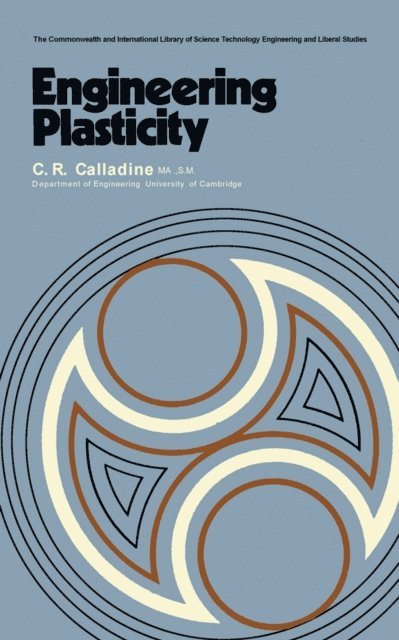
Engineering Plasticity focuses on certain features of the theory of plasticity that are particularly appropriate to engineering design. Topics covered range from specification of an ideal plastic material to the behavior of structures made of idealized elastic-plastic material, theorems of plastic theory, and rotating discs. Torsion, indentation problems, and slip-line fields are also discussed. This book consists of 12 chapters and begins by providing an engineering background for the theory of plasticity, with emphasis on the use of metals in structural engineering and the nature of physical theories. The reader is then introduced to the general problem of how to set up a model of the plastic behavior of metal for use in analysis and design of structures and forming processes, paying particular attention to the plastic deformation that occurs when a specimen of metal is stressed. Subsequent chapters explore the behavior of a simple structure made of elastic-plastic material; theorems of plastic theory; rotating discs; and indentation problems. Torsion, slip-line fields, and circular plates under transverse loading are also considered, along with wire-drawing and extrusion and the effects of changes in geometry on structure. This monograph is intended for students of engineering.
E-bok
PDF, Engelska, 2013783 kr
Läs direkt efter köp
Engineering Plasticity deals with certain features of the theory of plasticity that can be applied to engineering design. Topics covered range from specification of an ideal plastic material to the behavior of structures made of idealized elastic-plastic material, theorems of plastic theory, and rotating discs, along with torsion, indentation problems, and slip-line fields. This book consists of 12 chapters and begins by providing an engineering background for the theory of plasticity, with emphasis on the use of metals in structural engineering; the nature of physical theories; and the conceptual simplicity and power of plastic theory. The next chapter explains how to set up a model of the plastic behavior of metal for use in analysis and design of structures and forming processes, paying particular attention to the plastic deformation that occurs when a specimen of metal is stressed. Subsequent chapters focus on the behavior of a simple structure made of elastic-plastic material; theorems of plastic theory; rotating discs; and indentation problems. Torsion, slip-line fields, and circular plates under transverse loading are also discussed, together with wire-drawing and extrusion and the effects of changes in geometry on structure. This monograph is written primarily for engineering students.
Häftad, Engelska, 2000
1 241 kr
Skickas inom 10-15 vardagar
This book focuses on the plastic property of materials, and the way in which structures made of such material behave under load. It is intended for civil, mechanical, electro-mechanical, marine, and aeronautical engineers for under-graduate or post-graduate courses or research, and professionals in industry. Professor Calladine, from long experience in teaching, research and industry, here delivers a readable and authoritative account of theory and applications. He presents the classical "perfect plasticity material" as a model of irreversible mechanical behaviour, using this perfect plasticity property to analyse a range of continuum structural problems and metal-forming processes relevant to engineering practice.