C. Reid Nichols - Böcker
Visar alla böcker från författaren C. Reid Nichols. Handla med fri frakt och snabb leverans.
6 produkter
6 produkter
809 kr
Skickas inom 10-15 vardagar
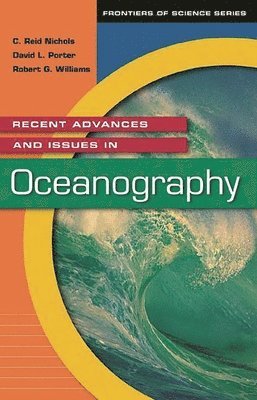
This volume describes and evaluates the major current research developments in the ocean sciences. Topics include advances in measuring ocean phenomena from space, ^Iin situ^R instruments, and the development of fully integrated observing systems that allow investigators to take environmental snapshots of areas that must be monitored in order to protect property and save lives. The authors emphasize that today's successful oceanographic programs rely on multidisciplinary, integrated, and task-organized teams of varying professionals, marine technicians, and oceanographers.Also discussed are the World Wide Web, distributed databases, and computer models that allow research and operational oceanographers to share information to build useful products and make new discoveries.
1 487 kr
Skickas inom 10-15 vardagar
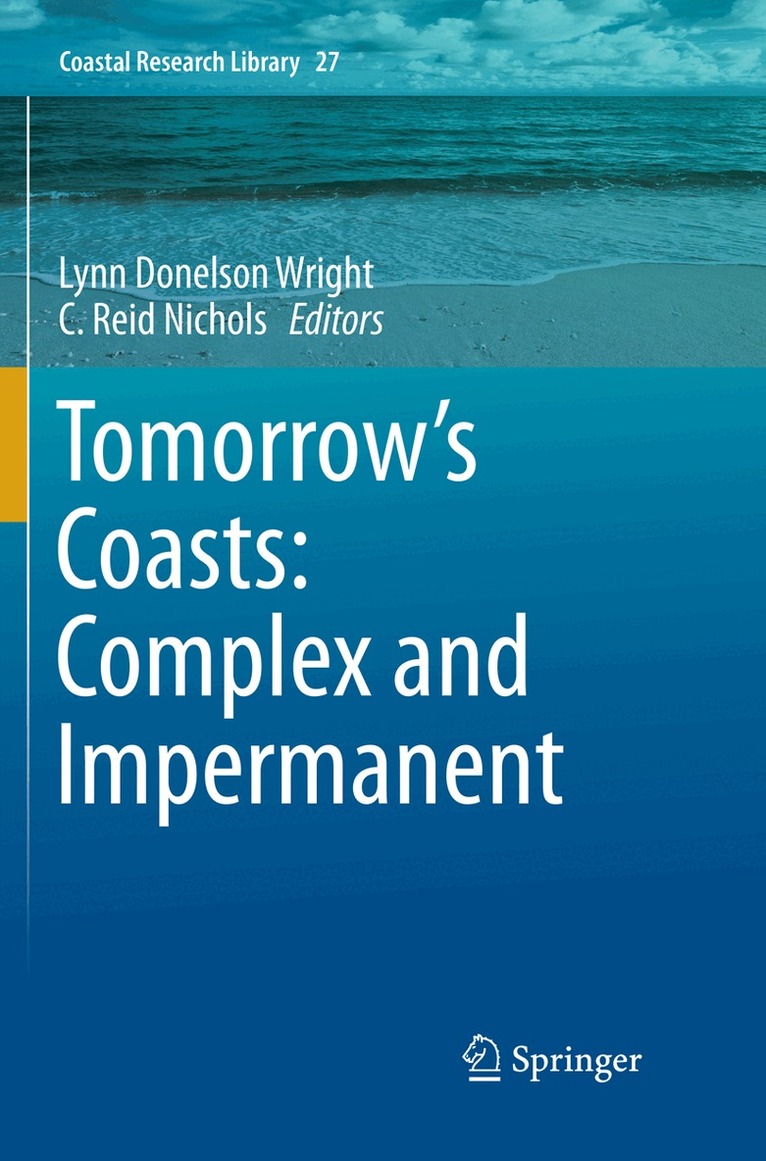
This book is intended as a conceptual roadmap to show how some of the numerous pieces of complex coastal systems intersect and might interact under changing future environmental regimes. It is addressed to a non-technical but environmentally literate audience that includes the lay public, policy makers, planners, engineers and academics interested in the causes and consequences of global changes as they are likely to affect coastal systems. The book also outlines some strategies for anticipating and responding to the challenges that lie ahead.The purpose is not to offer a technical treatise on how to build better numerical models or to provide the cognoscenti with new scientific details or theories. Quite on the contrary the authors aim to provide a holistic, easy-accessible overview of coastal systems and therefore use a writing style that is non-technical, nonmathematical and non-jargonized throughout. Wherever scientificterms are required to avoid ambiguity, a clear and simple definition is presented and those definitions are repeated in the glossary. The authors aim to communicate with all who care about the future of coastal environments.In Part 1, they present some underlying general “big picture” concepts that are applicable to coastal processes and coastal change worldwide. Part 2 reviews some of the more important physical, ecological and societal causes and outcomes of coastal change. A selection of case studies of some prominent and highly vulnerable coastal regions is presented in Part 3. Some strategies for facilitating and supporting collaboration among the global scientific community to enhance future coastal resilience are outlined in Part 4.
356 kr
Skickas inom 10-15 vardagar
The use of environmental data to support science, technology, and marine operations has evolved dramatically owing to long-term ocean observatories, unmanned platforms, satellite and coastal remote sensing, data assimilative numerical models, and high-speed communications. Actionable environmental information is regularly produced and communicated from quality-controlled measurements and skillful forecasts. The characterization of complex oceanographic processes is more difficult compared to inland features because of the difficulty in obtaining observations from often remote and hazardous locations. Regardless, coastal and ocean engineering projects and operations require the collection and analysis of meteorological and oceanographic data to fill information gaps and the running of numerical models to characterize regions of interest. Data analytics are also essential to integrate disparate marine data from national archives, in situ sensors, imagery, and numerical models to meet project requirements. Holistic marine environmental characterization is essential for data-driven decision making across the science and engineering lifecycle (e.g., research, production, operations, end-of-life).Many marine science and technology projects require the employment of an array of instruments and models to characterize spatially and temporally variable processes that may impact operations. Since certain environmental conditions will contribute to structural damage or operational disturbances, they are described using statistical parameters that have been standardized for engineering purposes. The statistical description should describe extreme conditions as well as long- and short-term variability. These data may also be used to verify and validate models and simulations. Environmental characterization covers the region where engineering projects or maritime operations take place. For vessels that operate across a variety of seaways, marine databases and models are essential to describe environmental conditions. Data, which are used for design and operations, must cover a sufficiently long time period to describe seasonal to sub-seasonal variations, multi-year, decadal, multi-decadal, and even climatological factors such as sea level rise, coastal winds, waves, and global ocean temperatures. Combined data types are essential for the computation of environmental loads for the region of interest. Typical factors include winds, waves, currents, and tides. Some regions may require consideration of biofouling, earthquakes, ice, salinity, soil conditions, temperature, tsunami, and visibility. Observations are also used for numerical forecasts, but errors may exist due to inexact physical assumptions and/or inaccurate initial data, which can cause errors to grow to unacceptable levels with increased forecasting times. Overall, marine environmental characterization tools, from observational data to numerical modeling, are critical to today's science, engineering, and marine operational disciplines.
588 kr
Skickas inom 10-15 vardagar
Resilient approaches involve assessing risk and vulnerability, identifying solutions to reduce risks, implementing viable solutions, and assessment.
588 kr
Skickas inom 10-15 vardagar
The potential for natural hazards and vulnerability to these threats varies from community to community. Adaptation will require ongoing monitoring of the natural and built-up environments and the development of policies, structures, and approaches to ensure resilient communities. Resilient approaches involve assessing risk and vulnerability, identifying solutions to reduce risks, implementing viable solutions, and assessment. Owing to past damages from extreme weather, countries around the world are making significant investments in coastal infrastructure that will reduce risks from disasters that are exacerbated by climatic changes.
1 487 kr
Skickas inom 10-15 vardagar
The authors aim to communicate with all who care about the future of coastal environments. In Part 1, they present some underlying general “big picture” concepts that are applicable to coastal processes and coastal change worldwide.