C. Thi Nguyen – författare
Visar alla böcker från författaren C. Thi Nguyen. Handla med fri frakt och snabb leverans.
11 produkter
11 produkter
Inbunden, Engelska, 2026
258 kr
Skickas
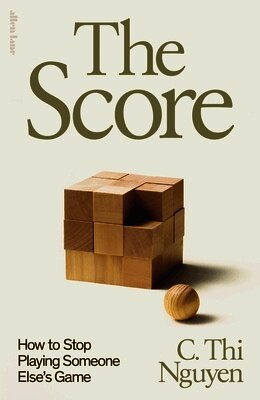
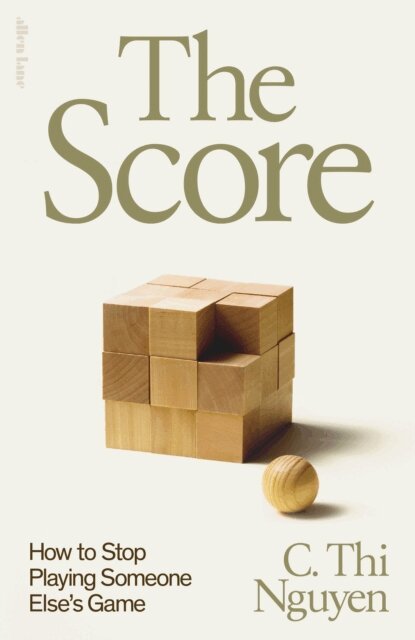
'Lucid, entertaining and precise... a brilliant warning about the gamification of everyday life' Tim Clare, GuardianIs this the game you want to be playing?Scoring systems are everywhere. Underpinning our daily lives – whether it’s the fit bits on our wrists, likes on social media, and even school rankings – they have become pervasive and increasingly dangerous, warping our desires and outsourcing our values to external institutions. Instead of encouraging us to be more playful, to take pleasure in the journey of striving towards a goal, institutions, corporations and bureaucracies weaponize scoring systems to impose their own interests. No matter what, we always seem to be playing by someone else’s rules.In The Score, philosopher C. Thi Nguyen shows us how this newly ‘gamified’ world has fundamentally captured our value systems, turning what might be moral or personal life choices into numerical data, and forcing us to prioritise what can be measured and monetized over what is truly meaningful to us.A life-long lover of online and board games himself, Nguyen argues that we should not stop playing games but rather take a step back and become more aware of their immersive and profound power, so that we might chart a way towards more creative and joyful lives. To start playing our own game.
Häftad, Engelska, 2025
234 kr
Skickas inom 5-8 vardagar
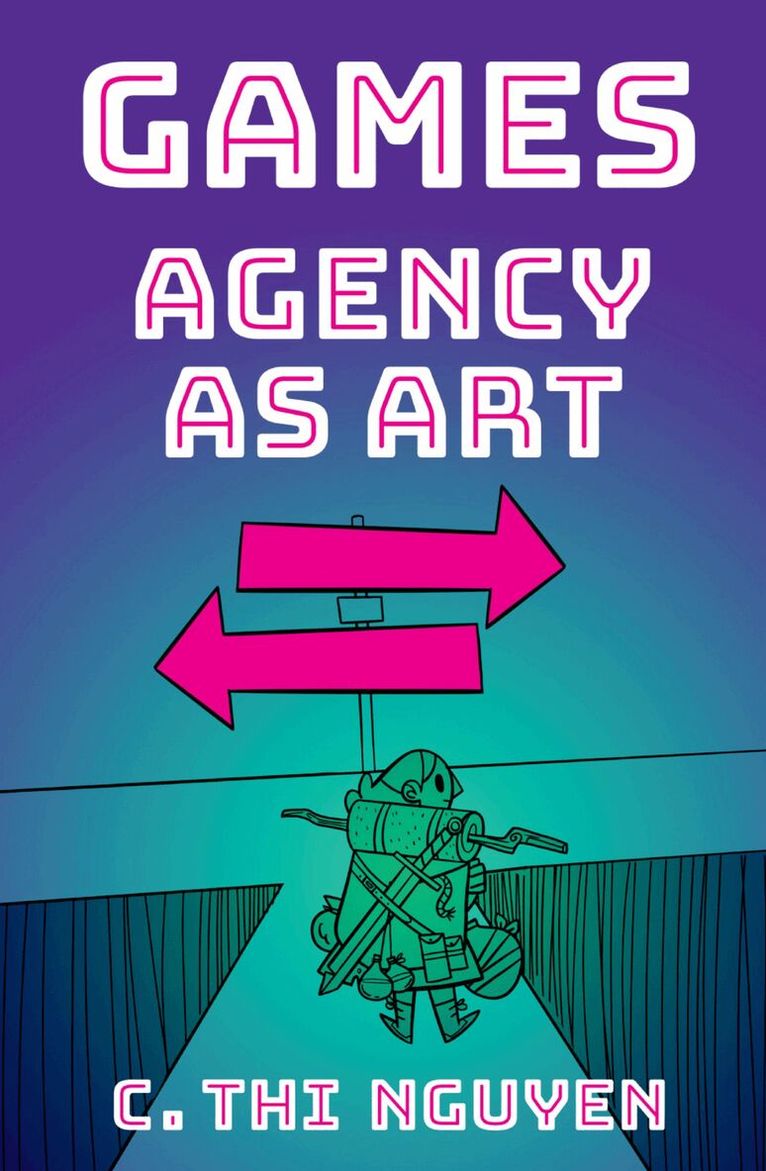
Games are a unique art form. Games work in the medium of agency. Game designers tell us who to be and what to care about during the game. Game designers sculpt alternate agencies, and game players submerge themselves in those alternate agencies. Thus, the fact that we play games demonstrates the fluidity of our own agency. We can throw ourselves, for a little while, into a different and temporary motivations. This volume presents a new theory of games which insists on their unique value. C. Thi Nguyen argues that games are an integral part our systems of communication and our art. Games sculpt our practical activities, allowing us to experience the beauty of our own actions and reasoning. Bridging aesthetics and practical reasoning, he gives an account of the special motivational structure involved in playing games. When we play games, we can pursue a goal, not for its own value, but for the value of the struggle. Thus, playing games involves a motivational inversion from normal life. We adopt an interest in winning temporarily, so we can experience the beauty of the struggle. Games offer us a temporary experience of life under utterly clear values, in a world engineered to fit to our abilities and goals.Games also let us to experience forms of agency we might never have developed on our own. Games, it turns out, are a special technique for communication. They are a technology that lets us record and transmit forms of agency. Our games form a "library of agency" and we can explore that library to develop our autonomy. Games use temporary restrictions to force us into new postures of agency.
Inbunden, Engelska, 2020
366 kr
Skickas inom 5-8 vardagar
Games are a unique art form. Games work in the medium of agency. Game designers tell us who to be and what to care about during the game. Game designers sculpt alternate agencies, and game players submerge themselves in those alternate agencies. Thus, the fact that we play games demonstrates the fluidity of our own agency. We can throw ourselves, for a little while, into a different and temporary motivations. This volume presents a new theory of games which insists on their unique value. C. Thi Nguyen argues that games are an integral part our systems of communication and our art. Games sculpt our practical activities, allowing us to experience the beauty of our own actions and reasoning. Bridging aesthetics and practical reasoning, he gives an account of the special motivational structure involved in playing games. When we play games, we can pursue a goal, not for its own value, but for the value of the struggle. Thus, playing games involves a motivational inversion from normal life. We adopt an interest in winning temporarily, so we can experience the beauty of the struggle. Games offer us a temporary experience of life under utterly clear values, in a world engineered to fit to our abilities and goals.Games also let us to experience forms of agency we might never have developed on our own. Games, it turns out, are a special technique for communication. They are a technology that lets us record and transmit forms of agency. Our games form a "library of agency" and we can explore that library to develop our autonomy. Games use temporary restrictions to force us into new postures of agency.
E-bok
PDF, Engelska, 2020351 kr
Läs direkt efter köp
Games are a unique art form. Games work in the medium of agency. Game designers tell us who to be and what to care about during the game. Game designers sculpt alternate agencies, and game players submerge themselves in those alternate agencies. Thus, the fact that we play games demonstrates the fluidity of our own agency. We can throw ourselves, for a little while, into a different and temporary motivations.This volume presents a new theory of games which insists on their unique value. C. Thi Nguyen argues that games are an integral part our systems of communication and our art. Games sculpt our practical activities, allowing us to experience the beauty of our own actions and reasoning. Bridging aesthetics and practical reasoning, he gives an account of the special motivational structure involved in playing games. When we play games, we can pursue a goal, not for its own value, but for the value of the struggle. Thus, playing games involves a motivational inversion from normal life. We adopt an interest in winning temporarily, so we can experience the beauty of the struggle. Games offer us a temporary experience of life under utterly clear values, in a world engineered to fit to our abilities and goals.Games also let us to experience forms of agency we might never have developed on our own. Games, it turns out, are a special technique for communication. They are a technology that lets us record and transmit forms of agency. Our games form a "library of agency" and we can explore that library to develop our autonomy. Games use temporary restrictions to force us into new postures of agency.
E-bok
Engelska, 2020351 kr
Läs direkt efter köp
Games are a unique art form. Games work in the medium of agency. Game designers tell us who to be and what to care about during the game. Game designers sculpt alternate agencies, and game players submerge themselves in those alternate agencies. Thus, the fact that we play games demonstrates the fluidity of our own agency. We can throw ourselves, for a little while, into a different and temporary motivations.This volume presents a new theory of games which insists on their unique value. C. Thi Nguyen argues that games are an integral part our systems of communication and our art. Games sculpt our practical activities, allowing us to experience the beauty of our own actions and reasoning. Bridging aesthetics and practical reasoning, he gives an account of the special motivational structure involved in playing games. When we play games, we can pursue a goal, not for its own value, but for the value of the struggle. Thus, playing games involves a motivational inversion from normal life. We adopt an interest in winning temporarily, so we can experience the beauty of the struggle. Games offer us a temporary experience of life under utterly clear values, in a world engineered to fit to our abilities and goals.Games also let us to experience forms of agency we might never have developed on our own. Games, it turns out, are a special technique for communication. They are a technology that lets us record and transmit forms of agency. Our games form a "library of agency" and we can explore that library to develop our autonomy. Games use temporary restrictions to force us into new postures of agency.
E-bok
Engelska, 2026161 kr
Läs direkt efter köp
'Lucid, entertaining and precise... a brilliant warning about the gamification of everyday life' Tim Clare, GuardianIs this the game you want to be playing?Scoring systems are everywhere. Underpinning our daily lives – whether it’s the fit bits on our wrists, likes on social media, and even school rankings – they have become pervasive and increasingly dangerous, warping our desires and outsourcing our values to external institutions. Instead of encouraging us to be more playful, to take pleasure in the journey of striving towards a goal, institutions, corporations and bureaucracies weaponize scoring systems to impose their own interests. No matter what, we always seem to be playing by someone else’s rules.In The Score, philosopher C. Thi Nguyen shows us how this newly ‘gamified’ world has fundamentally captured our value systems, turning what might be moral or personal life choices into numerical data, and forcing us to prioritise what can be measured and monetized over what is truly meaningful to us.A life-long lover of online and board games himself, Nguyen argues that we should not stop playing games but rather take a step back and become more aware of their immersive and profound power, so that we might chart a way towards more creative and joyful lives. To start playing our own game.
Inbunden, Engelska, 2026
326 kr
Skickas inom 3-6 vardagar
E-bok
Engelska, 2025844 kr
Läs direkt efter köp
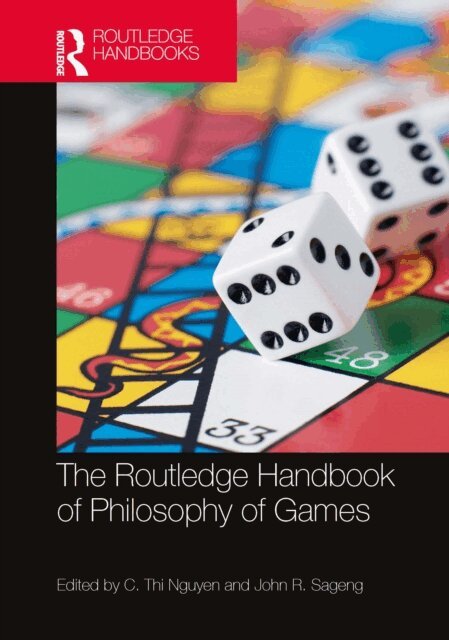
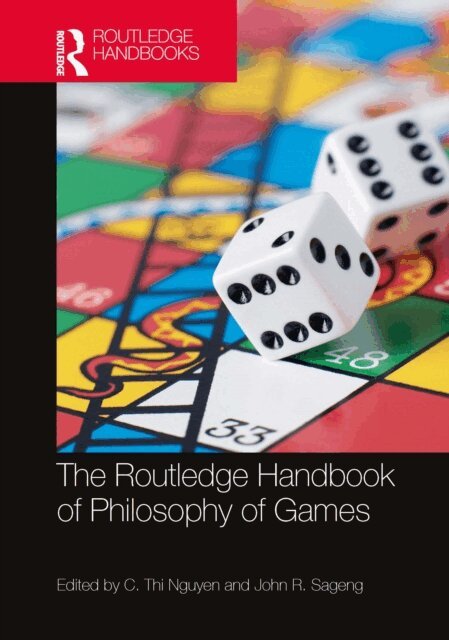
Playing games is a basic human activity, and games raise a great number of fascinating philosophical questions. What, exactly, are we doing when we play a game? What is the value of games for human life? What is the ontology of a game? And could games be, or someday become, a form of art?Comprising twenty-seven chapters by an international team of contributors, The Routledge Handbook of Philosophy of Games is an outstanding reference source to the core concepts, problems and debates in this exciting subject, and is the first collection of its kind. Beginning with an Introduction by the editors, the Handbook is divided into five clear parts: Introduction and historical foundations Game ontology Play and players Aesthetics of games Ethics and values of games Within these sections key topics are examined, including sport and games; rules in games; cheating in games; simulation; narrative in games; space in videogames; the nature of play; the body and play; avatars; the aesthetics of gameplay; violence; immersion; representation in games; race and gender in games; and many more.The Routledge Handbook of Philosophy of Games is essential reading for students and researchers working in philosophy of games, philosophy of sport, digital aesthetics and game studies.
E-bok
PDF, Engelska, 2025844 kr
Läs direkt efter köp
Playing games is a basic human activity, and games raise a great number of fascinating philosophical questions. What, exactly, are we doing when we play a game? What is the value of games for human life? What is the ontology of a game? And could games be, or someday become, a form of art?Comprising twenty-seven chapters by an international team of contributors, The Routledge Handbook of Philosophy of Games is an outstanding reference source to the core concepts, problems and debates in this exciting subject, and is the first collection of its kind. Beginning with an Introduction by the editors, the Handbook is divided into five clear parts: Introduction and historical foundations Game ontology Play and players Aesthetics of games Ethics and values of games Within these sections key topics are examined, including sport and games; rules in games; cheating in games; simulation; narrative in games; space in videogames; the nature of play; the body and play; avatars; the aesthetics of gameplay; violence; immersion; representation in games; race and gender in games; and many more.The Routledge Handbook of Philosophy of Games is essential reading for students and researchers working in philosophy of games, philosophy of sport, digital aesthetics and game studies.
Häftad, Engelska, 2027
146 kr
Kommande
'Lucid, entertaining and precise... a brilliant warning about the gamification of everyday life' Tim Clare, GuardianIs this the game you want to be playing?Scoring systems are everywhere. Underpinning our daily lives – whether it’s the fit bits on our wrists, likes on social media, and even school rankings – they have become pervasive and increasingly dangerous, warping our desires and outsourcing our values to external institutions. Instead of encouraging us to be more playful, to take pleasure in the journey of striving towards a goal, institutions, corporations and bureaucracies weaponize scoring systems to impose their own interests. No matter what, we always seem to be playing by someone else’s rules.In The Score, philosopher C. Thi Nguyen shows us how this newly ‘gamified’ world has fundamentally captured our value systems, turning what might be moral or personal life choices into numerical data, and forcing us to prioritise what can be measured and monetized over what is truly meaningful to us.A life-long lover of online and board games himself, Nguyen argues that we should not stop playing games but rather take a step back and become more aware of their immersive and profound power, so that we might chart a way towards more creative and joyful lives. To start playing our own game.
Inbunden, Tyska, 2026
316 kr
Skickas inom 3-6 vardagar