CA(c)cile Fabre – författare
Visar alla böcker från författaren CA(c)cile Fabre. Handla med fri frakt och snabb leverans.
5 produkter
5 produkter
E-bok
Engelska, 2014773 kr
Läs direkt efter köp
Most of us take it for granted that wars in defence of one''s political community are the quintessential just wars. Indeed, while in recent years philosophers have subjected all of our other assumptions about just war theory to radical revision, this principle has emerged largely unscathed. But what underpins the morality of defensive war? In this book, leading moral and political philosophers both show the profoundly challenging nature of that question, and advance novel answers to it. The first part exposes the deep tension between the individualist foundations of much contemporary philosophy and plausible conclusions about the morality of defensive war. The second part offers an individualist attempt to resolve that tension, while the third seeks to justify defensive war by appeal to more collectivist values.
E-bok
PDF, Engelska, 2014730 kr
Läs direkt efter köp
Most of us take it for granted that wars in defence of one''s political community are the quintessential just wars. Indeed, while in recent years philosophers have subjected all of our other assumptions about just war theory to radical revision, this principle has emerged largely unscathed. But what underpins the morality of defensive war? In this book, leading moral and political philosophers both show the profoundly challenging nature of that question, and advance novel answers to it. The first part exposes the deep tension between the individualist foundations of much contemporary philosophy and plausible conclusions about the morality of defensive war. The second part offers an individualist attempt to resolve that tension, while the third seeks to justify defensive war by appeal to more collectivist values.
E-bok
PDF, Engelska, 2022336 kr
Läs direkt efter köp
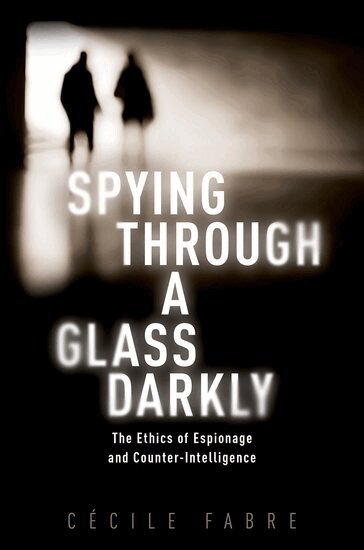
Cécile Fabre draws back the curtain on the ethics of espionage and counterintelligence.Espionage and counter-intelligence activities, both real and imagined, weave a complex and alluring story. Yet there is hardly any serious philosophical work on the subject. Cécile Fabre presents a systematic account of the ethics of espionage and counterintelligence. She argues that such operations, in the context of war and foreign policy, are morally justified as a means, but only as a means, to protect oneself and third parties from ongoing violations of fundamental rights. In doing so, she addresses a range of ethical questions: are intelligence officers morally permitted to bribe, deceive, blackmail, and manipulate as a way to uncover state secrets? Is cyberespionage morally permissible? Are governments morally permitted to resort to the mass surveillance of their and foreign populations as a means to unearth possible threats against national security? Can treason ever be morally permissible? Can it ever be legitimate to resort to economic espionage in the name of national security? The book offers answers to those questions through a blend of philosophical arguments and historical examples.
336 kr
Läs direkt efter köp
Cécile Fabre draws back the curtain on the ethics of espionage and counterintelligence.Espionage and counter-intelligence activities, both real and imagined, weave a complex and alluring story. Yet there is hardly any serious philosophical work on the subject. Cécile Fabre presents a systematic account of the ethics of espionage and counterintelligence. She argues that such operations, in the context of war and foreign policy, are morally justified as a means, but only as a means, to protect oneself and third parties from ongoing violations of fundamental rights. In doing so, she addresses a range of ethical questions: are intelligence officers morally permitted to bribe, deceive, blackmail, and manipulate as a way to uncover state secrets? Is cyberespionage morally permissible? Are governments morally permitted to resort to the mass surveillance of their and foreign populations as a means to unearth possible threats against national security? Can treason ever be morally permissible? Can it ever be legitimate to resort to economic espionage in the name of national security? The book offers answers to those questions through a blend of philosophical arguments and historical examples.
Häftad, Engelska, 2024
274 kr
Skickas inom 5-8 vardagar
Cécile Fabre draws back the curtain on the ethics of espionage and counterintelligence.Espionage and counter-intelligence activities, both real and imagined, weave a complex and alluring story. Yet there is hardly any serious philosophical work on the subject. Cécile Fabre presents a systematic account of the ethics of espionage and counterintelligence. She argues that such operations, in the context of war and foreign policy, are morally justified as a means, but only as a means, to protect oneself and third parties from ongoing violations of fundamental rights. In doing so, she addresses a range of ethical questions: are intelligence officers morally permitted to bribe, deceive, blackmail, and manipulate as a way to uncover state secrets? Is cyberespionage morally permissible? Are governments morally permitted to resort to the mass surveillance of their and foreign populations as a means to unearth possible threats against national security? Can treason ever be morally permissible? Can it ever be legitimate to resort to economic espionage in the name of national security? The book offers answers to those questions through a blend of philosophical arguments and historical examples.