Caleb Everett - Böcker
Visar alla böcker från författaren Caleb Everett. Handla med fri frakt och snabb leverans.
7 produkter
7 produkter
181 kr
Skickas inom 7-10 vardagar
“A fascinating book.”—James Ryerson, New York Times Book ReviewA Smithsonian Best Science Book of the YearWinner of the PROSE Award for Best Book in Language & LinguisticsCarved into our past and woven into our present, numbers shape our perceptions of the world far more than we think. In this sweeping account of how the invention of numbers sparked a revolution in human thought and culture, Caleb Everett draws on new discoveries in psychology, anthropology, and linguistics to reveal the many things made possible by numbers, from the concept of time to writing, agriculture, and commerce.Numbers are a tool, like the wheel, developed and refined over millennia. They allow us to grasp quantities precisely, but recent research confirms that they are not innate—and without numbers, we could not fully grasp quantities greater than three. Everett considers the number systems that have developed in different societies as he shares insights from his fascinating work with indigenous Amazonians.“This is bold, heady stuff… The breadth of research Everett covers is impressive, and allows him to develop a narrative that is both global and compelling… Numbers is eye-opening, even eye-popping.”—New Scientist“A powerful and convincing case for Everett’s main thesis: that numbers are neither natural nor innate to humans.”—Wall Street Journal
240 kr
Skickas
An award-winning look at the relationship between the language we speak and our perception of such fundamentals of experience as time, space, color, and smells.We tend to assume that all languages categorize ideas and objects similarly, reflecting our common human experience. But in fact many basic concepts are not universal. Speakers of different languages literally see and think about the world differently.Caleb Everett takes readers around the globe, explaining what linguistic diversity shows us about human culture. For instance, though we may think that everybody refers to time in spatial terms—in English, it “passes us by”—speakers of the Amazonian language Tupi Kawahib never do. In fact, Tupi Kawahib has no word for “time” at all. And while it has long been understood that languages categorize colors that speakers regularly encounter, evidence also suggests that the color words at our disposal affect how we actually perceive colors. Similarly, the terms available to us affect the range of smells we can identify.Why do some cultures talk anthropocentrically about things being to one’s “left” or “right,” while others use geocentric words like “east” and “west”? What is the connection between what we eat and the sounds we make? A Myriad of Tongues answers these and other questions, yielding profound insights into fundamentals of human communication and experience.
222 kr
Skickas inom 7-10 vardagar
"An assured guide" (New Scientist) to the relationship between the language we speak and our perception of such fundamentals of experience as time, space, color, and smells. We tend to assume that all languages categorize ideas and objects similarly, reflecting our common human experience. But this isn’t the case. When we look closely, we find that many basic concepts are not universal, and that speakers of different languages literally see and think about the world differently.Caleb Everett takes readers around the globe, explaining what linguistic diversity tells us about human culture, overturning conventional wisdom along the way. For instance, though it may seem that everybody refers to time in spatial terms—in English, for example, we speak of time “passing us by”—speakers of the Amazonian language Tupi Kawahib never do. In fact, Tupi Kawahib has no word for “time” at all. And while it has long been understood that languages categorize colors based on those that speakers regularly encounter, evidence suggests that the color words we have at our disposal affect how we discriminate colors themselves: a rose may not appear as rosy by any other name. What’s more, the terms available to us even determine the range of smells we can identify. European languages tend to have just a few abstract odor words, like “floral” or “stinky,” whereas Indigenous languages often have well over a dozen.Why do some cultures talk anthropocentrically about things being to one’s “left” or “right,” while others use geocentric words like “east” and “west”? What is the connection between what we eat and the sounds we make? A Myriad of Tongues answers these and other questions, yielding profound insights into the fundamentals of human communication and experience.
102 kr
Skickas inom 5-8 vardagar
1 754 kr
Skickas inom 5-8 vardagar
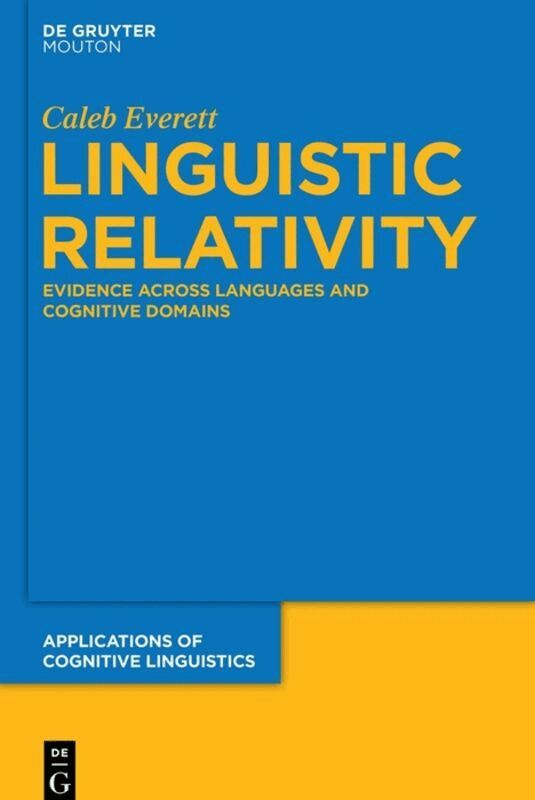
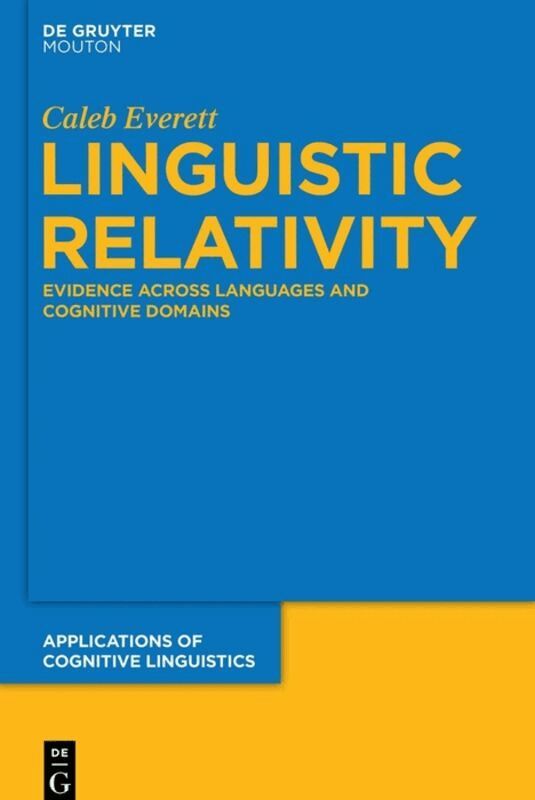
The claim that crosslinguistic disparities foster differences in nonlinguistic thought, often referred to as 'linguistic relativity', has for some time been the subject of intense debate. For much of that time the debate was not informed by much experimental work. Recently, however, there has been an explosion of research on linguistic relativity, carried out by numerous scholars interested in the interaction between language and nonlinguistic cognition. This book surveys the rapidly accruing research on this topic, much of it carried out in the last decade. Structured so as to be accessible to students and scholars in linguistics, psychology, and anthropology, it first introduces crucial concepts in the study of language and cognition. It then explores the relevant experimentally oriented research, focusing independently on the evidence for relativistic effects in spatial orientation, temporal perception, number recognition, color discrimination, object/substance categorization, gender construal, as well as other facets of cognition. This is the only book to extensively survey the recent work on linguistic relativity, and should serve as a critical resource for those concerned with the topic.
257 kr
Skickas inom 3-6 vardagar
The claim that crosslinguistic disparities foster differences in nonlinguistic thought, often referred to as 'linguistic relativity', has for some time been the subject of intense debate. For much of that time the debate was not informed by much experimental work. Recently, however, there has been an explosion of research on linguistic relativity, carried out by numerous scholars interested in the interaction between language and nonlinguistic cognition. This book surveys the rapidly accruing research on this topic, much of it carried out in the last decade. Structured so as to be accessible to students and scholars in linguistics, psychology, and anthropology, it first introduces crucial concepts in the study of language and cognition. It then explores the relevant experimentally oriented research, focusing independently on the evidence for relativistic effects in spatial orientation, temporal perception, number recognition, color discrimination, object/substance categorization, gender construal, as well as other facets of cognition. This is the only book to extensively survey the recent work on linguistic relativity, and should serve as a critical resource for those concerned with the topic.
299 kr
Skickas inom 3-6 vardagar