Camilla Perrone - Böcker
Visar alla böcker från författaren Camilla Perrone. Handla med fri frakt och snabb leverans.
3 produkter
3 produkter
1 378 kr
Skickas inom 7-10 vardagar
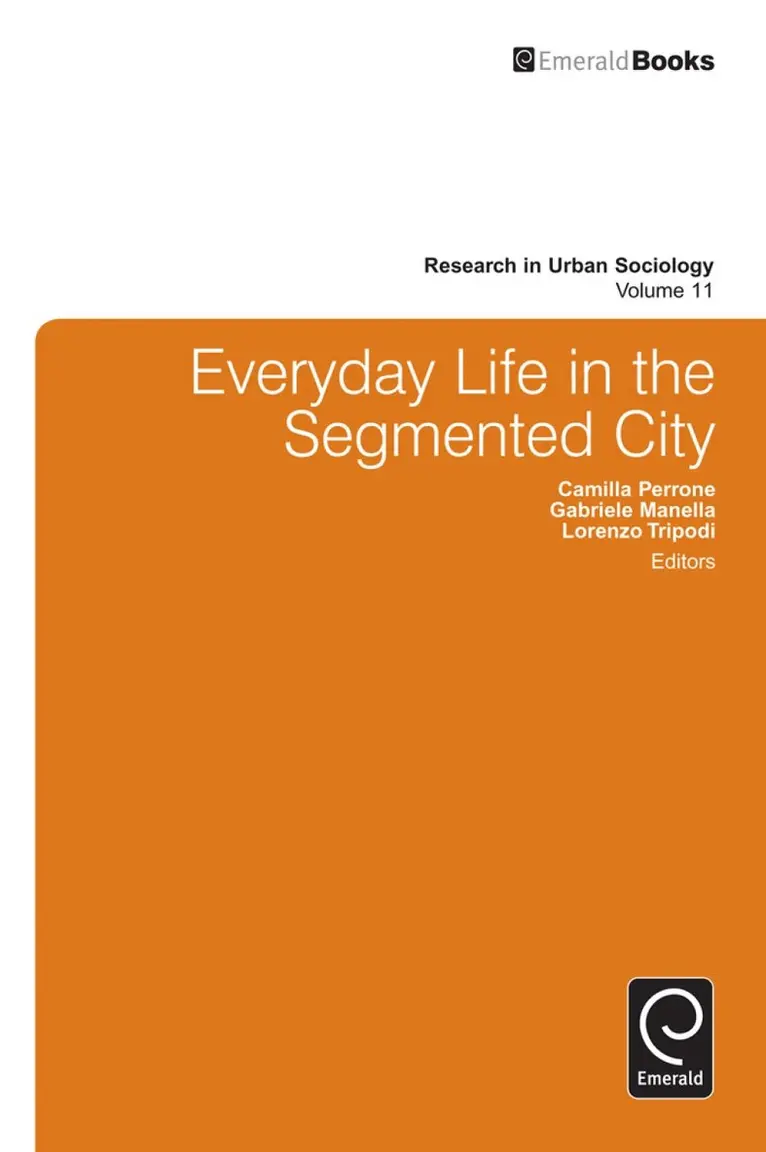
This volume of "Research in Urban Sociology" is composed of a selection of the papers presented at the conference "Everyday Life in the Segmented City" held in July 2010, Florence. The conference gathered a multiplicity of approaches and points of view dealing with issues of global urbanization. Urbanization is a phenomenon inscribed into the globalization process that has enormous consequences in the transformation of urban space and the everyday life of citizens, and is reflected also in the flourishing of an analytical discourse increasingly transcending the boundaries of established urban disciplines. The progressive extension of the urban domain beyond the limits of the city and across diverse scales has its corollary in the progressive segmentation of the urban dimension along multiple lines of physical, social, economic, cultural and ethnic nature. This volume focuses on the perspective of the everyday to analyze how practices and policy can overcome the spin towards fragmentation and anomie, and reinforce social cohesion for a more just and livable city, endorsing the "right to the city" as presented by the seminal work of Henri Lefebvre.
1 528 kr
Skickas inom 10-15 vardagar
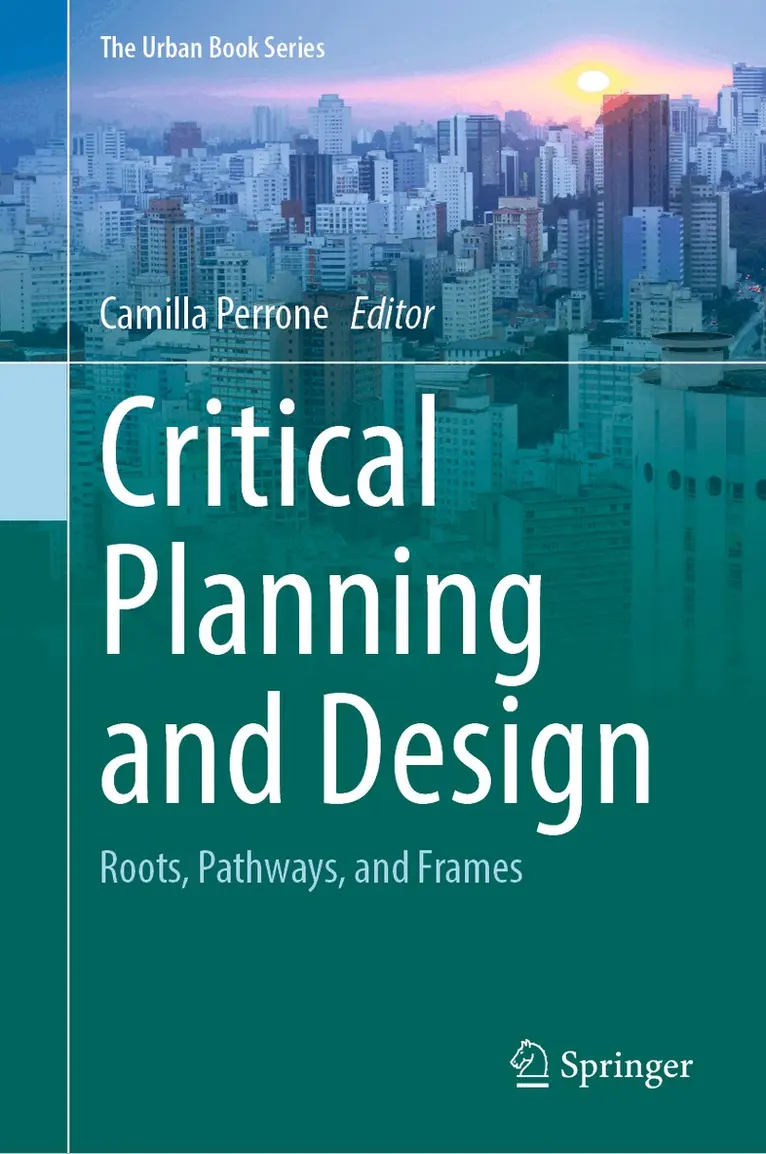
The book interprets and recombines, within a subjective trajectory, some roots, pathways and conceptual frames of the planning thought that worked either as dissenting imaginations or generative source to critically question the modernist epistemologies. ‘Critical planning and design’ is presented in this book as a field of research inspired by critical urban theory and developed along with ideas and theories that prove to be radical, alternative, dialectical to the mainstream history of planning.In this book, scholars present what they consider as the most important books in the field of planning, public policy and design. They have been asked to write about a book and its author, in their preferred manner. This freedom allowed passionate and original contributions.Three main threads - the three parts of the book - shape the choices of the authors. The first concerns the reconstruction of some genealogical roots of planning (including Cerdà, YonaFriedman, Alberto Magnaghi, and Ian McHarg). The second thread groups the authors who dialogue with contemporary protagonists of the planning debate (including John Friedmann, Leonie Sandercock, Doreen Massey, David Harvey, Tom Sievert, and Patzy Healey). The third thread includes authors who dig into relevant writings in social and philosophical sciences (including Max Weber, Charles Lindblom, Henri Lefebvre, Gilles Deleuze & Félix Guattari, Georges Didi-Huberman, Robert Nozick, Pand hilip K Dick).The book is addressed to researchers of planning and urban studies, who value the critical re-reading of some fundamental books. Including thoughtful and critical arguments on influential thinkers of the past two centuries, the book will enable students, scholars and researchers of planning, design, political science, geographical, environmental, and urban studies to better understand the socio-spatial and ecological transformations under the contemporary transitionwhile relying on a “usable past”. The book is also addressed to a wider audience of readers interested in the problems of the city and space.
1 528 kr
Skickas inom 10-15 vardagar
The book interprets and recombines, within a subjective trajectory, some roots, pathways and conceptual frames of the planning thought that worked either as dissenting imaginations or generative source to critically question the modernist epistemologies. ‘Critical planning and design’ is presented in this book as a field of research inspired by critical urban theory and developed along with ideas and theories that prove to be radical, alternative, dialectical to the mainstream history of planning.In this book, scholars present what they consider as the most important books in the field of planning, public policy and design. They have been asked to write about a book and its author, in their preferred manner. This freedom allowed passionate and original contributions.Three main threads - the three parts of the book - shape the choices of the authors. The first concerns the reconstruction of some genealogical roots of planning (including Cerdà, YonaFriedman, Alberto Magnaghi, and Ian McHarg). The second thread groups the authors who dialogue with contemporary protagonists of the planning debate (including John Friedmann, Leonie Sandercock, Doreen Massey, David Harvey, Tom Sievert, and Patzy Healey). The third thread includes authors who dig into relevant writings in social and philosophical sciences (including Max Weber, Charles Lindblom, Henri Lefebvre, Gilles Deleuze & Félix Guattari, Georges Didi-Huberman, Robert Nozick, Pand hilip K Dick).The book is addressed to researchers of planning and urban studies, who value the critical re-reading of some fundamental books. Including thoughtful and critical arguments on influential thinkers of the past two centuries, the book will enable students, scholars and researchers of planning, design, political science, geographical, environmental, and urban studies to better understand the socio-spatial and ecological transformations under the contemporary transitionwhile relying on a “usable past”. The book is also addressed to a wider audience of readers interested in the problems of the city and space.