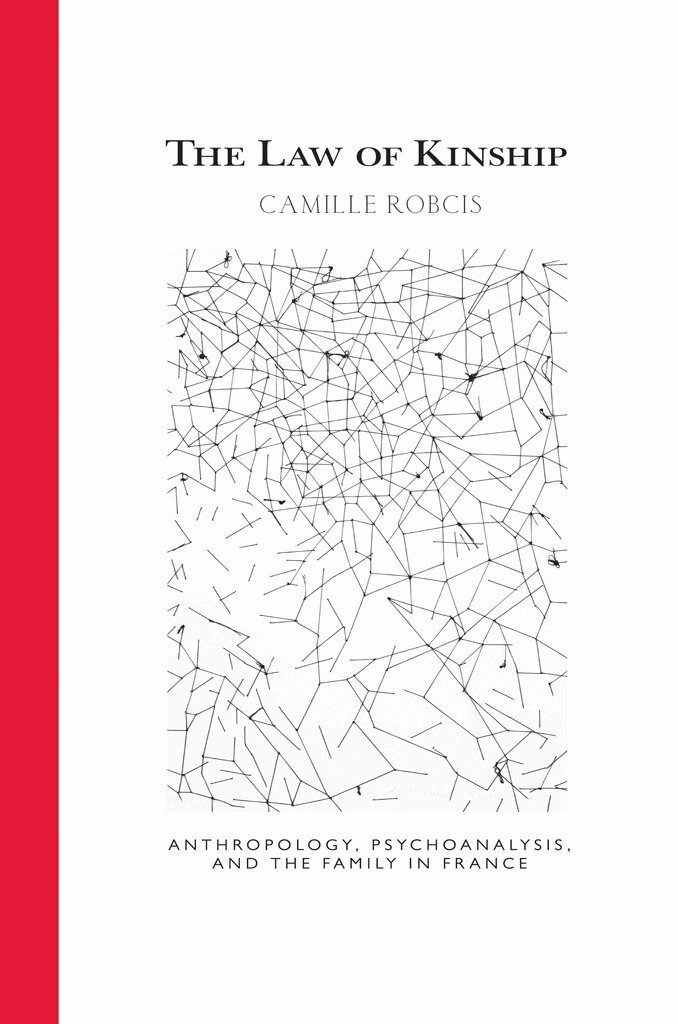
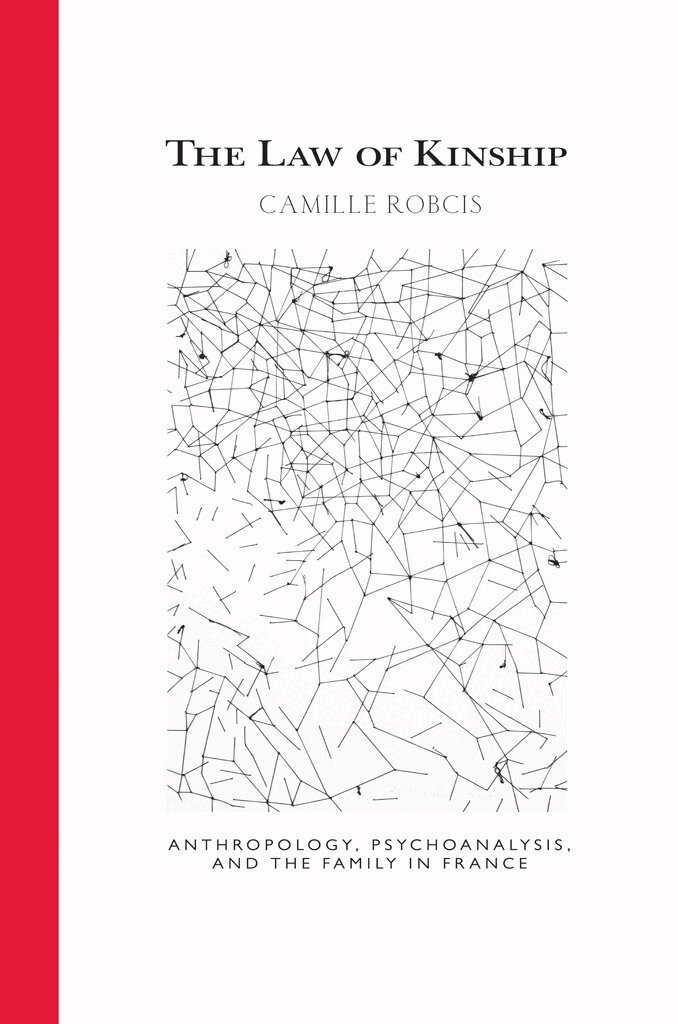
In France as elsewhere in recent years, legislative debates over single-parent households, same-sex unions, new reproductive technologies, transsexuality, and other challenges to long-held assumptions about the structure of family and kinship relations have been deeply divisive. What strikes many as uniquely French, however, is the extent to which many of these discussions—whether in legislative chambers, courtrooms, or the mass media—have been conducted in the frequently abstract vocabularies of anthropology and psychoanalysis. In this highly original book, Camille Robcis seeks to explain why and how academic discourses on kinship have intersected and overlapped with political debates on the family—and on the nature of French republicanism itself. She focuses on the theories of Claude Lévi-Strauss and Jacques Lacan, both of whom highlighted the interdependence of the sexual and the social by positing a direct correlation between kinship and socialization. Robcis traces how their ideas gained recognition not only from French social scientists but also from legislators and politicians who relied on some of the most obscure and difficult concepts of structuralism to enact a series of laws concerning the family. Lévi-Strauss and Lacan constructed the heterosexual family as a universal trope for social and psychic integration, and this understanding of the family at the root of intersubjectivity coincided with the role that the family has played in modern French law and public policy. The Law of Kinship contributes to larger conversations about the particularities of French political culture, the nature of sexual difference, and the problem of reading and interpretation in intellectual history.
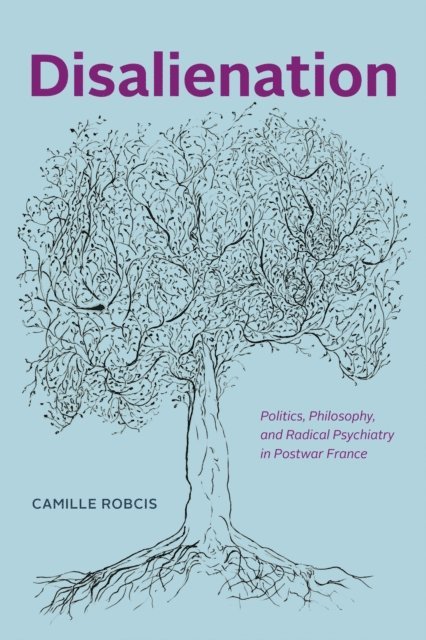
From 1940 to 1945, forty thousand patients died in French psychiatric hospitals. The Vichy regime’s “soft extermination” let patients die of cold, starvation, or lack of care. But in Saint-Alban-sur-Limagnole, a small village in central France, one psychiatric hospital attempted to resist. Hoarding food with the help of the local population, the staff not only worked to keep patients alive but began to rethink the practical and theoretical bases of psychiatric care. The movement that began at Saint-Alban came to be known as institutional psychotherapy and would go on to have a profound influence on postwar French thought.In Disalienation, Camille Robcis grapples with the historical, intellectual, and psychiatric meaning of the ethics articulated at Saint-Alban by exploring the movement’s key thinkers, including François Tosquelles, Frantz Fanon, Félix Guattari, and Michel Foucault. Anchored in the history of one hospital, Robcis's study draws on a wide geographic context—revolutionary Spain, occupied France, colonial Algeria, and beyond—and charts the movement's place within a broad political-economic landscape, from fascism to Stalinism to postwar capitalism.
From 1940 to 1945, forty thousand patients died in French psychiatric hospitals. The Vichy regime’s “soft extermination” let patients die of cold, starvation, or lack of care. But in Saint-Alban-sur-Limagnole, a small village in central France, one psychiatric hospital attempted to resist. Hoarding food with the help of the local population, the staff not only worked to keep patients alive but began to rethink the practical and theoretical bases of psychiatric care. The movement that began at Saint-Alban came to be known as institutional psychotherapy and would go on to have a profound influence on postwar French thought. In Disalienation, Camille Robcis grapples with the historical, intellectual, and psychiatric meaning of the ethics articulated at Saint-Alban by exploring the movement’s key thinkers, including François Tosquelles, Frantz Fanon, Félix Guattari, and Michel Foucault. Anchored in the history of one hospital, Robcis''s study draws on a wide geographic context—revolutionary Spain, occupied France, colonial Algeria, and beyond—and charts the movement''s place within a broad political-economic landscape, from fascism to Stalinism to postwar capitalism.
How “anti-genderism” fueled a global right-wing movement In recent years, opposition to “gender ideology” has become a rallying cry for the Right. Politicians throughout the world have invoked the dangers of “gender” to restrict access to abortion, revoke LGBTQ rights, and police education. And yet at the same time, the term“gender” has become standard in everyday speech—a box to check on a passport application or on a form at the doctor’s office. When did the word “gender” become a political controversy? When did the idea of a “gender ideology” first emerge? In The War on Gender, Camille Robcis traces the history of a global movement that she calls “anti-genderism”: the assertion that a “gender ideology,” developed in the halls of academia and foisted on an unwilling public, has become the driving force behind social policy.Robcis argues that anti-genderism was invented by the Vatican in the mid-1990s in response to demands for reproductive and sexual rights made by feminist activists at conferences sponsored by the United Nations. To counter these claims, Vatican representatives decided to oppose “gender” altogether. The culprits, in their view, were not only the activists at the conferences but the “gender theorists” who had inspired them. During the papacy of John Paul II—who made defense of the heterosexual family the bedrock of his reign—the Vatican propagated the expression “gender ideology” throughout the world. It was embraced by many on the Right, including evangelical Christians, who adopted the rhetoric of anti-genderism to further their own illiberal agendas.
In France as elsewhere in recent years, legislative debates over single-parent households, same-sex unions, new reproductive technologies, transsexuality, and other challenges to long-held assumptions about the structure of family and kinship relations have been deeply divisive. What strikes many as uniquely French, however, is the extent to which many of these discussions—whether in legislative chambers, courtrooms, or the mass media—have been conducted in the frequently abstract vocabularies of anthropology and psychoanalysis. In this highly original book, Camille Robcis seeks to explain why and how academic discourses on kinship have intersected and overlapped with political debates on the family—and on the nature of French republicanism itself. She focuses on the theories of Claude Lévi-Strauss and Jacques Lacan, both of whom highlighted the interdependence of the sexual and the social by positing a direct correlation between kinship and socialization. Robcis traces how their ideas gained recognition not only from French social scientists but also from legislators and politicians who relied on some of the most obscure and difficult concepts of structuralism to enact a series of laws concerning the family. Lévi-Strauss and Lacan constructed the heterosexual family as a universal trope for social and psychic integration, and this understanding of the family at the root of intersubjectivity coincided with the role that the family has played in modern French law and public policy. The Law of Kinship contributes to larger conversations about the particularities of French political culture, the nature of sexual difference, and the problem of reading and interpretation in intellectual history.