Can Ince - Böcker
Visar alla böcker från författaren Can Ince. Handla med fri frakt och snabb leverans.
3 produkter
3 produkter
1 091 kr
Skickas inom 10-15 vardagar
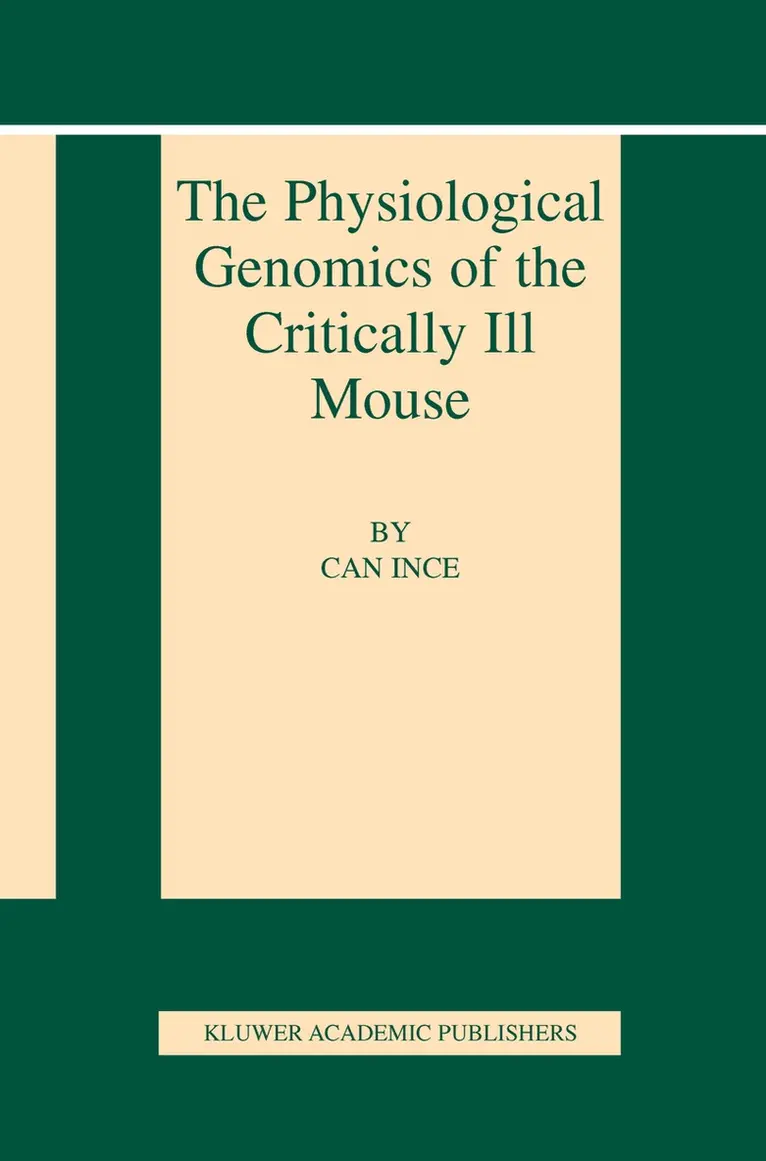
This latest volume in the "Basic Science for the Cardiologist" book series is dedicated to the study of the physiological genomics of cardiovascular disease. It was inspired by the Third Amsterdam Mouse Symposium which showed the enormous strides that have been made in physiological genomics in recent years. The integrative nature of this field has its best clinical analogue in critical care medicine where the cardiovascular system, and the diagnosis and treatment of the different organ systems and their successful interaction are key. Physiological monitoring, mechanical ventilation, sedation and an integrative analysis all form part of the arsenal of the intensivist and also of the mouse physiologist. Sections include the following: physiological monitoring of the mouse; cardiovascular pathophysiology of the mouse; and treating the critically ill mouse.
1 091 kr
Skickas inom 10-15 vardagar
The physiological genomics of the cardiovascular system studies the relationship between gene and physiological (dys)function. It is a rapidly developing area of research and distinguishes itself from other areas of molecular medicine by its highly integrative nature. In this multi disciplinarian area of the physiological sciences, there is interaction between gene structure and physiological cardiovascular function as well as interactions between the different organs and their physiological compartments. The mouse has played a central role in the study of genomics due to the detailed knowledge of the mouse genome and the wide availability of genetically modified mice. In the past, the mouse had mainly been used in the area of immunology and molecular biology, and physiological interest in the mouse was scarce. As more insight has come into the structural genomics of the mouse, however, it has become increasingly important to understand the relation between gene and physiological function. With this in mind we have been organizing the Amsterdam Mouse Symposia to bring together different disciplines interested in the molecular basis of cardiovascular function (see J. of Clinical and Exp. Pharmacology and rd Physiology (2002) 29:A69-AI02 for the proceedings of the 3 Amsterdam Mouse Symposium and Basic Research in Cardiology (2000) 95:492-535 for nd the proceedings of the 2 symposium).
533 kr
Skickas inom 10-15 vardagar
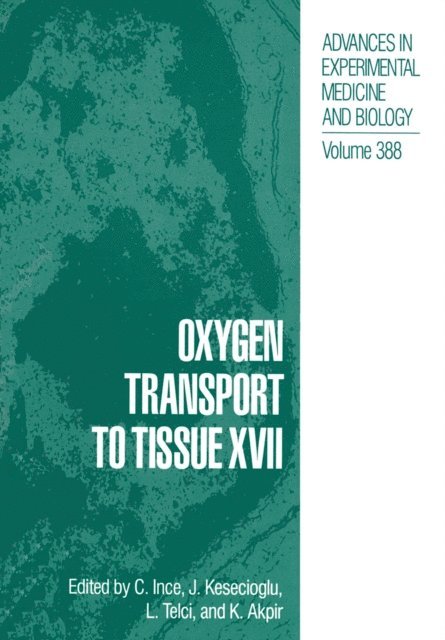
nd The 22 meeting of the International Society on Oxygen Transport to Tissue (LS. O. T. T. ) of which this volume is the scientific proceedings, was held in Istanbul, Turkey on August 22-26, 1994. It was a historical occasion in that it was almost 200 years to the day that one of the founding fathers of oxygen research, Antoine Lavoisier, on May 8, 1794 found his early demise at the hands of the guillotine. This spirit of history set the tone of the conference and in the opening lecture the contribution that this part of the world has given to the understanding of oxygen transport to tissue was highlighted. In particular, the contribution of Galen of Pergamon (129-200) was discussed who for the first time demon strated that blood flowed through the arteries and whose view on the physiology of the circulation dominated the ancient world for well over a millennium. A forgotten chapter in the history of the circulation of the blood is the contribution made by Ibn al Nafis of Damascus (1210-1280) who for the first time described the importance of the pulmonary circulation by stating that all venous blood entering the right ventricle ofthe heart passes to the left ventricle, not through pores in the septum of the heart as had been postulated by Galen, but through the circulation of the lungs.