Can Nacar – författare
Visar alla böcker från författaren Can Nacar. Handla med fri frakt och snabb leverans.
4 produkter
4 produkter
Inbunden, Engelska, 2019
956 kr
Skickas inom 10-15 vardagar
By the early twentieth century, consumers around the world had developed a taste for Ottoman-grown tobacco. Employing tens of thousands of workers, the Ottoman tobacco industry flourished in the decades between the 1870s to the First Balkan War—and it became the locus of many of the most active labor struggles across the empire. Can Nacar delves into the lives of these workers and their fight for better working conditions. Full of insight into the changing relations of power between capital and labor in the Ottoman Empire and the role played by state actors in these relations, this book also draws on a rich array of primary sources to foreground the voices of tobacco workers themselves.
E-bok
Engelska, 20191 172 kr
Läs direkt efter köp
By the early twentieth century, consumers around the world had developed a taste for Ottoman-grown tobacco. Employing tens of thousands of workers, the Ottoman tobacco industry flourished in the decades between the 1870s to the First Balkan War—and it became the locus of many of the most active labor struggles across the empire. Can Nacar delves into the lives of these workers and their fight for better working conditions. Full of insight into the changing relations of power between capital and labor in the Ottoman Empire and the role played by state actors in these relations, this book also draws on a rich array of primary sources to foreground the voices of tobacco workers themselves.
Häftad, Engelska, 2020
956 kr
Skickas inom 10-15 vardagar
By the early twentieth century, consumers around the world had developed a taste for Ottoman-grown tobacco. Employing tens of thousands of workers, the Ottoman tobacco industry flourished in the decades between the 1870s to the First Balkan War—and it became the locus of many of the most active labor struggles across the empire. Can Nacar delves into the lives of these workers and their fight for better working conditions. Full of insight into the changing relations of power between capital and labor in the Ottoman Empire and the role played by state actors in these relations, this book also draws on a rich array of primary sources to foreground the voices of tobacco workers themselves.
Inbunden, Engelska, 2024
1 241 kr
Skickas inom 5-8 vardagar
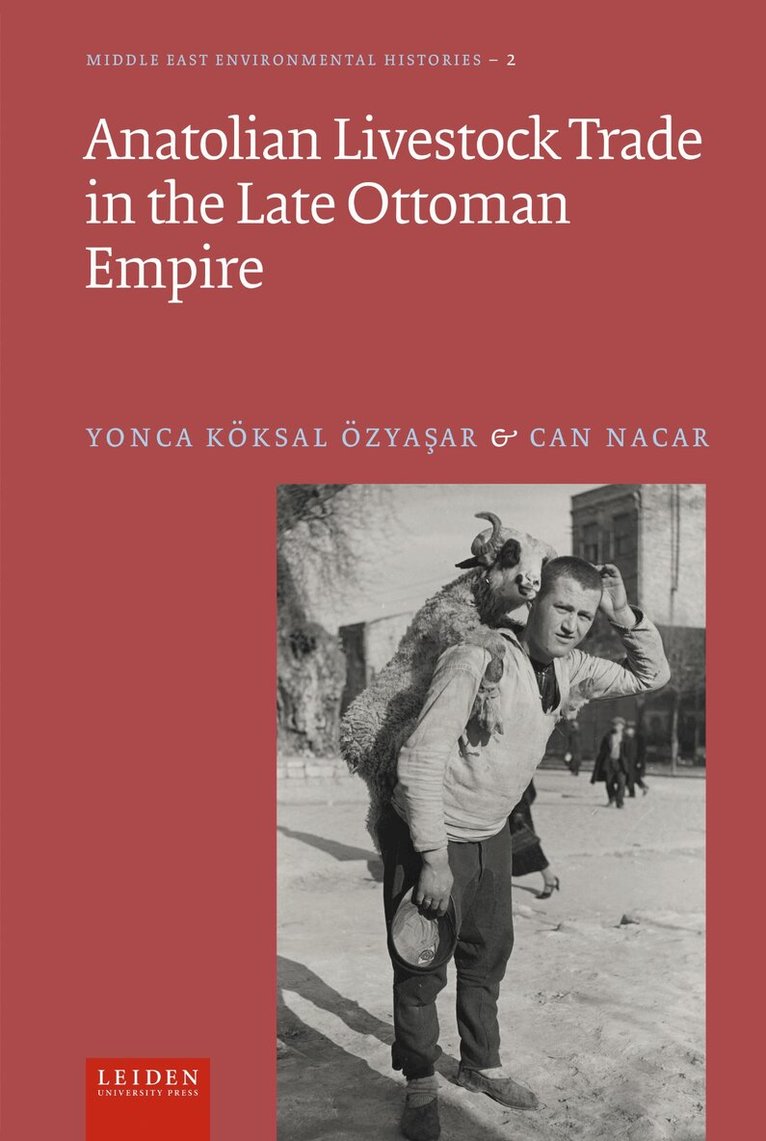
This book analyzes the expansion of the Anatolian livestock trade, focusing on sheep and cattle, during the nineteenth and early twentieth centuries— a period marked by significant changes in state policies, society and environment. It examines the impact of these changes on both human and non-human actors, maps trade routes and networks, and explores their transformations over time, thereby contributing to the literature on Ottoman environmental and socioeconomic history. The book identifies three regions -central, northeastern, and northwestern Anatolia- and four Eastern Mediterranean ports (İzmir, İskenderun, Mersin, and Antalya) as major centers of livestock trade. It examines a combination of environmental, economic, social, and political dynamics that shaped the emergence of these regions as primary suppliers of sheep to Istanbul and the ports as gateways for livestock exports. By highlighting diverse ecosystems and socioeconomic dynamics, and utilizing a variety of primary sources including Ottoman and British state documents, newspapers, memoirs, and travel accounts, the book aims to address several key questions: How did the ecosystems and socioeconomic dynamics of these regions and ports change in the nineteenth and early twentieth centuries? What were the repercussions of these changes on livestock production and trade? And how did they impact the organization of livestock and meat trade in Istanbul?