Capers Jones – författare
886 kr
Skickas inom 3-6 vardagar
Publisher's Note: Products purchased from Third Party sellers are not guaranteed by the publisher for quality, authenticity, or access to any online entitlements included with the product.
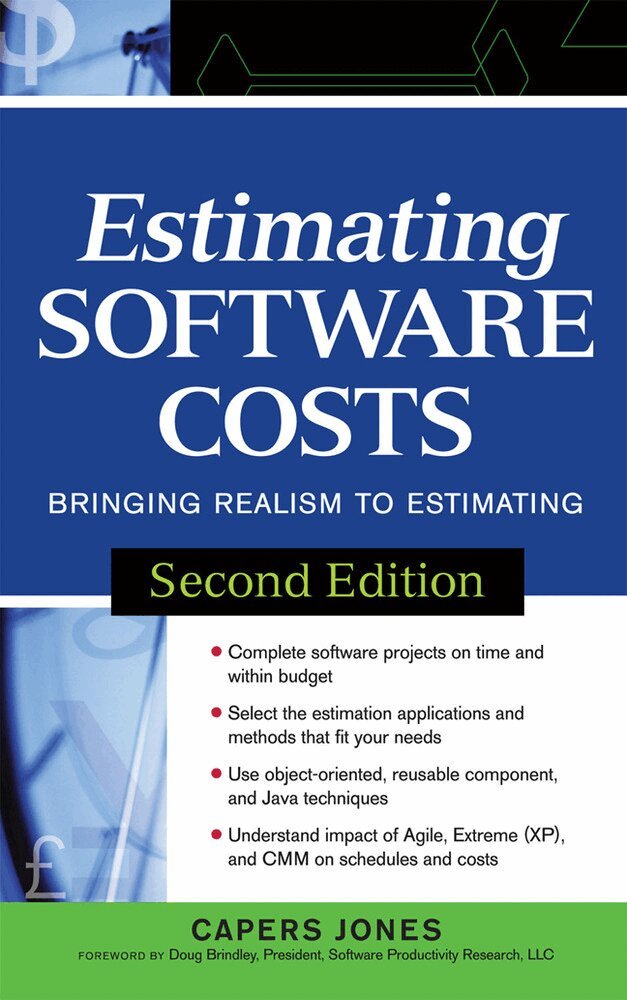
Deliver bug-free software projects on schedule and within budget
Get a clear, complete understanding of how to estimate software costs, schedules, and quality using the real-world information contained in this comprehensive volume. Find out how to choose the correct hardware and software tools, develop an appraisal strategy, deploy tests and prototypes, and produce accurate software cost estimates. Plus, you'll get full coverage of cutting-edge estimating approaches using Java, object-oriented methods, and reusable components.
Plan for and execute project-, phase-, and activity-level cost estimationsEstimate regression, component, integration, and stress testsCompensate for inaccuracies in data collection, calculation, and analysisAssess software deliverables and data complexityTest design principles and operational characteristics using software prototyping Handle configuration change, research, quality control, and documentation costs"Capers Jones' work offers a unique contribution to the understanding of the economics of software production. It provides deep insights into why our advances in computing are not matched with corresponding improvements in the software that drives it. This book is absolutely required reading for an understanding of the limitations of our technological advances." --Paul A. Strassmann, former CIO of Xerox, the Department of Defense, and NASA
968 kr
Skickas inom 3-6 vardagar
Publisher's Note: Products purchased from Third Party sellers are not guaranteed by the publisher for quality, authenticity, or access to any online entitlements included with the product.
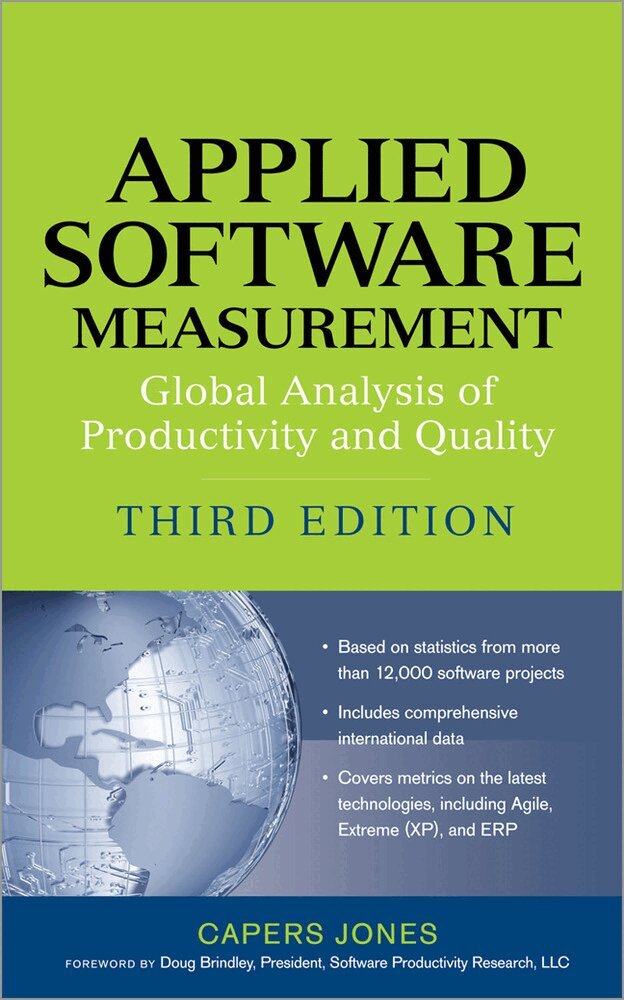
Effectively forecast, manage, and control software across the entire project lifecycle
Accurately size, estimate, and administer software projects with real-world guidance from an industry expert. Fully updated to cover the latest tools and techniques, Applied Software Measurement, Third Edition details how to deploy a cost-effective and pragmatic analysis strategy. You will learn how to use function points and baselines, implement benchmarks and tracking systems, and perform efficiency tests. Full coverage of the latest regulations, metrics, and standards is included.
Measure performance at the requirements, coding, testing, and installation phasesSet function points for efficiency, cost, market share, and customer satisfactionAnalyze quality and productivity using assessments, benchmarks, and baselinesDesign and manage project cost, defect, and quality tracking systems Use object-oriented, reusable component, Agile, CMM, and XP methods Assess defect removal efficiency using unit tests and multistage test suites896 kr
Skickas inom 3-6 vardagar
Publisher's Note: Products purchased from Third Party sellers are not guaranteed by the publisher for quality, authenticity, or access to any online entitlements included with the product.
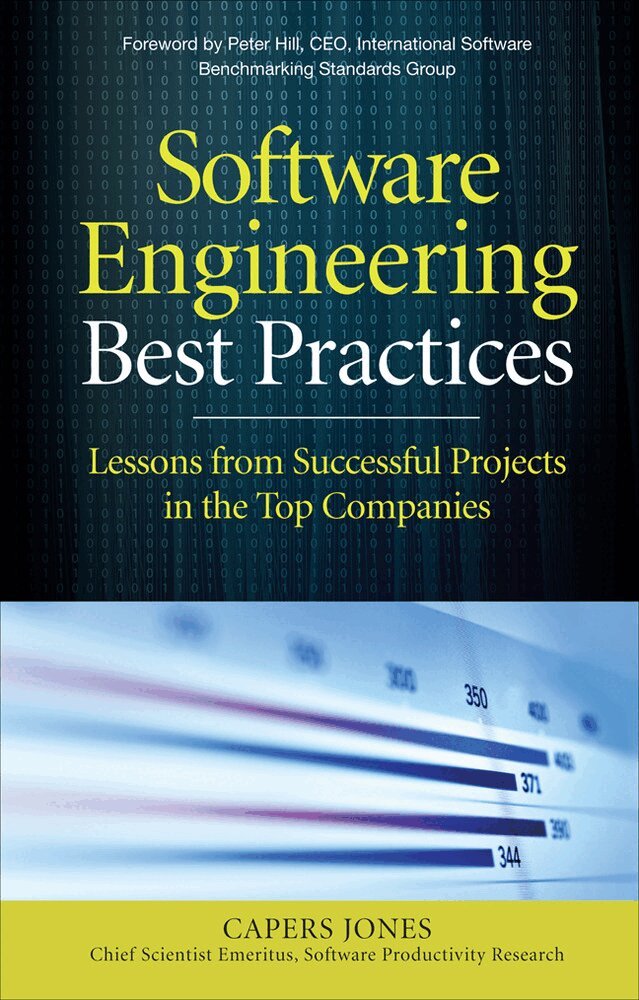
Proven techniques for software engineering successThis in-depth volume examines software engineering topics that are not covered elsewhere: the question of why software engineering has developed more than 2,500 programming languages; problems with traditional definitions of software quality; and problems with common metrics, "lines of code," and "cost per defect" that violate standard economic assumptions. The book notes that a majority of "new" projects are actually replacements for legacy applications, illustrating that data mining for lost requirements should be a standard practice. Difficult social engineering issues are also covered, such as how to minimize harm from layoffs and downsizing.
Software Engineering Best Practices explains how to effectively plan, size, schedule, and manage software projects of all types, using solid engineering procedures. It details proven methods, from initial requirements through 20 years of maintenance. Portions of the book have been extensively reviewed by key engineers from top companies, including IBM, Microsoft, Unisys, and Sony.
Manage Agile, hierarchical, matrix, and virtual software development teamsOptimize software quality using JAD, OFD, TSP, static analysis, inspections, and other methods with proven success recordsUse high-speed functional metrics to assess productivity and quality levelsPlan optimal organization, from small teams through more than 1,000 personnel1 176 kr
Läs direkt efter köp
This in-depth volume examines software engineering topics that are not covered elsewhere: the question of why software engineering has developed more than 2,500 programming languages; problems with traditional definitions of software quality; and problems with common metrics, "lines of code," and "cost per defect" that violate standard economic assumptions. The book notes that a majority of "new" projects are actually replacements for legacy applications, illustrating that data mining for lost requirements should be a standard practice. Difficult social engineering issues are also covered, such as how to minimize harm from layoffs and downsizing.
Software Engineering Best Practices explains how to effectively plan, size, schedule, and manage software projects of all types, using solid engineering procedures. It details proven methods, from initial requirements through 20 years of maintenance. Portions of the book have been extensively reviewed by key engineers from top companies, including IBM, Microsoft, Unisys, and Sony.
Manage Agile, hierarchical, matrix, and virtual software development teamsOptimize software quality using JAD, OFD, TSP, static analysis, inspections, and other methods with proven success recordsUse high-speed functional metrics to assess productivity and quality levelsPlan optimal organization, from small teams through more than 1,000 personnel1 265 kr
Läs direkt efter köp
Effectively forecast, manage, and control software across the entire project lifecycle
Accurately size, estimate, and administer software projects with real-world guidance from an industry expert. Fully updated to cover the latest tools and techniques, Applied Software Measurement, Third Edition details how to deploy a cost-effective and pragmatic analysis strategy. You will learn how to use function points and baselines, implement benchmarks and tracking systems, and perform efficiency tests. Full coverage of the latest regulations, metrics, and standards is included.
Measure performance at the requirements, coding, testing, and installation phasesSet function points for efficiency, cost, market share, and customer satisfactionAnalyze quality and productivity using assessments, benchmarks, and baselinesDesign and manage project cost, defect, and quality tracking systems Use object-oriented, reusable component, Agile, CMM, and XP methods Assess defect removal efficiency using unit tests and multistage test suites1 163 kr
Läs direkt efter köp
Deliver bug-free software projects on schedule and within budget
Get a clear, complete understanding of how to estimate software costs, schedules, and quality using the real-world information contained in this comprehensive volume. Find out how to choose the correct hardware and software tools, develop an appraisal strategy, deploy tests and prototypes, and produce accurate software cost estimates. Plus, you''ll get full coverage of cutting-edge estimating approaches using Java, object-oriented methods, and reusable components.
Plan for and execute project-, phase-, and activity-level cost estimationsEstimate regression, component, integration, and stress testsCompensate for inaccuracies in data collection, calculation, and analysisAssess software deliverables and data complexityTest design principles and operational characteristics using software prototyping Handle configuration change, research, quality control, and documentation costs"Capers Jones'' work offers a unique contribution to the understanding of the economics of software production. It provides deep insights into why our advances in computing are not matched with corresponding improvements in the software that drives it. This book is absolutely required reading for an understanding of the limitations of our technological advances." --Paul A. Strassmann, former CIO of Xerox, the Department of Defense, and NASA
826 kr
Läs direkt efter köp
“Whether consulting, working on projects, or teaching, whenever I need credible, detailed, relevant metrics and insights into the current capabilities and performance of the software engineering profession, I always turn first to Capers Jones’ work. In this important new book, he and Olivier Bonsignour make the hard-headed, bottom-line, economic case, with facts and data, about why software quality is so important. I know I’ll turn to this excellent reference again and again.”
—Rex Black, President, RBCS
Poor quality continues to bedevil large-scale development projects, but few software leaders and practitioners know how to measure quality, select quality best practices, or cost-justify their usage. In The Economics of Software Quality, leading software quality experts Capers Jones and Olivier Bonsignour show how to systematically measure the economic impact of quality and how to use this information to deliver far more business value.
Using empirical data from hundreds of software organizations, Jones and Bonsignour show how integrated inspection, structural quality measurement, static analysis, and testing can achieve defect removal rates exceeding 95 percent. They offer innovative guidance for predicting and measuring defects and quality; choosing defect prevention, pre-test defect removal, and testing methods; and optimizing post-release defect reporting and repair.
This book will help you
Move beyond functional quality to quantify non-functional and structural quality Prove that improved software quality translates into strongly positive ROI and greatly reduced TCO Drive better results from current investments in Quality Assurance and Testing Use quality improvement techniques to stay on schedule and on budget Avoid “hazardous” metrics that lead to poor decisions295 kr
Läs direkt efter köp
“Capers Jones has accumulated the most comprehensive data on every aspect of software engineering, and has performed the most scientific analysis on this data. Now, Capers performs yet another invaluable service to our industry, by documenting, for the first time, its long and fascinating history. Capers’ new book is a must-read for every software engineering student and information technology professional.”
— From the Foreword by Tony Salvaggio, CEO and president, Computer Aid, Inc.
Software engineering is one of the world’s most exciting and important fields. Now, pioneering practitioner Capers Jones has written the definitive history of this world-changing industry. Drawing on several decades as a leading researcher and innovator, he illuminates the field’s broad sweep of progress and its many eras of invention. He assesses the immense impact of software engineering on society, and previews its even more remarkable future. Decade by decade, Jones examines trends, companies, winners, losers, new technologies, productivity/quality issues, methods, tools, languages, risks, and more. He reviews key inventions, estimates industry growth, and addresses “mysteries” such as why programming languages gain and lose popularity. Inspired by Paul Starr’s Pulitzer Prize–winning The Social Transformation of American Medicine, Jones’ new book is a tour de force—and compelling reading for everyone who wants to understand how software became what it is today.
COVERAGE INCLUDES
• The human need to compute: from ancient times to the modern era
• Foundations of computing: Alan Turing, Konrad Zuse, and World War II
• Big business, big defense, big systems: IBM, mainframes, and COBOL
• A concise history of minicomputers and microcomputers: the birth of Apple and Microsoft
• The PC era: DOS, Windows, and the rise of commercial software
• Innovations in writing and managing code: structured development, objects, agile, and more
• The birth and explosion of the Internet and the World Wide Web
• The growing challenges of legacy system maintenance and support
• Emerging innovations, from wearables to intelligent agents to quantum computing
• Cybercrime, cyberwarfare, and large-scale software failure
365 kr
Skickas inom 7-10 vardagar
886 kr
Läs direkt efter köp
Software development has been a troubling since it first started. There are seven chronic problems that have plagued it from the beginning:
Incomplete and ambiguous user requirements that grow by >2% per month. Major cost and schedule overruns for large applications > 35% higher than planned. Low defect removal efficiency (DRE) < 85% on large systems. Cancelled projects that are not completed: > 30% above 10,000 function points. Poor quality and low reliability after the software is delivered: > 5 bugs per FP. Breach of contract litigation against software outsource vendors. Expensive maintenance and enhancement costs after delivery.These are endemic problems for software executives, software engineers and software customers but they are not insurmountable. In Software Development Patterns and Antipatterns, software engineering and metrics pioneer Capers Jones presents technical solutions for all seven. The solutions involve moving from harmful patterns of software development to effective patterns of software development.
The first section of the book examines common software development problems that have been observed in many companies and government agencies. The data on the problems comes from consulting studies, breach of contract lawsuits, and the literature on major software failures. This section considers the factors involved with cost overruns, schedule delays, canceled projects, poor quality, and expensive maintenance after deployment.
The second section shows patterns that lead to software success. The data comes from actual companies. The section’s first chapter on Corporate Software Risk Reduction in a Fortune 500 company was based on a major telecom company whose CEO was troubled by repeated software failures. The other chapters in this section deal with methods of achieving excellence, as well as measures that can prove excellence to C-level executives, and with continuing excellence through the maintenance cycle as well as for software development.
886 kr
Läs direkt efter köp
Software development has been a troubling since it first started. There are seven chronic problems that have plagued it from the beginning:
Incomplete and ambiguous user requirements that grow by >2% per month. Major cost and schedule overruns for large applications > 35% higher than planned. Low defect removal efficiency (DRE) < 85% on large systems. Cancelled projects that are not completed: > 30% above 10,000 function points. Poor quality and low reliability after the software is delivered: > 5 bugs per FP. Breach of contract litigation against software outsource vendors. Expensive maintenance and enhancement costs after delivery.These are endemic problems for software executives, software engineers and software customers but they are not insurmountable. In Software Development Patterns and Antipatterns, software engineering and metrics pioneer Capers Jones presents technical solutions for all seven. The solutions involve moving from harmful patterns of software development to effective patterns of software development.
The first section of the book examines common software development problems that have been observed in many companies and government agencies. The data on the problems comes from consulting studies, breach of contract lawsuits, and the literature on major software failures. This section considers the factors involved with cost overruns, schedule delays, canceled projects, poor quality, and expensive maintenance after deployment.
The second section shows patterns that lead to software success. The data comes from actual companies. The section’s first chapter on Corporate Software Risk Reduction in a Fortune 500 company was based on a major telecom company whose CEO was troubled by repeated software failures. The other chapters in this section deal with methods of achieving excellence, as well as measures that can prove excellence to C-level executives, and with continuing excellence through the maintenance cycle as well as for software development.
633 kr
Läs direkt efter köp
Software is one of the most important products in human history and is widely used by all industries and all countries. It is also one of the most expensive and labor-intensive products in human history. Software also has very poor quality that has caused many major disasters and wasted many millions of dollars. Software is also the target of frequent and increasingly serious cyber-attacks.
Among the reasons for these software problems is a chronic lack of reliable quantified data. This reference provides quantified data from many countries and many industries based on about 26,000 projects developed using a variety of methodologies and team experience levels. The data has been gathered between 1970 and 2017, so interesting historical trends are available.
Since current average software productivity and quality results are suboptimal, this book focuses on "best in class" results and shows not only quantified quality and productivity data from best-in-class organizations, but also the technology stacks used to achieve best-in-class results. The overall goal of this book is to encourage the adoption of best-in-class software metrics and best-in-class technology stacks. It does so by providing current data on average software schedules, effort, costs, and quality for several industries and countries.
Because productivity and quality vary by technology and size, the book presents quantitative results for applications between 100 function points and 100,000 function points. It shows quality results using defect potential and DRE metrics because the number one cost driver for software is finding and fixing bugs. The book presents data on cost of quality for software projects and discusses technical debt, but that metric is not standardized. Finally, the book includes some data on three years of software maintenance and enhancements as well as some data on total cost of ownership.
773 kr
Skickas inom 10-15 vardagar
2 103 kr
Skickas inom 10-15 vardagar
730 kr
Skickas inom 10-15 vardagar
681 kr
Skickas inom 10-15 vardagar
701 kr
Skickas inom 10-15 vardagar
2 031 kr
Skickas inom 10-15 vardagar
1 761 kr
Skickas inom 10-15 vardagar
1 902 kr
Skickas inom 10-15 vardagar
633 kr
Läs direkt efter köp
Software is one of the most important products in human history and is widely used by all industries and all countries. It is also one of the most expensive and labor-intensive products in human history. Software also has very poor quality that has caused many major disasters and wasted many millions of dollars. Software is also the target of frequent and increasingly serious cyber-attacks.
Among the reasons for these software problems is a chronic lack of reliable quantified data. This reference provides quantified data from many countries and many industries based on about 26,000 projects developed using a variety of methodologies and team experience levels. The data has been gathered between 1970 and 2017, so interesting historical trends are available.
Since current average software productivity and quality results are suboptimal, this book focuses on "best in class" results and shows not only quantified quality and productivity data from best-in-class organizations, but also the technology stacks used to achieve best-in-class results. The overall goal of this book is to encourage the adoption of best-in-class software metrics and best-in-class technology stacks. It does so by providing current data on average software schedules, effort, costs, and quality for several industries and countries.
Because productivity and quality vary by technology and size, the book presents quantitative results for applications between 100 function points and 100,000 function points. It shows quality results using defect potential and DRE metrics because the number one cost driver for software is finding and fixing bugs. The book presents data on cost of quality for software projects and discusses technical debt, but that metric is not standardized. Finally, the book includes some data on three years of software maintenance and enhancements as well as some data on total cost of ownership.
836 kr
Läs direkt efter köp
This comprehensive reference uses a formal and standard evaluation technique to show the strengths and weakness of more than 60 software development methodologies such as agile, DevOps, RUP, Waterfall, TSP, XP and many more. Each methodology is applied to an application of 1000 function points using the Java language. Each methodology produces a characteristic set of results for development schedules, productivity, costs, and quality. The intent of the book is to show readers the optimum kinds of methodologies for the projects they are concerned with and to warn them about counter indications and possible harm from unsuitable methodologies.
836 kr
Läs direkt efter köp
This comprehensive reference uses a formal and standard evaluation technique to show the strengths and weakness of more than 60 software development methodologies such as agile, DevOps, RUP, Waterfall, TSP, XP and many more. Each methodology is applied to an application of 1000 function points using the Java language. Each methodology produces a characteristic set of results for development schedules, productivity, costs, and quality. The intent of the book is to show readers the optimum kinds of methodologies for the projects they are concerned with and to warn them about counter indications and possible harm from unsuitable methodologies.
779 kr
Läs direkt efter köp
Going where no book on software measurement and metrics has previously gone, this critique thoroughly examines a number of bad measurement practices, hazardous metrics, and huge gaps and omissions in the software literature that neglect important topics in measurement. The book covers the major gaps and omissions that need to be filled if data about software development is to be useful for comparisons or estimating future projects.
Among the more serious gaps are leaks in reporting about software development efforts that, if not corrected, can distort data and make benchmarks almost useless and possibly even harmful. One of the most common leaks is that of unpaid overtime. Software is a very labor-intensive occupation, and many practitioners work very long hours. However, few companies actually record unpaid overtime. This means that software effort is underreported by around 15%, which is too large a value to ignore. Other sources of leaks include the work of part-time specialists who come and go as needed. There are dozens of these specialists, and their combined effort can top 45% of total software effort on large projects.
The book helps software project managers and developers uncover errors in measurements so they can develop meaningful benchmarks to estimate software development efforts. It examines variations in a number of areas that include:
Programming languages Development methodology Software reuse Functional and nonfunctional requirements Industry type Team size and experienceFilled with tables and charts, this book is a starting point for making measurements that reflect current software development practices and realities to arrive at meaningful benchmarks to guide successful software projects.
779 kr
Läs direkt efter köp
Going where no book on software measurement and metrics has previously gone, this critique thoroughly examines a number of bad measurement practices, hazardous metrics, and huge gaps and omissions in the software literature that neglect important topics in measurement. The book covers the major gaps and omissions that need to be filled if data about software development is to be useful for comparisons or estimating future projects.
Among the more serious gaps are leaks in reporting about software development efforts that, if not corrected, can distort data and make benchmarks almost useless and possibly even harmful. One of the most common leaks is that of unpaid overtime. Software is a very labor-intensive occupation, and many practitioners work very long hours. However, few companies actually record unpaid overtime. This means that software effort is underreported by around 15%, which is too large a value to ignore. Other sources of leaks include the work of part-time specialists who come and go as needed. There are dozens of these specialists, and their combined effort can top 45% of total software effort on large projects.
The book helps software project managers and developers uncover errors in measurements so they can develop meaningful benchmarks to estimate software development efforts. It examines variations in a number of areas that include:
Programming languages Development methodology Software reuse Functional and nonfunctional requirements Industry type Team size and experienceFilled with tables and charts, this book is a starting point for making measurements that reflect current software development practices and realities to arrive at meaningful benchmarks to guide successful software projects.
510 kr
Skickas inom 5-8 vardagar
259 kr
Tillfälligt slut