Carah Ong Whaley - Böcker
Visar alla böcker från författaren Carah Ong Whaley. Handla med fri frakt och snabb leverans.
6 produkter
6 produkter
875 kr
Skickas inom 10-15 vardagar
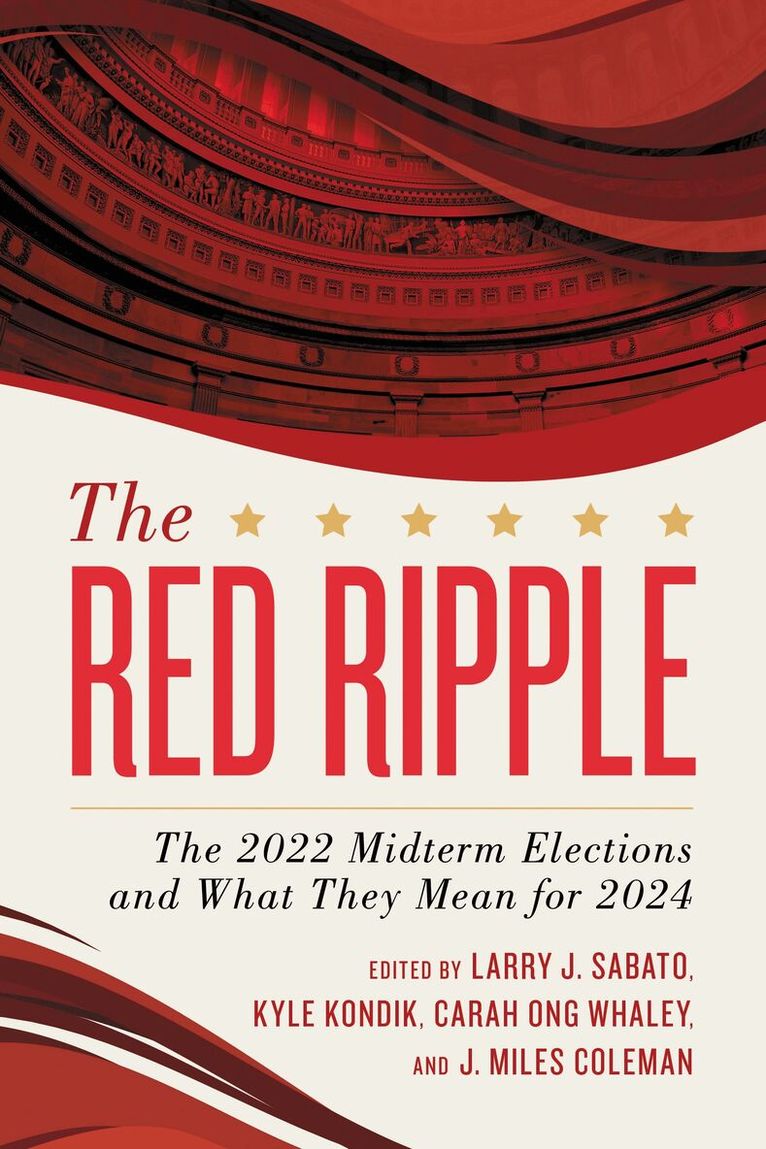
Larry Sabato, one of the leading experts in American politics, will bring together respected journalists and academics from across the political spectrum to examine every facet of the 2022 midterm election, and what its development and outcome will mean for the nation moving forward. In frank, accessible prose, each author offers insight that goes beyond the headlines, and dives into the underlying forces and shifts that drove the election from its earliest developments to its dramatic conclusion. Following Sabato’s introductory analysis, the contributors will provide a comprehensive review of everything in play during the 2022 midterms and look ahead to the 2024 presidential campaign.
234 kr
Skickas
Larry Sabato, one of the leading experts in American politics, will bring together respected journalists and academics from across the political spectrum to examine every facet of the 2022 midterm election, and what its development and outcome will mean for the nation moving forward. In frank, accessible prose, each author offers insight that goes beyond the headlines, and dives into the underlying forces and shifts that drove the election from its earliest developments to its dramatic conclusion. Following Sabato’s introductory analysis, the contributors will provide a comprehensive review of everything in play during the 2022 midterms and look ahead to the 2024 presidential campaign.
1 034 kr
Skickas inom 7-10 vardagar
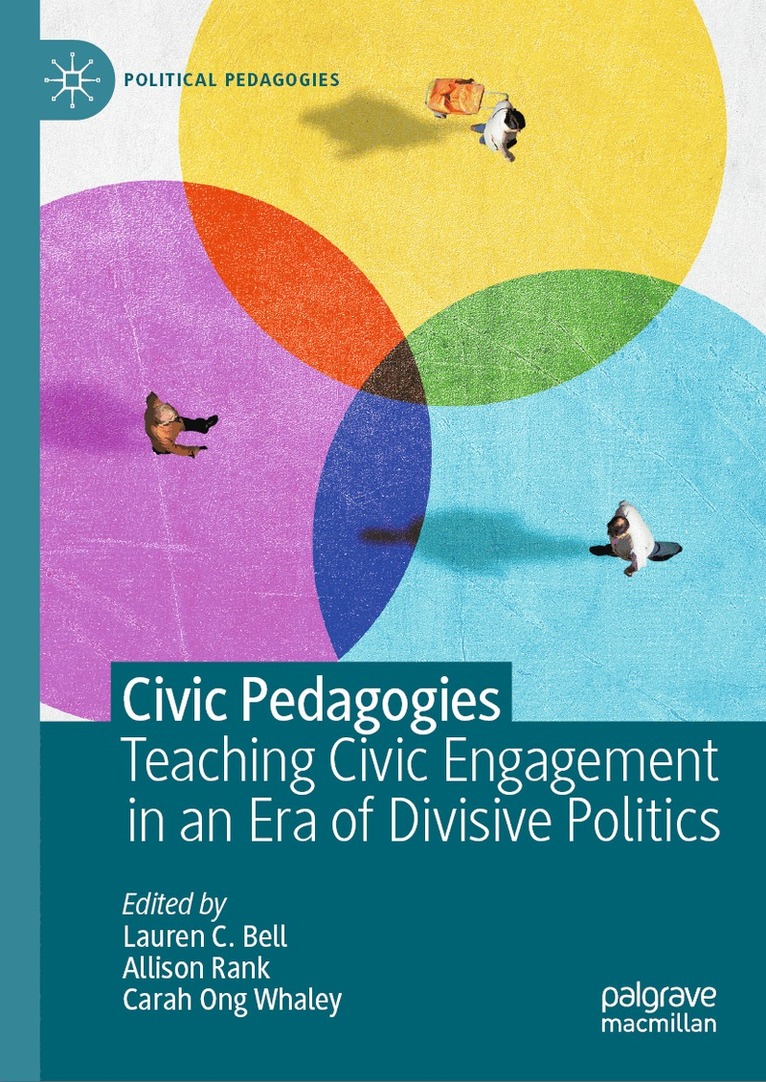
Especially as changing educational and political landscapes make efforts to educate for democracy both more necessary and more fraught, contributors to this book offer innovative pedagogies and praxis grounded in political and civic theories aimed at strengthening democratic norms, practices and institutions.
726 kr
Skickas inom 10-15 vardagar
This book comes at a crucial time as the USA and countries around the world wrestle with an ongoing period of democratic backsliding that shows little sign of abating. Alarmingly, study after study shows that younger people are not convinced that democracy will endure – and that a sizable number are no longer convinced that it should. Especially as changing educational and political landscapes make efforts to educate for democracy both more necessary and more fraught, contributors to this book offer innovative pedagogies and praxis grounded in political and civic theories aimed at strengthening democratic norms, practices and institutions.
644 kr
Skickas inom 7-10 vardagar
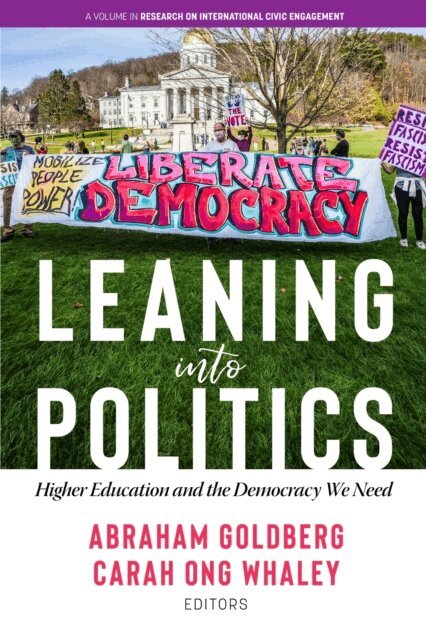
Democratic decline in the United States and globally, a lack of confidence in political institutions and an increasingly violent and divisive political climate raise many questions for the state of political learning and civic engagement. A decade ago, a task force commissioned by the United States Department of Education called on colleges and universities to affirm their missions to educate for democracy. Relatively few have made the investment, though dozens of higher education associations and organizations have publicly committed their support to prepare students to address the persistent public issues they are inheriting.While there has been a recent upward spike in rote civic knowledge and historically high youth voting rates, the United States has seen a decline in political rights and civil liberties and has been listed as a backsliding democracy. Since 2010, state legislatures have passed laws making it harder to vote, with access to the ballot increasingly dependent on which party controls the state legislature. Meanwhile, substantial dysfunction and hyperpartisanship in Congress, concerns over the impartiality of the judiciary and limited accountability and oversight of the executive branch have contributed to the loss of institutional capacity to address public problems and to declining public confidence in political institutions.These trends coincide with problematic rhetoric and growing scrutiny from public officials on how colleges and universities educate students on public issues, particularly those centered on class, race, ethnicity and social justice. Issues of free speech and expression have been further nationalized following a high-profile hearing of the House Committee on Education and the Workforce that questioned the presidents of Harvard, Massachusetts Institute of Technology and University of Pennsylvania about antisemitism on their campuses and as campus protests regarding the Israeli-Palestinian conflict have been met with heavy-handed responses. These episodes serve as loud warning shots to colleges and universities across the country. Academic freedom and freedom of speech - core tenets of a liberal education - are at risk. Can higher education step up and meet the moment? Collectively, contributors to this volume - who come from a broad range of institutions, experiences and perspectives - provide critical research and analyses, as well as innovative approaches for how higher education can fulfill its public role and contribute to building the democratic societies we need.
1 091 kr
Skickas inom 7-10 vardagar
Democratic decline in the United States and globally, a lack of confidence in political institutions and an increasingly violent and divisive political climate raise many questions for the state of political learning and civic engagement. A decade ago, a task force commissioned by the United States Department of Education called on colleges and universities to affirm their missions to educate for democracy. Relatively few have made the investment, though dozens of higher education associations and organizations have publicly committed their support to prepare students to address the persistent public issues they are inheriting.While there has been a recent upward spike in rote civic knowledge and historically high youth voting rates, the United States has seen a decline in political rights and civil liberties and has been listed as a backsliding democracy. Since 2010, state legislatures have passed laws making it harder to vote, with access to the ballot increasingly dependent on which party controls the state legislature. Meanwhile, substantial dysfunction and hyperpartisanship in Congress, concerns over the impartiality of the judiciary and limited accountability and oversight of the executive branch have contributed to the loss of institutional capacity to address public problems and to declining public confidence in political institutions.These trends coincide with problematic rhetoric and growing scrutiny from public officials on how colleges and universities educate students on public issues, particularly those centered on class, race, ethnicity and social justice. Issues of free speech and expression have been further nationalized following a high-profile hearing of the House Committee on Education and the Workforce that questioned the presidents of Harvard, Massachusetts Institute of Technology and University of Pennsylvania about antisemitism on their campuses and as campus protests regarding the Israeli-Palestinian conflict have been met with heavy-handed responses. These episodes serve as loud warning shots to colleges and universities across the country. Academic freedom and freedom of speech - core tenets of a liberal education - are at risk. Can higher education step up and meet the moment? Collectively, contributors to this volume - who come from a broad range of institutions, experiences and perspectives - provide critical research and analyses, as well as innovative approaches for how higher education can fulfill its public role and contribute to building the democratic societies we need.