Caren Irr - Böcker
Visar alla böcker från författaren Caren Irr. Handla med fri frakt och snabb leverans.
11 produkter
11 produkter
2 446 kr
Skickas inom 3-6 vardagar
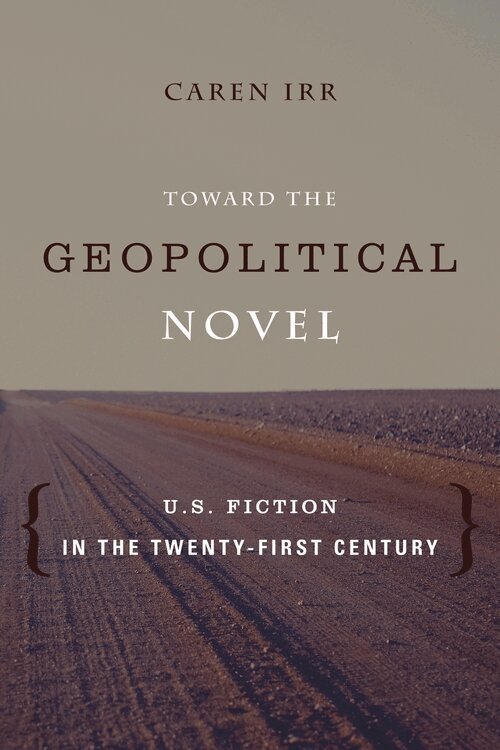
Caren Irr's survey of more than 125 novels outlines the dramatic resurgence of the American political novel in the twenty-first century. She explores the writings of Chris Abani, Susan Choi, Edwidge Danticat, Junot Diaz, Dave Eggers, Jeffrey Eugenides, Aleksandar Hemon, Hari Kunzru, Dinaw Mengestu, Norman Rush, Gary Shteyngart, and others as they rethink stories of migration, the Peace Corps, nationalism and neoliberalism, revolution, and the expatriate experience. Taken together, these innovations define a new literary form: the geopolitical novel. More cosmopolitan and socially critical than domestic realism, the geopolitical novel provides new ways of understanding crucial political concepts to meet the needs of a new century.
315 kr
Skickas inom 7-10 vardagar
Caren Irr's survey of more than 125 novels outlines the dramatic resurgence of the American political novel in the twenty-first century. She explores the writings of Chris Abani, Susan Choi, Edwidge Danticat, Junot Diaz, Dave Eggers, Jeffrey Eugenides, Aleksandar Hemon, Hari Kunzru, Dinaw Mengestu, Norman Rush, Gary Shteyngart, and others as they rethink stories of migration, the Peace Corps, nationalism and neoliberalism, revolution, and the expatriate experience. Taken together, these innovations define a new literary form: the geopolitical novel. More cosmopolitan and socially critical than domestic realism, the geopolitical novel provides new ways of understanding crucial political concepts to meet the needs of a new century.
566 kr
Skickas inom 3-6 vardagar
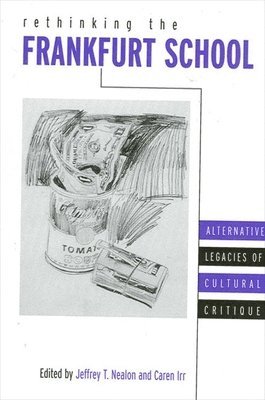
By exploring the work of the Frankfurt school today, this book helps to define the very field of cultural studies.A reexamination of key Frankfurt School thinkers-Benjamin, Adorno, Horkheimer, Marcuse-in the light of contemporary theory and cultural studies across the disciplines, Rethinking the Frankfurt School asks what consequences such a rethinking might have for study of the Frankfurt School on its own terms. Ironically, contemporary theorists find themselves turning back toward the Frankfurt School precisely for the reasons it was once scorned: for a notion of subjects whose desires are less liberated and multiplied than they are produced and regulated by a far-reaching, very-nearly totalizing global culture industry. Indeed, as new questions concerning globalization and economic redistribution emerge, while analyses of identity politics and subjective transgression become less central to contemporary theory and cultural studies, the future of the Frankfurt School looks as promising and productive as its past has proven to be.
1 674 kr
Skickas inom 3-6 vardagar
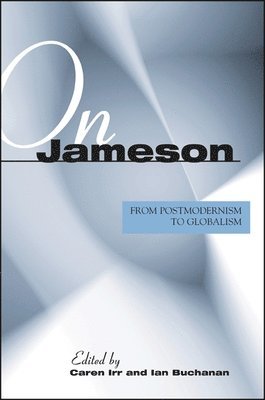
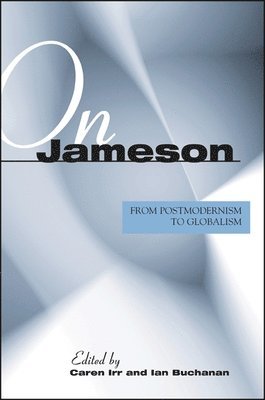
Offers an interrogation of Jameson's critical legacy.One of the leading figures in the debate over postmodernism in the 1980s and 1990s, Fredric Jameson is regarded as the most important Marxist theoretician and cultural critic writing in America today. Although Jameson's significance as a global intellectual has been widely recognized for some time, none of the literature covers the full range of his work. This timely collection reflects on Jameson's entire body of work and demonstrates its potential to shape the emerging field of globalization studies. Experts in literary theory, Slavic studies, film criticism, and Biblical studies explore the significance of Jameson's work for their diverse fields. The contributors treat Jameson's work as a complicated and interconnected whole, and deal with many topics, including his influence in China and Russia, his interests in second- and third-world cinema and literature, and his lifelong passion for science fiction. As On Jameson reveals, integrating these concerns is Jameson's project of producing a critical theory of contemporary global cultures.
440 kr
Tillfälligt slut
Offers an interrogation of Jameson's critical legacy.One of the leading figures in the debate over postmodernism in the 1980s and 1990s, Fredric Jameson is regarded as the most important Marxist theoretician and cultural critic writing in America today. Although Jameson's significance as a global intellectual has been widely recognized for some time, none of the literature covers the full range of his work. This timely collection reflects on Jameson's entire body of work and demonstrates its potential to shape the emerging field of globalization studies. Experts in literary theory, Slavic studies, film criticism, and Biblical studies explore the significance of Jameson's work for their diverse fields. The contributors treat Jameson's work as a complicated and interconnected whole, and deal with many topics, including his influence in China and Russia, his interests in second- and third-world cinema and literature, and his lifelong passion for science fiction. As On Jameson reveals, integrating these concerns is Jameson's project of producing a critical theory of contemporary global cultures.
1 276 kr
Skickas inom 10-15 vardagar
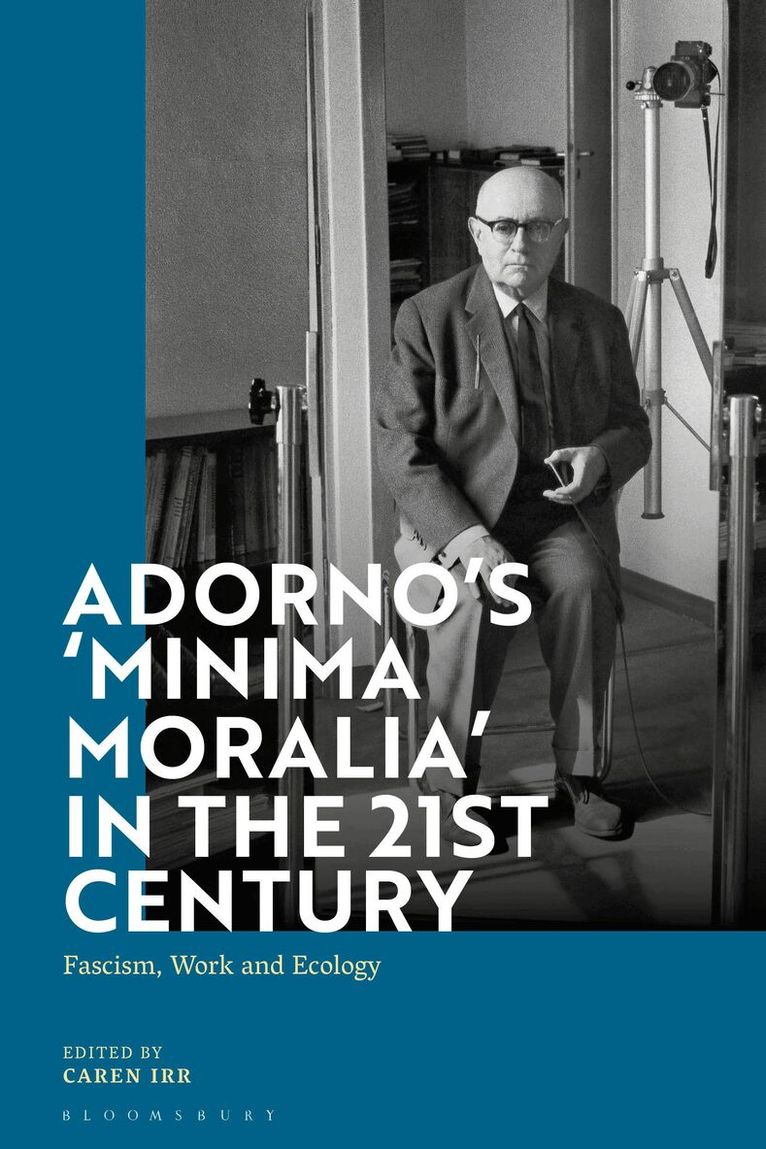
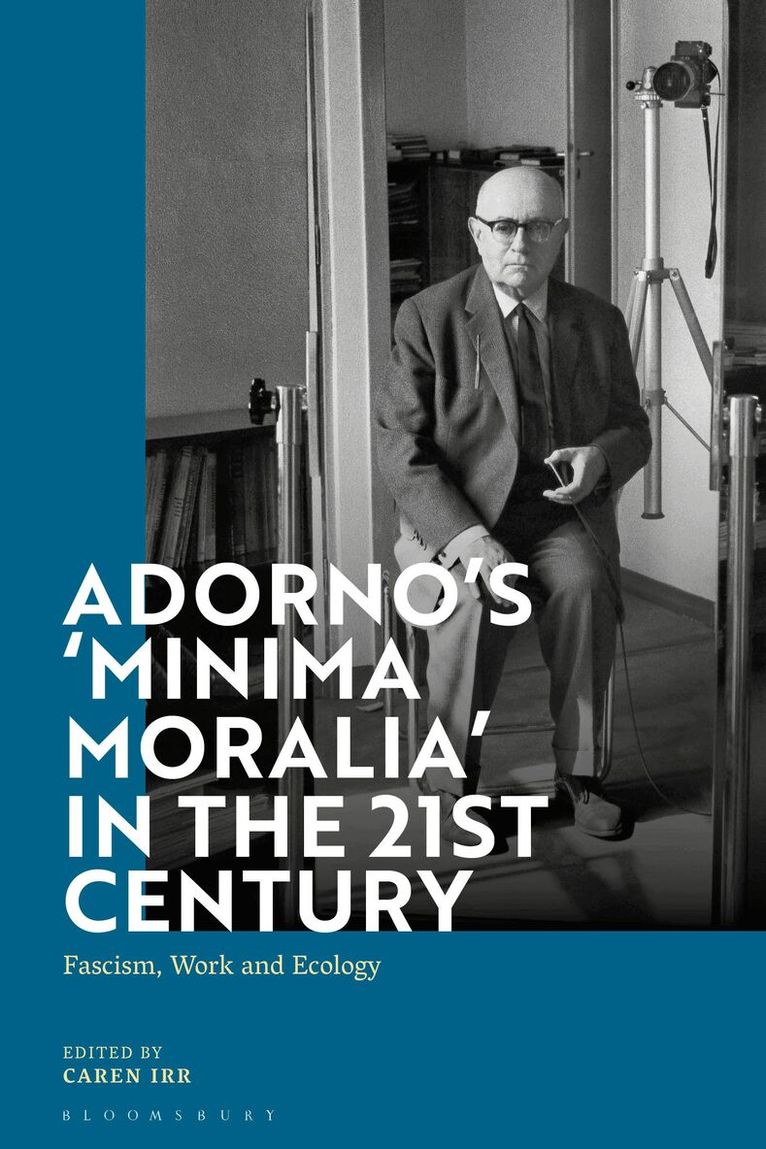
This interdisciplinary volume revisits Adorno’s lesser-known work, Minima Moralia, and makes the case for its application to the most urgent concerns of the 21st century. Contributing authors situate Adorno at the heart of contemporary debates on the ecological crisis, the changing nature of work, the idea of utopia, and the rise of fascism. Exploring the role of critical pedagogy in shaping responses to fascistic regimes, alongside discussions of extractive economies and the need for leisure under increasingly precarious working conditions, this volume makes new connections between Minima Moralia and critical theory today. Another line of focus is the aphoristic style of Minima Moralia and its connection to Adorno’s wider commitment to small and minor literary forms, which enable capitalist critique to be both subversive and poetic. This critique is further located in Adorno’s discussion of a utopia that is reliant on complete rejection of the totalising system of capitalism. The distinctive feature of such a utopia for Adorno is dependent upon individual suffering and subsequent survival, an argument this book connects to the mutually constitutive relationship between ecological destruction and right-wing authoritarianism. These timely readings of Adorno’s Minima Moralia teach us to adapt through our survival, and to pursue a utopia based on his central ideas. In the process, opening up theoretical spaces and collapsing the physical borders between us in the spirit of Adorno’s lifelong project.
408 kr
Skickas inom 10-15 vardagar
This interdisciplinary volume revisits Adorno’s lesser-known work, Minima Moralia, and makes the case for its application to the most urgent concerns of the 21st century. Contributing authors situate Adorno at the heart of contemporary debates on the ecological crisis, the changing nature of work, the idea of utopia, and the rise of fascism. Exploring the role of critical pedagogy in shaping responses to fascistic regimes, alongside discussions of extractive economies and the need for leisure under increasingly precarious working conditions, this volume makes new connections between Minima Moralia and critical theory today. Another line of focus is the aphoristic style of Minima Moralia and its connection to Adorno’s wider commitment to small and minor literary forms, which enable capitalist critique to be both subversive and poetic. This critique is further located in Adorno’s discussion of a utopia that is reliant on complete rejection of the totalising system of capitalism. The distinctive feature of such a utopia for Adorno is dependent upon individual suffering and subsequent survival, an argument this book connects to the mutually constitutive relationship between ecological destruction and right-wing authoritarianism. These timely readings of Adorno’s Minima Moralia teach us to adapt through our survival, and to pursue a utopia based on his central ideas. In the process, opening up theoretical spaces and collapsing the physical borders between us in the spirit of Adorno’s lifelong project.
1 343 kr
Skickas inom 10-15 vardagar
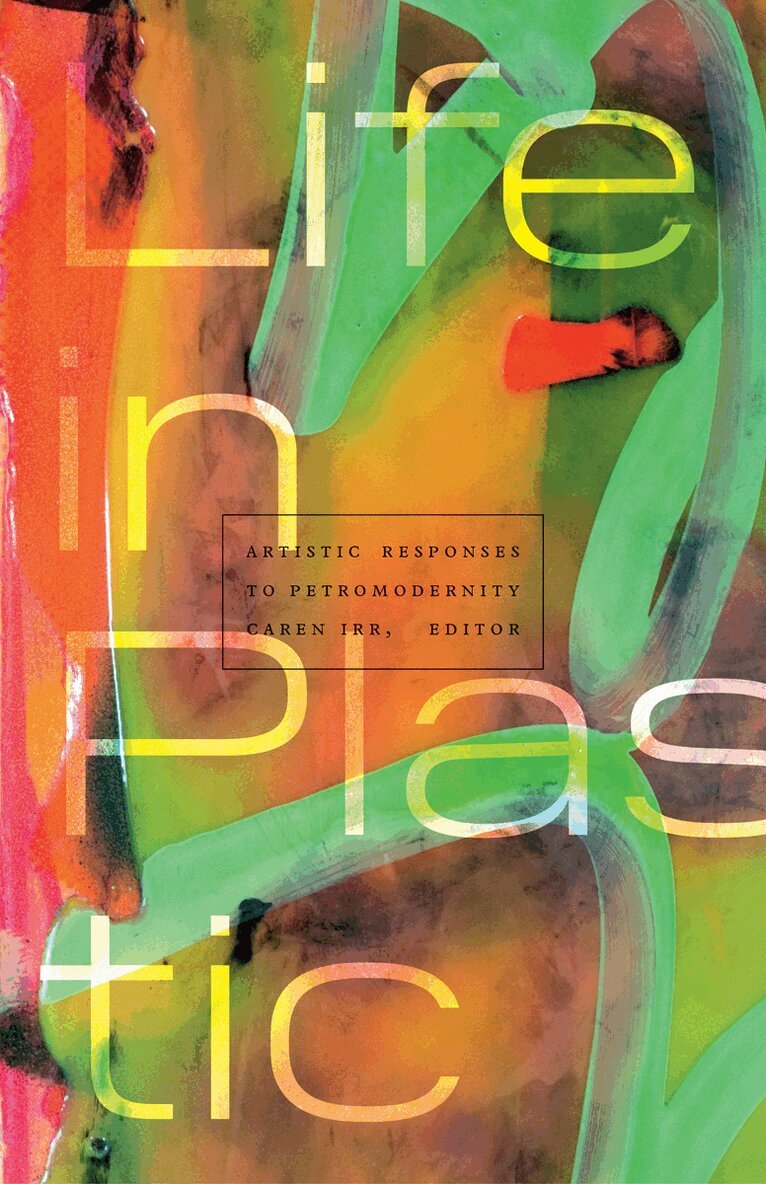
A vital contribution to environmental humanities that explores artistic responses to the plastic age Since at least the 1960s, plastics have been a defining feature of contemporary life. They are undeniably utopian-wondrously innovative, cheap, malleable, durable, and convenient. Yet our proliferating use of plastics has also triggered catastrophic environmental consequences. Plastics are piling up in landfills, floating in oceans, and contributing to climate change and cancer clusters. They are derived from petrochemicals and enmeshed with the global oil economy, and they permeate our consumer goods and their packaging, our clothing and buildings, our bodies and minds. Plastic reshapes our cultural and social imaginaries. With impressive breadth and compelling urgency, the essays in Life in Plastic examine the arts and literature of the plastic age. Focusing mainly on post-1960s North America, the collection spans a wide variety of genres, including graphic novels, superhero comics, utopic and dystopic science fiction, poetry, and satirical prose, as well as vinyl records and visual arts. Essays by a remarkable lineup of cultural theorists interrogate how plastic-as material and concept-has affected human sensibilities and expression. The collection reveals the place of plastic in reshaping how we perceive, relate to, represent, and re-imagine bodies, senses, environment, scale, mortality, and collective well-being.Ultimately, the contributors to Life in Plastic think through plastic with an eye to imagining our way out of plastic, moving toward a postplastic future.Contributors: Crystal Bartolovich, Syracuse U; Maurizia Boscagli, U of California, Santa Barbara; Christopher Breu, Illinois State U; Loren Glass, U of Iowa; Sean Grattan, U of Kent; Nayoung Kim, Brandeis U; Jane Kuenz, U of Southern Maine; Paul Morrison, Brandeis U; W. Dana Phillips, Towson U in Maryland and Rhodes U in Grahamstown, South Africa; Margaret Ronda, UC-Davis; Lisa Swanstrom, U of Utah; Jennifer Wagner-Lawlor, Pennsylvania State U; Phillip E. Wegner, U of Florida; Daniel Worden, Rochester Institute of Technology.
330 kr
Skickas inom 10-15 vardagar
A vital contribution to environmental humanities that explores artistic responses to the plastic age Since at least the 1960s, plastics have been a defining feature of contemporary life. They are undeniably utopian-wondrously innovative, cheap, malleable, durable, and convenient. Yet our proliferating use of plastics has also triggered catastrophic environmental consequences. Plastics are piling up in landfills, floating in oceans, and contributing to climate change and cancer clusters. They are derived from petrochemicals and enmeshed with the global oil economy, and they permeate our consumer goods and their packaging, our clothing and buildings, our bodies and minds. Plastic reshapes our cultural and social imaginaries. With impressive breadth and compelling urgency, the essays in Life in Plastic examine the arts and literature of the plastic age. Focusing mainly on post-1960s North America, the collection spans a wide variety of genres, including graphic novels, superhero comics, utopic and dystopic science fiction, poetry, and satirical prose, as well as vinyl records and visual arts. Essays by a remarkable lineup of cultural theorists interrogate how plastic-as material and concept-has affected human sensibilities and expression. The collection reveals the place of plastic in reshaping how we perceive, relate to, represent, and re-imagine bodies, senses, environment, scale, mortality, and collective well-being.Ultimately, the contributors to Life in Plastic think through plastic with an eye to imagining our way out of plastic, moving toward a postplastic future.Contributors: Crystal Bartolovich, Syracuse U; Maurizia Boscagli, U of California, Santa Barbara; Christopher Breu, Illinois State U; Loren Glass, U of Iowa; Sean Grattan, U of Kent; Nayoung Kim, Brandeis U; Jane Kuenz, U of Southern Maine; Paul Morrison, Brandeis U; W. Dana Phillips, Towson U in Maryland and Rhodes U in Grahamstown, South Africa; Margaret Ronda, UC-Davis; Lisa Swanstrom, U of Utah; Jennifer Wagner-Lawlor, Pennsylvania State U; Phillip E. Wegner, U of Florida; Daniel Worden, Rochester Institute of Technology.
1 363 kr
Skickas inom 7-10 vardagar
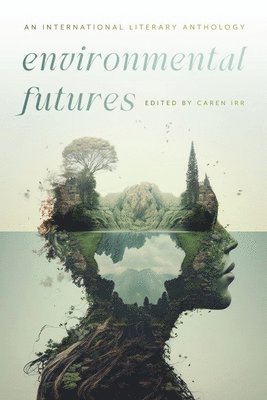
A global anthology, curated by experts from around the world, draws on fiction and poetry to examine environmental challenges and their implications for communities. Featuring short stories, poetry, drama, and creative nonfiction from around the world, this anthology showcases contemporary literature to envision the future of the environment. While environmental literature written in English has been dominated by English and American men who make solo explorations into an unspoiled natural world, Environmental Futures emphasizes local and indigenous writers contending with global landscapes that are far from pristine. Their work opens up decolonial perspectives from Anglophone Africa, South Asia, India, China, South America, the peripheries of Europe, and BIPoC North America. Introducing many writers who will be unfamiliar to English-speaking readers, this collection explores resistance to the oil economy, the impact of storms and natural disasters, extinction, and relations between humans and animals, among other themes. The pieces are organized by geographical area in five sections: Africa, Asia, Europe, Latin America, and North America. Expert scholars and translators—Kurt Cavender, Roberto Forns-Broggi, Cajetan Iheka, Upamanyu (Pablo) Mukherjee, Irina Sadovina, and Shaobo Xie—selected the works and provided critical introductions for each section.
324 kr
Skickas inom 7-10 vardagar
A global anthology, curated by experts from around the world, draws on fiction and poetry to examine environmental challenges and their implications for communities. Featuring short stories, poetry, drama, and creative nonfiction from around the world, this anthology showcases contemporary literature to envision the future of the environment. While environmental literature written in English has been dominated by English and American men who make solo explorations into an unspoiled natural world, Environmental Futures emphasizes local and indigenous writers contending with global landscapes that are far from pristine. Their work opens up decolonial perspectives from Anglophone Africa, South Asia, India, China, South America, the peripheries of Europe, and BIPoC North America. Introducing many writers who will be unfamiliar to English-speaking readers, this collection explores resistance to the oil economy, the impact of storms and natural disasters, extinction, and relations between humans and animals, among other themes. The pieces are organized by geographical area in five sections: Africa, Asia, Europe, Latin America, and North America. Expert scholars and translators—Kurt Cavender, Roberto Forns-Broggi, Cajetan Iheka, Upamanyu (Pablo) Mukherjee, Irina Sadovina, and Shaobo Xie—selected the works and provided critical introductions for each section.