Carina J. Fearnley – författare
Visar alla böcker från författaren Carina J. Fearnley. Handla med fri frakt och snabb leverans.
6 produkter
6 produkter
Inbunden, Engelska, 2023
1 911 kr
Skickas inom 10-15 vardagar
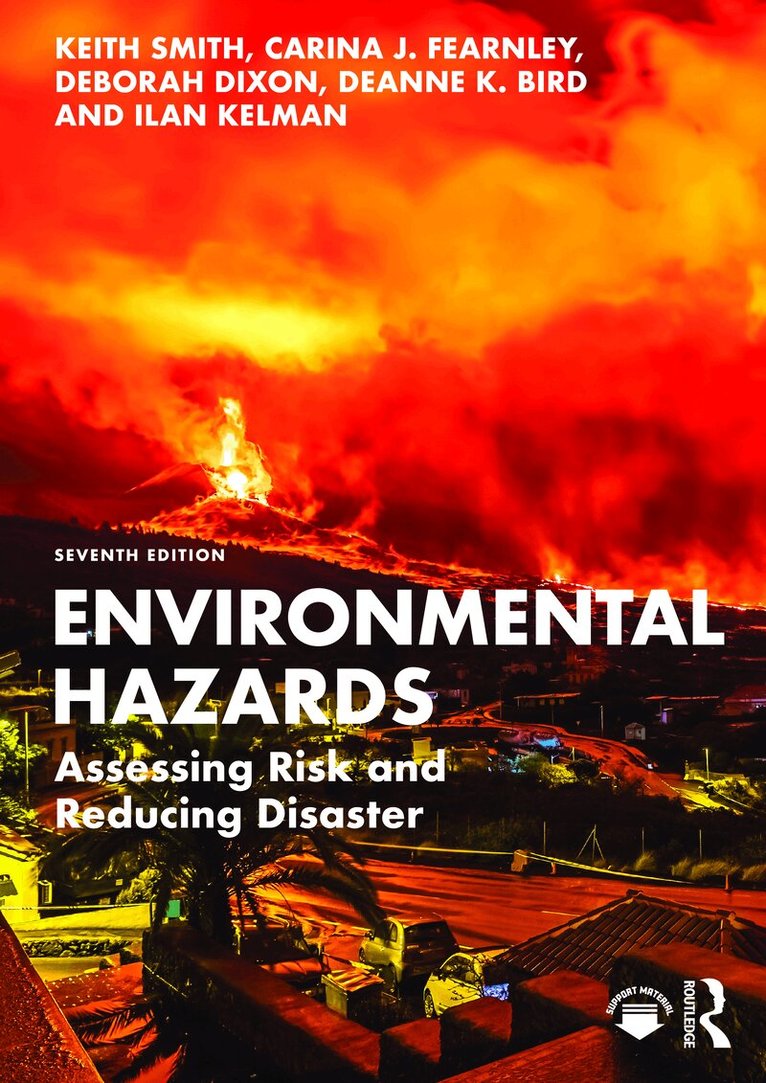
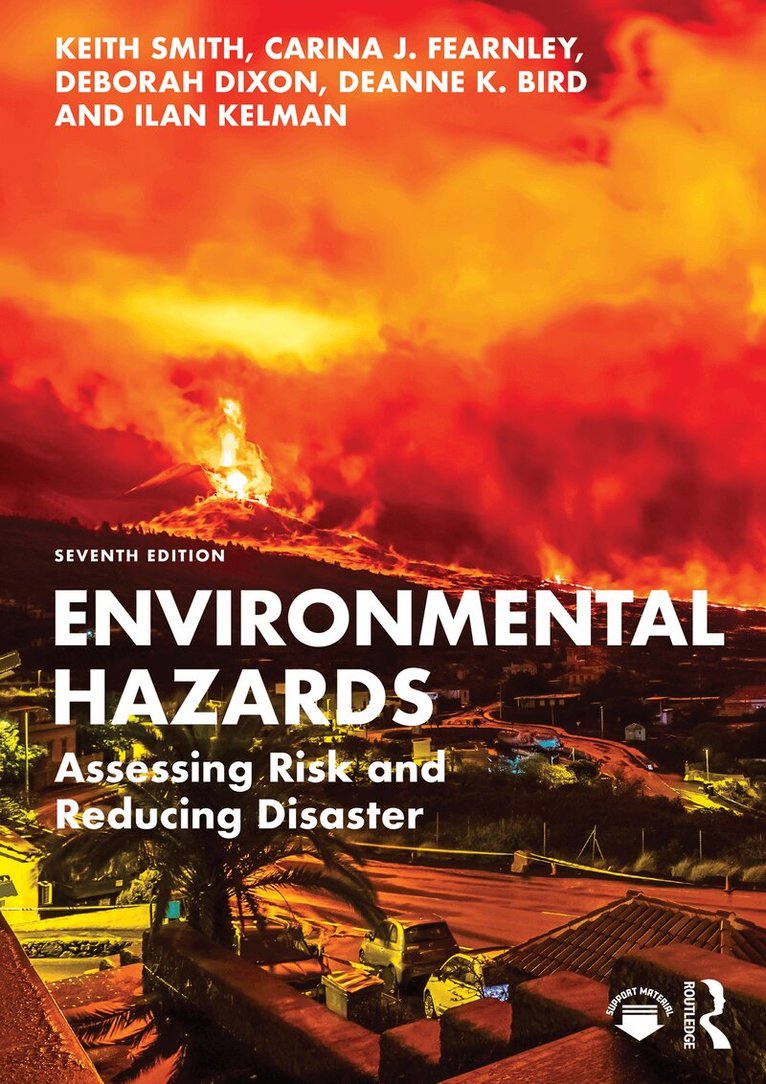
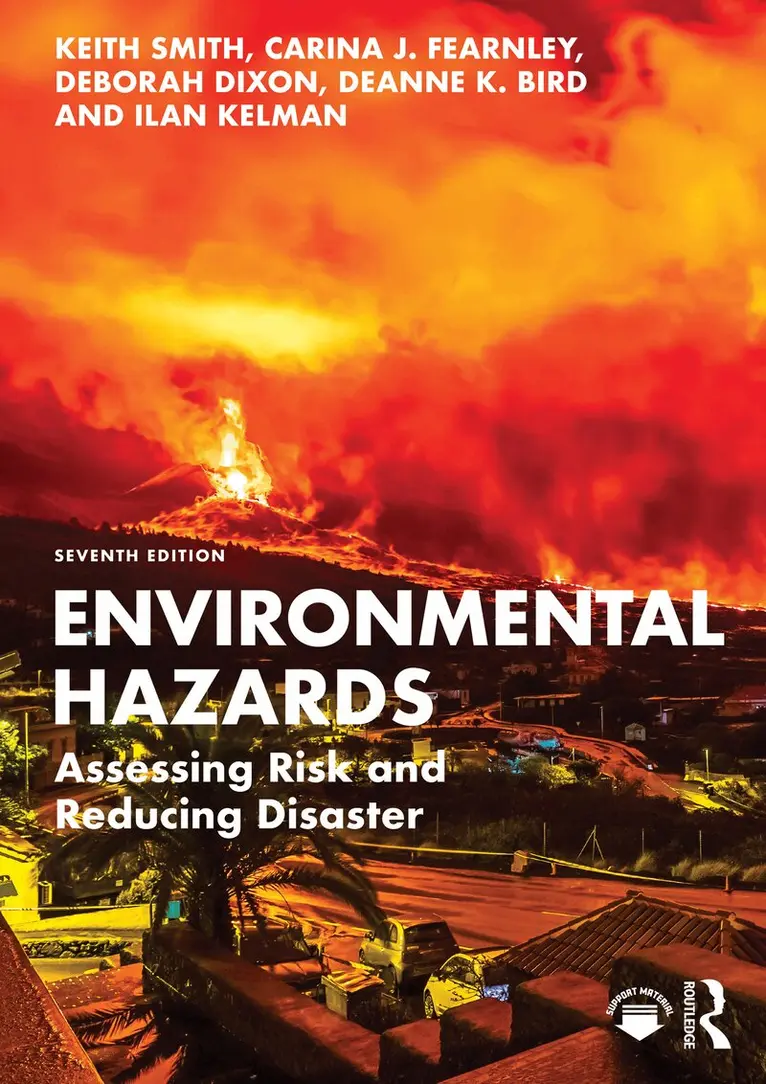
The seventh edition of Environmental Hazards provides a much expanded and fully up-to-date overview of all the extreme environmental events that threaten people and what they value in the 21st century globally. It integrates cutting-edge materials to provide an interdisciplinary approach to environmental hazards and their management, illustrating how natural and human systems interact to place communities of all sizes, and at all stages of economic development, at risk. Part 1 defines basic concepts of hazard, risk, vulnerability and disaster and explores the evolution of hazards theory. Part 2 employs a consistent chapter structure to demonstrate how individual hazards occur, their impacts and how the risks can be assessed and managed.This extensively revised edition includes:Fresh perspectives on the reliability of disaster data, disaster risk reduction, risk and disaster perception and communication, and new technologies available to assist with environmental hazard managementThe addition of several new environmental hazards including landslide and avalanches, cryospheric hazards, karst and subsidence hazards, and hazards of the AnthropoceneMore boxed sections with a focus on both generic issues and the lessons to be learned from a carefully selected range of up-to-date extreme eventsAn annotated list of key resources, including further reading and relevant websites, for all chaptersMore colour diagrams and photographs, and more than 1,000 references to some of the most significant and recent published materialNew exercises to assist teaching in the classroom, or self-learningThis carefully structured and balanced textbook captures the complexity and dynamism of environmental hazards and is essential reading for students across many disciplines including geography, environmental science, environmental studies and natural resources.
Häftad, Engelska, 2023
656 kr
Skickas inom 10-15 vardagar
The seventh edition of Environmental Hazards provides a much expanded and fully up-to-date overview of all the extreme environmental events that threaten people and what they value in the 21st century globally. It integrates cutting-edge materials to provide an interdisciplinary approach to environmental hazards and their management, illustrating how natural and human systems interact to place communities of all sizes, and at all stages of economic development, at risk. Part 1 defines basic concepts of hazard, risk, vulnerability and disaster and explores the evolution of hazards theory. Part 2 employs a consistent chapter structure to demonstrate how individual hazards occur, their impacts and how the risks can be assessed and managed.This extensively revised edition includes:Fresh perspectives on the reliability of disaster data, disaster risk reduction, risk and disaster perception and communication, and new technologies available to assist with environmental hazard managementThe addition of several new environmental hazards including landslide and avalanches, cryospheric hazards, karst and subsidence hazards, and hazards of the AnthropoceneMore boxed sections with a focus on both generic issues and the lessons to be learned from a carefully selected range of up-to-date extreme eventsAn annotated list of key resources, including further reading and relevant websites, for all chaptersMore colour diagrams and photographs, and more than 1,000 references to some of the most significant and recent published materialNew exercises to assist teaching in the classroom, or self-learningThis carefully structured and balanced textbook captures the complexity and dynamism of environmental hazards and is essential reading for students across many disciplines including geography, environmental science, environmental studies and natural resources.
E-bok
Engelska, 2023746 kr
Läs direkt efter köp
The seventh edition of Environmental Hazards provides a much expanded and fully up-to-date overview of all the extreme environmental events that threaten people and what they value in the 21st century globally. It integrates cutting-edge materials to provide an interdisciplinary approach to environmental hazards and their management, illustrating how natural and human systems interact to place communities of all sizes, and at all stages of economic development, at risk. Part 1 defines basic concepts of hazard, risk, vulnerability and disaster and explores the evolution of hazards theory. Part 2 employs a consistent chapter structure to demonstrate how individual hazards occur, their impacts and how the risks can be assessed and managed.This extensively revised edition includes:Fresh perspectives on the reliability of disaster data, disaster risk reduction, risk and disaster perception and communication, and new technologies available to assist with environmental hazard managementThe addition of several new environmental hazards including landslide and avalanches, cryospheric hazards, karst and subsidence hazards, and hazards of the AnthropoceneMore boxed sections with a focus on both generic issues and the lessons to be learned from a carefully selected range of up-to-date extreme eventsAn annotated list of key resources, including further reading and relevant websites, for all chaptersMore colour diagrams and photographs, and more than 1,000 references to some of the most significant and recent published materialNew exercises to assist teaching in the classroom, or self-learningThis carefully structured and balanced textbook captures the complexity and dynamism of environmental hazards and is essential reading for students across many disciplines including geography, environmental science, environmental studies and natural resources.
E-bok
PDF, Engelska, 2023753 kr
Läs direkt efter köp
The seventh edition of Environmental Hazards provides a much expanded and fully up-to-date overview of all the extreme environmental events that threaten people and what they value in the 21st century globally. It integrates cutting-edge materials to provide an interdisciplinary approach to environmental hazards and their management, illustrating how natural and human systems interact to place communities of all sizes, and at all stages of economic development, at risk. Part 1 defines basic concepts of hazard, risk, vulnerability and disaster and explores the evolution of hazards theory. Part 2 employs a consistent chapter structure to demonstrate how individual hazards occur, their impacts and how the risks can be assessed and managed.This extensively revised edition includes:Fresh perspectives on the reliability of disaster data, disaster risk reduction, risk and disaster perception and communication, and new technologies available to assist with environmental hazard managementThe addition of several new environmental hazards including landslide and avalanches, cryospheric hazards, karst and subsidence hazards, and hazards of the AnthropoceneMore boxed sections with a focus on both generic issues and the lessons to be learned from a carefully selected range of up-to-date extreme eventsAn annotated list of key resources, including further reading and relevant websites, for all chaptersMore colour diagrams and photographs, and more than 1,000 references to some of the most significant and recent published materialNew exercises to assist teaching in the classroom, or self-learningThis carefully structured and balanced textbook captures the complexity and dynamism of environmental hazards and is essential reading for students across many disciplines including geography, environmental science, environmental studies and natural resources.
Häftad, Engelska, 2019
549 kr
Skickas inom 10-15 vardagar
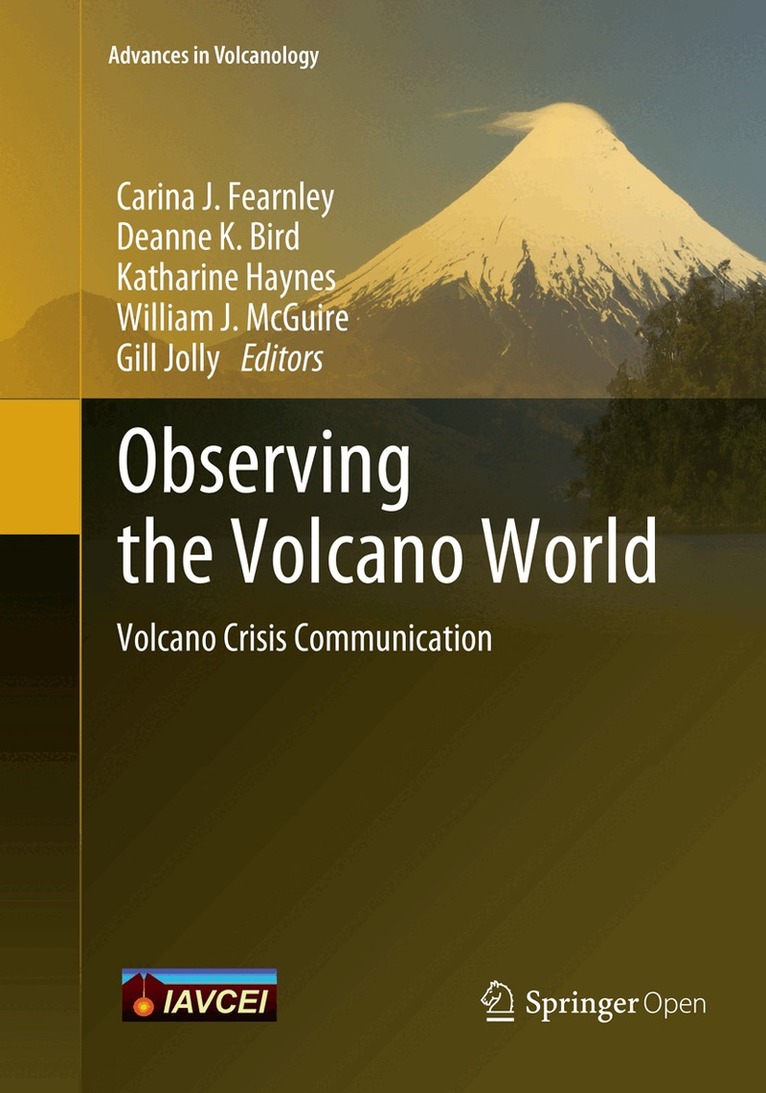
This open access book provides a comprehensive overview of volcanic crisis research, the goal being to establish ways of successfully applying volcanology in practice and to identify areas that need to be addressed for future progress. It shows how volcano crises are managed in practice, and helps to establish best practices. Consequently the book brings together authors from all over the globe who work with volcanoes, ranging from observatory volcanologists, disaster practitioners and government officials to NGO-based and government practitioners to address three key aspects of volcanic crises. First, the book explores the unique nature of volcanic hazards, which makes them a particularly challenging threat to forecast and manage, due in part to their varying spatial and temporal characteristics. Second, it presents lessons learned on how to best manage volcanic events based on a number of crises that have shaped our understanding of volcanic hazards and crises management. Third, it discusses the diverse and wide-ranging aspects of communication involved in crises, which merge old practices and new technologies to accommodate an increasingly challenging and globalised world. The information and insights presented here are essential to tapping established knowledge, moving towards more robust volcanic crises management, and understanding how the volcanic world is perceived from a range of standpoints and contexts around the globe.
Inbunden, Engelska, 2018
549 kr
Skickas inom 10-15 vardagar
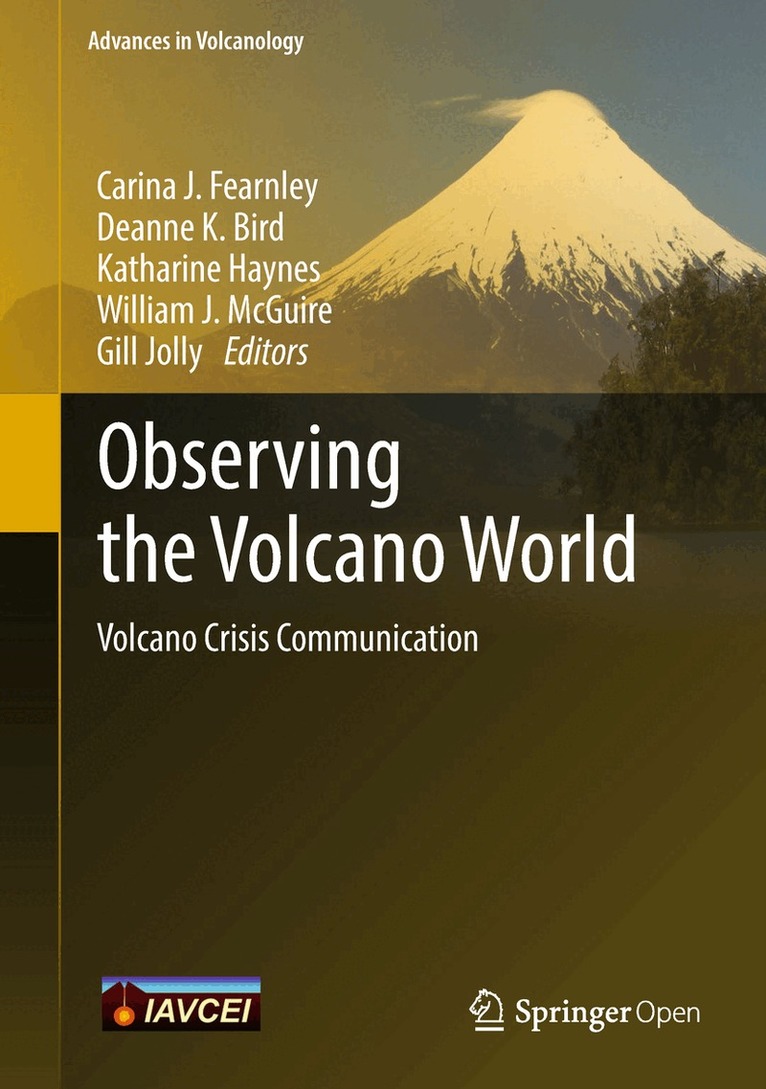
This open access book provides a comprehensive overview of volcanic crisis research, the goal being to establish ways of successfully applying volcanology in practice and to identify areas that need to be addressed for future progress. It shows how volcano crises are managed in practice, and helps to establish best practices. Consequently the book brings together authors from all over the globe who work with volcanoes, ranging from observatory volcanologists, disaster practitioners and government officials to NGO-based and government practitioners to address three key aspects of volcanic crises. First, the book explores the unique nature of volcanic hazards, which makes them a particularly challenging threat to forecast and manage, due in part to their varying spatial and temporal characteristics. Second, it presents lessons learned on how to best manage volcanic events based on a number of crises that have shaped our understanding of volcanic hazards and crises management. Third, it discusses the diverse and wide-ranging aspects of communication involved in crises, which merge old practices and new technologies to accommodate an increasingly challenging and globalised world. The information and insights presented here are essential to tapping established knowledge, moving towards more robust volcanic crises management, and understanding how the volcanic world is perceived from a range of standpoints and contexts around the globe.