Carl Benedikt Frey - Böcker
Visar alla böcker från författaren Carl Benedikt Frey. Handla med fri frakt och snabb leverans.
5 produkter
5 produkter
342 kr
Skickas inom 7-10 vardagar
Shortlisted for the Financial Times and Schroders Business Book of the Year AwardHow 1,000 years of global history show why technological and economic progress is often followed by stagnation and even collapseIn How Progress Ends, Carl Benedikt Frey challenges the conventional belief that economic and technological progress is inevitable. For most of human history, stagnation was the norm, and even today progress and prosperity in the world’s largest, most advanced economies—the United States and China—have fallen short of expectations. To appreciate why we cannot depend on any AI-fueled great leap forward, Frey offers a remarkable and fascinating journey across the globe, spanning the past 1,000 years, to explain why some societies flourish and others fail in the wake of rapid technological change.By examining key historical moments—from the rise of the steam engine to the dawn of AI—Frey shows why technological shifts have shaped, and sometimes destabilized, entire civilizations. He explores why some leading technological powers of the past—such as Song China, the Dutch Republic, and Victorian Britain—ultimately lost their innovative edge, why some modern nations such as Japan had periods of rapid growth followed by stagnation, and why planned economies like the Soviet Union collapsed after brief surges of progress. Frey uncovers a recurring tension in history: while decentralization fosters the exploration of new technologies, bureaucracy is crucial for scaling them. When institutions fail to adapt to technological change, stagnation inevitably follows. Only by carefully balancing decentralization and bureaucracy can nations innovate and grow over the long term—findings that have worrying implications for the United States, Europe, China, and other economies today.Through a rich narrative that weaves together history, economics, and technology, How Progress Ends reveals that managing the future requires us to draw the right lessons from the past.
244 kr
Skickas inom 7-10 vardagar
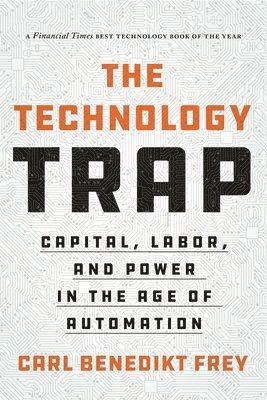
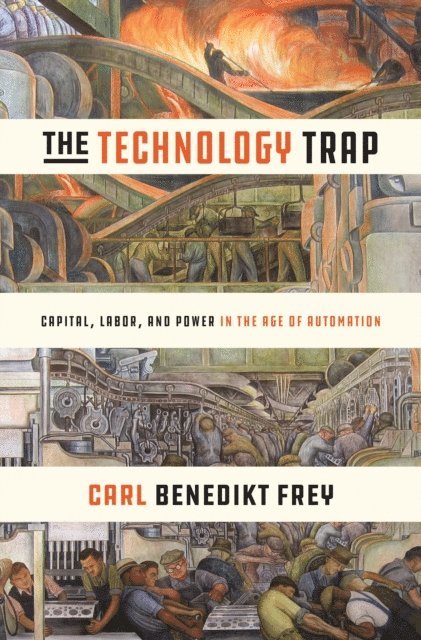
"Made me look at the industrial revolution, invention, sleeping beauties, contexts and the forces that shape our societies differently."—David Byrne, New York Times Book ReviewHow the history of technological revolutions can help us better understand economic and political polarization in the age of automation From the Industrial Revolution to the age of artificial intelligence, The Technology Trap takes a sweeping look at the history of technological progress and how it has radically shifted the distribution of economic and political power among society’s members. As Carl Benedikt Frey shows, the Industrial Revolution created unprecedented wealth and prosperity over the long run, but the immediate consequences of mechanization were devastating for large swaths of the population. Middle-income jobs withered, wages stagnated, the labor share of income fell, profits surged, and economic inequality skyrocketed. These trends, Frey documents, broadly mirror those in our current age of automation, which began with the Computer Revolution.Just as the Industrial Revolution eventually brought about extraordinary benefits for society, artificial intelligence systems have the potential to do the same. But Frey argues that this depends on how the short term is managed. In the nineteenth century, workers violently expressed their concerns over machines taking their jobs. The Luddite uprisings joined a long wave of machinery riots that swept across Europe and China. Today’s despairing middle class has not resorted to physical force, but their frustration has led to rising populism and the increasing fragmentation of society. As middle-class jobs continue to come under pressure, there’s no assurance that positive attitudes to technology will persist.The Industrial Revolution was a defining moment in history, but few grasped its enormous consequences at the time. The Technology Trap demonstrates that in the midst of another technological revolution, the lessons of the past can help us to more effectively face the present.
221 kr
Skickas inom 7-10 vardagar
"Made me look at the industrial revolution, invention, sleeping beauties, contexts and the forces that shape our societies differently."—David Byrne, New York Times Book ReviewHow the history of technological revolutions can help us better understand economic and political polarization in the age of automation From the Industrial Revolution to the age of artificial intelligence, The Technology Trap takes a sweeping look at the history of technological progress and how it has radically shifted the distribution of economic and political power among society’s members. As Carl Benedikt Frey shows, the Industrial Revolution created unprecedented wealth and prosperity over the long run, but the immediate consequences of mechanization were devastating for large swaths of the population. Middle-income jobs withered, wages stagnated, the labor share of income fell, profits surged, and economic inequality skyrocketed. These trends, Frey documents, broadly mirror those in our current age of automation, which began with the Computer Revolution.Just as the Industrial Revolution eventually brought about extraordinary benefits for society, artificial intelligence systems have the potential to do the same. But Frey argues that this depends on how the short term is managed. In the nineteenth century, workers violently expressed their concerns over machines taking their jobs. The Luddite uprisings joined a long wave of machinery riots that swept across Europe and China. Today’s despairing middle class has not resorted to physical force, but their frustration has led to rising populism and the increasing fragmentation of society. As middle-class jobs continue to come under pressure, there’s no assurance that positive attitudes to technology will persist.The Industrial Revolution was a defining moment in history, but few grasped its enormous consequences at the time. The Technology Trap demonstrates that in the midst of another technological revolution, the lessons of the past can help us to more effectively face the present.
Intellectual Property Rights and the Financing of Technological Innovation
Public Policy and the Efficiency of Capital Markets
Inbunden, Engelska, 2013
1 945 kr
Skickas inom 7-10 vardagar
Following the transition of industrial nations to knowledge economies, the financing of technological innovation has become a central issue in public policy, corporate finance and business management. This detailed book examines the role of intellectual property rights in facilitating the financing of technological innovation as well as the role of policy makers, investors and managers in this process. The book's central finding is that public policy plays a key role in promoting the corporate disclosure of intellectual property-related information to enhance the efficiency of capital markets. This not only reduces the costs of capital for technology-driven firms but ultimately spurs innovation and economic growth.Intellectual Property Rights and the Financing of Technological Innovation will strongly appeal to research students and academics, policy makers, intellectual property professionals, equity analysts, credit rating analysts and executives in the pharmaceutical industry.Contents: 1. Introduction 2. The Intangible Economy 3. Patent Information and Corporate Credit Ratings: An Empirical Study of Patent Valuation by Credit Rating Agencies 4. IPR Management and Company Valuation in the Pharmaceutical Industry: An Exploratory Study 5. IPR Management, Corporate Disclosures, and Stock Market Valuations in the Pharmaceutical Industry 6. Towards Forward-looking Financial Reporting Bibliography Index
386 kr
Skickas inom 3-6 vardagar