Carl Boggs – författare
2 198 kr
Skickas inom 10-15 vardagar
643 kr
Skickas inom 10-15 vardagar
558 kr
Skickas inom 10-15 vardagar
700 kr
Skickas inom 10-15 vardagar
346 kr
Skickas inom 10-15 vardagar
508 kr
Skickas inom 10-15 vardagar
605 kr
Skickas inom 10-15 vardagar
357 kr
Skickas inom 5-8 vardagar
1 219 kr
Skickas inom 11-20 vardagar
377 kr
Skickas inom 5-8 vardagar
706 kr
Läs direkt efter köp
706 kr
Läs direkt efter köp
690 kr
Läs direkt efter köp
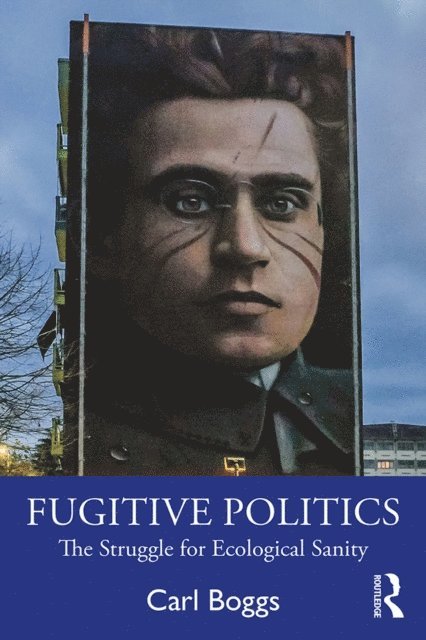
Fugitive Politics explores the intersection between politics and ecology, between the requirements for radical change and the unprecedented challenges posed by the global crisis, a dialectic has rarely been addressed in academia.
Across eight chapters, Carl Boggs explores how systemic change may be achieved within the current system, while detailing attempts at achieving change within nation-states. Boggs states that any notion of revolution seems fanciful in the current climate, contending that controlling elites have concentrated their hold on corporate power along three self-serving fronts: technology (Big Tech) and the surveillance order, militarism and the warfare state, and intensification of globalized power. Combined with this Boggs cites the fundamental absence of revolutionary counter-forces, arguing that after decades of subservice relevant, allied to the rise of identity politics and social movements, the Marxist theoretical legacy is now exhausted and will not provide an exit from the crisis. Boggs concludes that the only possibility for fundamental change will come from an open style of politics, in the Jacobin tradition, operating within the overall structures of the current democratic state.
Written for both an academic and a general readership, in the U.S. and beyond, Fugitive Politics will be of vital importance to those studying political theory, political philosophy, political history, Marxism and Marxist theory, authoritarian politics, ecology, environmental politics, and climate politics.
690 kr
Läs direkt efter köp
Fugitive Politics explores the intersection between politics and ecology, between the requirements for radical change and the unprecedented challenges posed by the global crisis, a dialectic has rarely been addressed in academia.
Across eight chapters, Carl Boggs explores how systemic change may be achieved within the current system, while detailing attempts at achieving change within nation-states. Boggs states that any notion of revolution seems fanciful in the current climate, contending that controlling elites have concentrated their hold on corporate power along three self-serving fronts: technology (Big Tech) and the surveillance order, militarism and the warfare state, and intensification of globalized power. Combined with this Boggs cites the fundamental absence of revolutionary counter-forces, arguing that after decades of subservice relevant, allied to the rise of identity politics and social movements, the Marxist theoretical legacy is now exhausted and will not provide an exit from the crisis. Boggs concludes that the only possibility for fundamental change will come from an open style of politics, in the Jacobin tradition, operating within the overall structures of the current democratic state.
Written for both an academic and a general readership, in the U.S. and beyond, Fugitive Politics will be of vital importance to those studying political theory, political philosophy, political history, Marxism and Marxist theory, authoritarian politics, ecology, environmental politics, and climate politics.
586 kr
Skickas inom 10-15 vardagar
2 198 kr
Skickas inom 10-15 vardagar
656 kr
Läs direkt efter köp
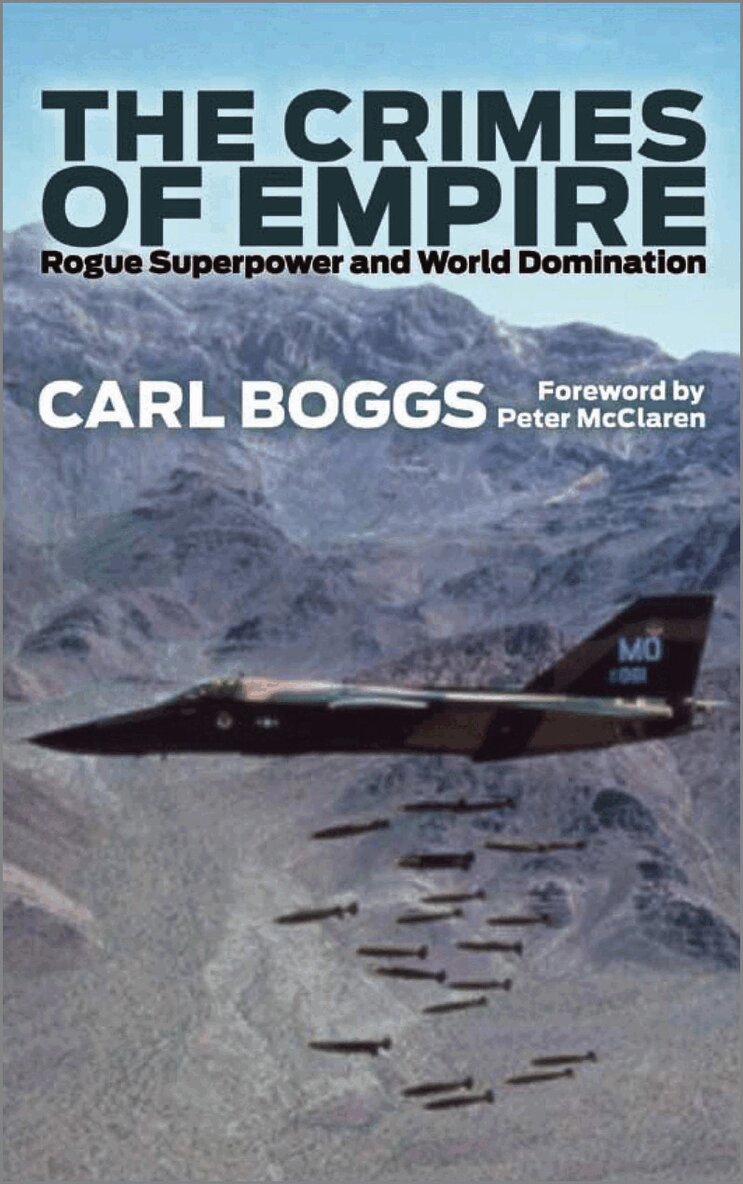
In Empire Versus Democracy, Carl Boggs traces the authoritarian trajectory of American politics since World War II, with emphasis on the growing concentration of corporate and military power that has accompanied the United States assumption of leading superpower on the world scene. The rise of the U.S. as unchallenged imperial nation has meant the steady expansion of a permanent war economy and security state that, working in tandem with large business interests, has led to proliferation of American armed-forces bases around the world, recurrent military interventions, swollen government bureaucracy, massive public expenditures, heavy reliance on surveillance and secrecy, and diminished resources for social infrastructure and social programs. Boggs shows that, as in the case of the Roman and other previous empires, enlargement of U.S. imperial power has resulted in a decline of civic engagement and local participation along with skewed priorities favoring the war economy and security state. Inevitably, this has meant a weakening of electoral and legislative politics, overwhelmed by the centers of enormous wealth and power.
The goal of this new, unique Series is to offer readable, teachable "thinking frames" on today’s social problems and social issues by leading scholars, all in short 60 page or shorter formats, and available for view on http://routledge.customgateway.com/routledge-social-issues.html
For instructors teaching a wide range of courses in the social sciences, the Routledge Social Issues Collection now offers the best of both worlds: originally written short texts that provide "overviews" to important social issues as well as teachable excerpts from larger works previously published by Routledge and other presses.
656 kr
Läs direkt efter köp
In Empire Versus Democracy, Carl Boggs traces the authoritarian trajectory of American politics since World War II, with emphasis on the growing concentration of corporate and military power that has accompanied the United States assumption of leading superpower on the world scene. The rise of the U.S. as unchallenged imperial nation has meant the steady expansion of a permanent war economy and security state that, working in tandem with large business interests, has led to proliferation of American armed-forces bases around the world, recurrent military interventions, swollen government bureaucracy, massive public expenditures, heavy reliance on surveillance and secrecy, and diminished resources for social infrastructure and social programs. Boggs shows that, as in the case of the Roman and other previous empires, enlargement of U.S. imperial power has resulted in a decline of civic engagement and local participation along with skewed priorities favoring the war economy and security state. Inevitably, this has meant a weakening of electoral and legislative politics, overwhelmed by the centers of enormous wealth and power.
The goal of this new, unique Series is to offer readable, teachable "thinking frames" on today’s social problems and social issues by leading scholars, all in short 60 page or shorter formats, and available for view on http://routledge.customgateway.com/routledge-social-issues.html
For instructors teaching a wide range of courses in the social sciences, the Routledge Social Issues Collection now offers the best of both worlds: originally written short texts that provide "overviews" to important social issues as well as teachable excerpts from larger works previously published by Routledge and other presses.
404 kr
Läs direkt efter köp
404 kr
Läs direkt efter köp
2 622 kr
Skickas inom 10-15 vardagar
2 481 kr
Skickas inom 10-15 vardagar
798 kr
Skickas inom 10-15 vardagar
2 511 kr
Skickas inom 10-15 vardagar
706 kr
Skickas inom 10-15 vardagar
942 kr
Läs direkt efter köp
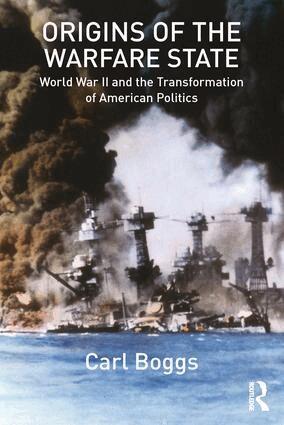
The post-World War II emergence of a full-blown state of perpetual war is arguably the most important feature of contemporary American politics. This book examines the "warfare state" in terms of a broad ensemble of structures, policies, and ideologies: permanent war economy, national security-state, global expansion of military bases, merger of state, corporate, and military power, an imperial presidency, the nuclear establishment, and superpower ambitions. Carl Boggs makes the argument that the "Good War" led to an authoritarian system that has expanded throughout the post-war decades, undermining liberal-democratic institutions and values in the process. He goes on to suggest that current American electoral politics show no sign of rolling back the warfare state and in fact, may push it to a new threshold bordering on American fascism.
942 kr
Läs direkt efter köp
The post-World War II emergence of a full-blown state of perpetual war is arguably the most important feature of contemporary American politics. This book examines the "warfare state" in terms of a broad ensemble of structures, policies, and ideologies: permanent war economy, national security-state, global expansion of military bases, merger of state, corporate, and military power, an imperial presidency, the nuclear establishment, and superpower ambitions. Carl Boggs makes the argument that the "Good War" led to an authoritarian system that has expanded throughout the post-war decades, undermining liberal-democratic institutions and values in the process. He goes on to suggest that current American electoral politics show no sign of rolling back the warfare state and in fact, may push it to a new threshold bordering on American fascism.
918 kr
Läs direkt efter köp
891 kr
Läs direkt efter köp
746 kr
Läs direkt efter köp
Deep historical trends suggest the United States could be moving toward a distinctly novel form of fascism, embracing elements of the historical phenomenon as it appeared in such countries as Italy, Germany, Japan, and Spain while departing in significant ways. A twenty-first century fascism would hardly be revolutionary or totalitarian, as it would involve no dramatic break with the past, following a logic of continuity and building on firmaments of entrenched power going back to World War II. This new type of fascist regime would be driven by a tightening confluence of sectoral interests in American society: corporate, state, military, and cultural – interests favoring oligarchy, authoritarianism, the warfare system, and surveillance order within an expanding globalized matrix of power. The dominant historical forces emphasized by such theorists as C. Wright Mills (The Power Elite) and Sheldon Wolin (Democracy, Inc.), an important foundation of this book, have grown stronger and more pervasive across the decades. An integrated power structure has been fueled by new advances in technology, a money-saturated political system, and neoliberal globalism bolstered by the spread of right wing populism that, among other things, has catapulted Donald Trump into the U.S. presidency.
In this book, Carl Boggs explores new political and ideological terrain in systematically considering the prospects for a gradual development of fascism in contemporary American society and, by extension, elsewhere across the advanced industrial world. He persuasively argues that modern fascistic trends, arguably most visible in the U.S., demonstrate a closer affinity with Mussolini’s Italy (corporate state) than with the more extreme Nazi German model of tyranny and genocide.
A very timely scholarly enterprise, this book will be of interest to students of contemporary radical politics, fascism more broadly, US political history, ideologies and party politics.