Carl Lavo – författare
Visar alla böcker från författaren Carl Lavo. Handla med fri frakt och snabb leverans.
6 produkter
Bucks County Adventures
From William Penn and George Washington to Neil Armstrong
Av Carl Lavo
Inbunden, 2016
412 kr
Lägg i varukorg
Galloping Ghost
The Extraordinary Life of Submarine Legend Eugene
Av Carl LaVO
E-bok, 2013
337 kr
Lägg i varukorg
Eugene Fluckey was one of the great naval heroes of World War II. His exploits as captain of the submarine USS Barb revolutionized undersea warfare and laid the groundwork for a nuclear-powered ballistic missile submarine fleet. He retired as a rear admiral and was awarded numerous presidential, …
Back from the Deep
The Strange Story of the Sister Subs ''Squalus'' and ''Sculpin''
Av Carl LaVO
E-bok, 2012
248 kr
Lägg i varukorg
This epic World War II saga follows the USS Squalus and Sculpin as they play out their dramatic destinies in the Pacific. The author, a seasoned journalist, re-creates their entire perilous journey. The Squalus sank during a test dive in 1939, but thirty-three trapped crewmen were saved thanks to …
Bucks County Adventures
From William Penn and George Washington to Neil Armstrong
Av Carl Lavo
Inbunden, 2023
493 kr
Lägg i varukorg
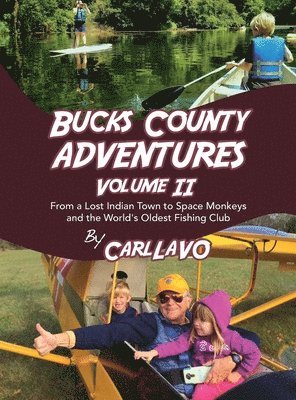
Bucks County Adventures Volume II
From a Lost Indian Town to Space Monkeys and the World's Oldest Fishing Club
Av Carl Lavo
Inbunden, 2023
505 kr
Lägg i varukorg