Carl Milofsky – författare
Visar alla böcker från författaren Carl Milofsky. Handla med fri frakt och snabb leverans.
9 produkter
9 produkter
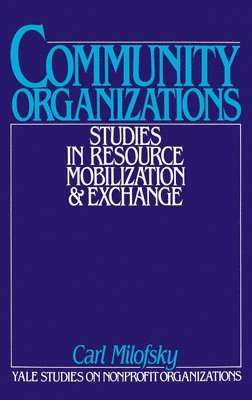
Inbunden, Engelska, 1988
1 540 kr
Skickas inom 5-8 vardagar
Treating community organizations as parts of larger systems - organizational fields or ecologies and communities - this book presents various perspectives on local non-profit organizations from the standpoint of organizational theory.
E-bok
PDF, Engelska, 1988859 kr
Läs direkt efter köp
Local nonprofit organizations are often small, loosely structured, and democratically governed, and therefore do not fit conveniently into traditional theories of organizational behavior that are rooted in administrative science and bureaucratic structure. Treating community organizations as parts of larger systems--organizational fields or ecologies and communities--this collection of papers presents various perspectives on local nonprofit organizations from the standpoint of organizational theory. The essays draw on an array of methods and theoretical approaches taken from population ecology theories of organizations, laying the foundation for the structural analysis of community organizations.
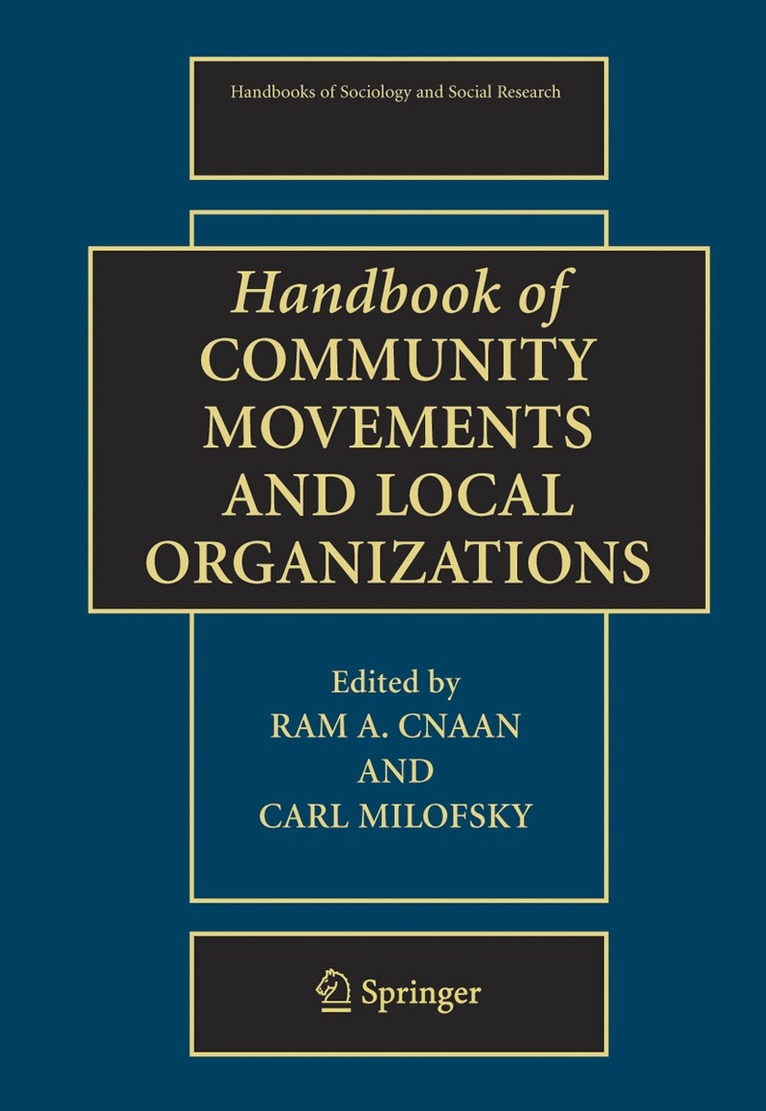
Inbunden, Engelska, 2006
1 619 kr
Skickas inom 10-15 vardagar
Creating a Frame for Understanding Local Organizations RAM CNAAN, CARL MILOFSKY, AND ALBERT HUNTER In this book, scholars from anumber of disciplines present work focused on communities, with particular attention to community organizations. A few scholars have emphasized the imp- tance of the need to map this intellectual territory (Calhoun, 1992). In some ways community study seems to be well trodden ground; there has been influential work on social capital, for example (Coleman, 1987,1988; Putnam, 1995; Foley and Edwards, 1997; Edwards and Foley, 1998). Yet the rich diversity of communities and community organizations has rarely been studied from a perspective that is both conceptual and descriptive. The growing sense that - studied local organizations constitute a massive yet little understood portion of the nonprofit cosmos has led Smith (1997a,b) to call them the "darkmatter of the nonprofit universe. " An - terdisciplinary attempt to make community a unit ofstudy has not been previously undertaken, and thus we feel that this Handbook makes a unique contribution to scholarly understanding ofboth communities and nonprofit organizations that operate at the community level. A community is a group of people connected by the physical or virtual location (to some extent we can speak of "places" on the World Wide Web, e. g. ) in which they dwell or congregate, organizations they form, and cultural values and symbols they share. Communities are affected, and in a sense defined by, forces that affect community members and their space.
E-bok
PDF, Engelska, 20101 977 kr
Läs direkt efter köp
Creating a Frame for Understanding Local Organizations RAM CNAAN, CARL MILOFSKY, AND ALBERT HUNTER In this book, scholars from anumber of disciplines present work focused on communities, with particular attention to community organizations. A few scholars have emphasized the imp- tance of the need to map this intellectual territory (Calhoun, 1992). In some ways community study seems to be well trodden ground; there has been influential work on social capital, for example (Coleman, 1987,1988; Putnam, 1995; Foley and Edwards, 1997; Edwards and Foley, 1998). Yet the rich diversity of communities and community organizations has rarely been studied from a perspective that is both conceptual and descriptive. The growing sense that - studied local organizations constitute a massive yet little understood portion of the nonprofit cosmos has led Smith (1997a,b) to call them the "darkmatter of the nonprofit universe. " An - terdisciplinary attempt to make community a unit ofstudy has not been previously undertaken, and thus we feel that this Handbook makes a unique contribution to scholarly understanding ofboth communities and nonprofit organizations that operate at the community level. A community is a group of people connected by the physical or virtual location (to some extent we can speak of "places" on the World Wide Web, e. g. ) in which they dwell or congregate, organizations they form, and cultural values and symbols they share. Communities are affected, and in a sense defined by, forces that affect community members and their space.
Häftad, Engelska, 2007
1 007 kr
Skickas inom 5-8 vardagar
Creating a Frame for Understanding Local Organizations RAM CNAAN, CARL MILOFSKY, AND ALBERT HUNTER In this book, scholars from anumber of disciplines present work focused on communities, with particular attention to community organizations.
Häftad, Engelska, 2019
2 305 kr
Skickas inom 10-15 vardagar
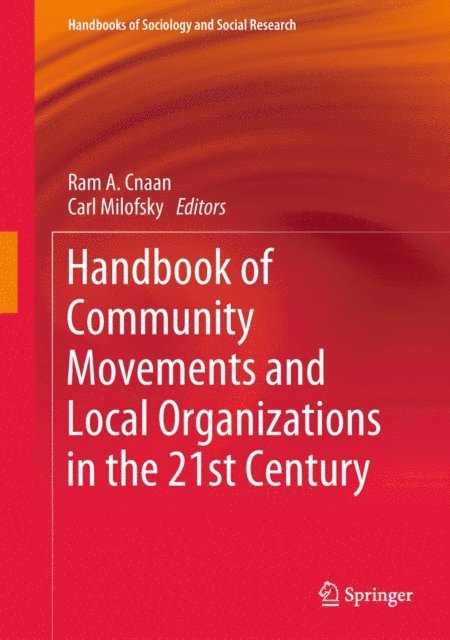
This new handbook builds on The Handbook of Community Movements and Local Organizations published in 2007, and is the only resource defining the field of study related to small nonprofit organizations and to studying communities from the standpoint of associations that make up communities.
Inbunden, Engelska, 2018
2 371 kr
Skickas inom 10-15 vardagar
This new handbook builds on The Handbook of Community Movements and Local Organizations published in 2007, and is the only resource defining the field of study related to small nonprofit organizations and to studying communities from the standpoint of associations that make up communities.
E-bok
Engelska, 20182 986 kr
Läs direkt efter köp
This new handbook builds on The Handbook of Community Movements and Local Organizations published in 2007, and is the only resource defining the field of study related to small nonprofit organizations and to studying communities from the standpoint of associations that make up communities. It explores the history and conceptualizations of community, theoretical concepts in community organizations, social movements ranging from health to crime, and community practice methods. Further it provides authoritative statements of major theory areas, gives examples of different sub areas of the field, provides guidance to people working as practitioners in the field, and nicely coincides with the increasing interest in clinical sociology. This handbook is of great interest to academics, students and practitioners with an interdisciplinary resource to understand and collaborate in work with contemporary communities.
E-bok
PDF, Engelska, 20191 296 kr
Läs direkt efter köp
This article argues the position that the symbolic sense of community is a product of action by associations and larger community-based organizations. It draws on a theory from urban sociology called "e;the community of limited liability."e; In the past this theory, first articulated by Morris Janowitz, has mostly been used to argue that residents living in a local neighborhood feel a sense of identification with that area to the extent that the symbolism of that neighborhood has been developed. This article extends Janowitz's theory to apply to local associations and their efforts to create activities, movements, and products that encourage residents to expand their sense of symbolic attachment to a place. We argue that this organizational method has long been used by local associations but it has not been recognized as an organizational theory. Because associations have used this approach over time, communities have a historical legacy of organizing and symbol creating efforts by many local associations. Over time they have competed, collaborated, and together developed a collective vision of place. They also have created a local interorganizational field and this field of interacting associations and organizations is dense with what we call associational social capital. Not all communities have this history of associational activity and associational social capital. Where it does exist, the field becomes an institutionalized feature of the community. This is what we mean by an institutional theory of community.