Carla De Pietro – författare
2 258 kr
Läs direkt efter köp
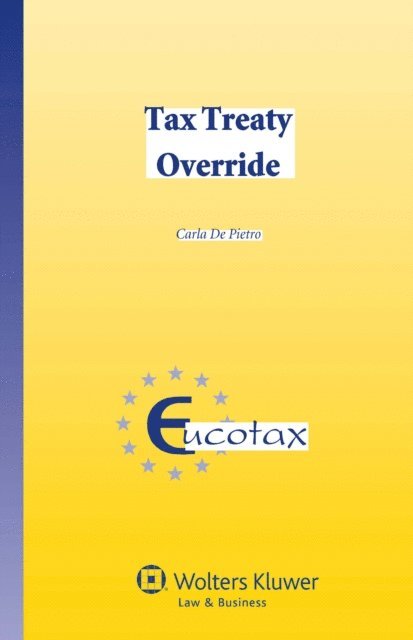
The term 舖treaty override舗 has acquired a specific connotation for tax treaty purposes, which requires an in-depth analysis. There is a tendency for domestic legislation to be passed (or court cases decided) which may override provisions of tax treaties. Despite the many conflicts and uncertainties about what tax treaty override exactly is and the exact point in time when tax treaty override occurs, its implications have not until now been analysed in a systematic manner.
1 385 kr
Skickas inom 5-8 vardagar
1 163 kr
Läs direkt efter köp
New Perspectives on Fiscal State Aid
Legitimacy and Effectiveness of Fiscal State Aid Control
Edited by Carla De Pietro
Based on a project co-funded by the European Commission, this book focuses on fiscal state aid – an increasingly important topic – with a number of high-profile cases ongoing and with serious implications for sustainable growth and the future of the internal market. The project, conducted by four universities, consisted in seminars, workshops and a final conference aimed at training national tax judges from the four different countries involved (Austria, Belgium, Italy and the Netherlands), with discussion and reflection by international academics and other tax professionals who participated as speakers and/or discussants. This book presents an in-depth analysis of the topics the project dealt with, taking a giant step towards defining the connection between effective state aid control, its legitimacy and a desirable functioning of the internal market for the twenty-first century.
The core elements of this fundamental analysis include the following:
selectivity as applied in the case law of the Court of Justice; whether and to what extent state aid law limits European Union (EU) Member States in designing anti-tax avoidance measures; protection of legitimate expectations; to what extent national judges are required to apply state aid rules ex officio; powers of national judges in connection with the national obligation of guaranteeing an immediate and effective recovery on the basis of an order issued by the European Commission; and connection between legitimacy of state aid law and effectiveness of state aid control.The book includes a thorough investigation of the notion of fiscal state aid, also by focusing on the most recent decisions of the European Commission concerning mismatches. Representing, as it does, an important and concrete contribution to the intense debate about the interpretation of the notion of fiscal state aid, with different normative views about the goals and functions of control, this book will stimulate solutions in terms of legitimacy of fiscal state aid control that also take into consideration the most desirable functioning of the internal market. It will be welcomed not only by academics in taxation and EU law but also by national tax judges, tax authorities and practitioners.
1 163 kr
Läs direkt efter köp
New Perspectives on Fiscal State Aid
Legitimacy and Effectiveness of Fiscal State Aid Control
Edited by Carla De Pietro
Based on a project co-funded by the European Commission, this book focuses on fiscal state aid – an increasingly important topic – with a number of high-profile cases ongoing and with serious implications for sustainable growth and the future of the internal market. The project, conducted by four universities, consisted in seminars, workshops and a final conference aimed at training national tax judges from the four different countries involved (Austria, Belgium, Italy and the Netherlands), with discussion and reflection by international academics and other tax professionals who participated as speakers and/or discussants. This book presents an in-depth analysis of the topics the project dealt with, taking a giant step towards defining the connection between effective state aid control, its legitimacy and a desirable functioning of the internal market for the twenty-first century.
The core elements of this fundamental analysis include the following:
selectivity as applied in the case law of the Court of Justice; whether and to what extent state aid law limits European Union (EU) Member States in designing anti-tax avoidance measures; protection of legitimate expectations; to what extent national judges are required to apply state aid rules ex officio; powers of national judges in connection with the national obligation of guaranteeing an immediate and effective recovery on the basis of an order issued by the European Commission; and connection between legitimacy of state aid law and effectiveness of state aid control.The book includes a thorough investigation of the notion of fiscal state aid, also by focusing on the most recent decisions of the European Commission concerning mismatches. Representing, as it does, an important and concrete contribution to the intense debate about the interpretation of the notion of fiscal state aid, with different normative views about the goals and functions of control, this book will stimulate solutions in terms of legitimacy of fiscal state aid control that also take into consideration the most desirable functioning of the internal market. It will be welcomed not only by academics in taxation and EU law but also by national tax judges, tax authorities and practitioners.
1 562 kr
Skickas inom 5-8 vardagar
1 325 kr
Läs direkt efter köp
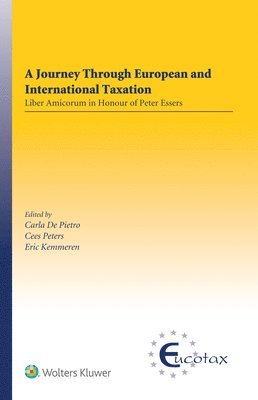
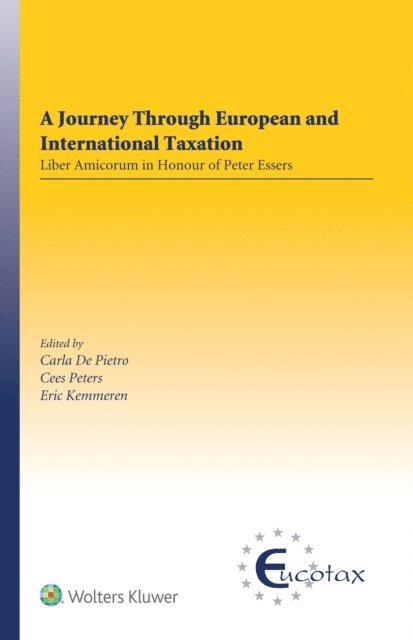
To some extent, because of his overlapping careers in academia and politics, the renowned tax scholar Peter Essers is known for his influential insight that ‘the effects of taxation on the political balance of power, and vice versa, are always interlinked with other phenomena, such as wars, crises, religious developments and inequalities in society’. In this widely ranging festschrift, thirty-six prominent tax scholars from all across Europe examine the legacy of Peter Essers’ research interests, from the larger philosophical, political, and social factors driving tax history to the reality of the taxing State as experienced by taxpayers and tax officials.
The book’s outstanding overview of the most relevant technical and policy aspects of European and international taxation includes deeply thoughtful chapters on such topics and issues as the following:
developing sustainable corporate tax governance;
tax whistleblowing;
transfer pricing;
balancing qualitative and quantitative approaches to tax research;
necessity to reach something close to ‘equal treatment’ between the upper and lower social classes;
consent and democracy;
tax rebellions;
tax evasion and tax avoidance;
taxation of cross-border remote workers and their employers;
mitigation of double taxation of income earned by entertainers and sportspersons; and
the international tax treaty network.
More than a homage to this scholar’s far-reaching contributions, this book is remarkable for the variety and academic rigour of the chapters. The understanding its authors provide of both the broad contours and the intricacies of European and international taxation will be of inestimable value to tax practitioners, policymakers, tax consultants, and academics, as well as interested researchers in economics, political science, and sociology.
1 325 kr
Läs direkt efter köp
To some extent, because of his overlapping careers in academia and politics, the renowned tax scholar Peter Essers is known for his influential insight that ‘the effects of taxation on the political balance of power, and vice versa, are always interlinked with other phenomena, such as wars, crises, religious developments and inequalities in society’. In this widely ranging festschrift, thirty-six prominent tax scholars from all across Europe examine the legacy of Peter Essers’ research interests, from the larger philosophical, political, and social factors driving tax history to the reality of the taxing State as experienced by taxpayers and tax officials.
The book’s outstanding overview of the most relevant technical and policy aspects of European and international taxation includes deeply thoughtful chapters on such topics and issues as the following:
developing sustainable corporate tax governance;
tax whistleblowing;
transfer pricing;
balancing qualitative and quantitative approaches to tax research;
necessity to reach something close to ‘equal treatment’ between the upper and lower social classes;
consent and democracy;
tax rebellions;
tax evasion and tax avoidance;
taxation of cross-border remote workers and their employers;
mitigation of double taxation of income earned by entertainers and sportspersons; and
the international tax treaty network.
More than a homage to this scholar’s far-reaching contributions, this book is remarkable for the variety and academic rigour of the chapters. The understanding its authors provide of both the broad contours and the intricacies of European and international taxation will be of inestimable value to tax practitioners, policymakers, tax consultants, and academics, as well as interested researchers in economics, political science, and sociology.