Carlo Massobrio – författare
Visar alla böcker från författaren Carlo Massobrio. Handla med fri frakt och snabb leverans.
8 produkter
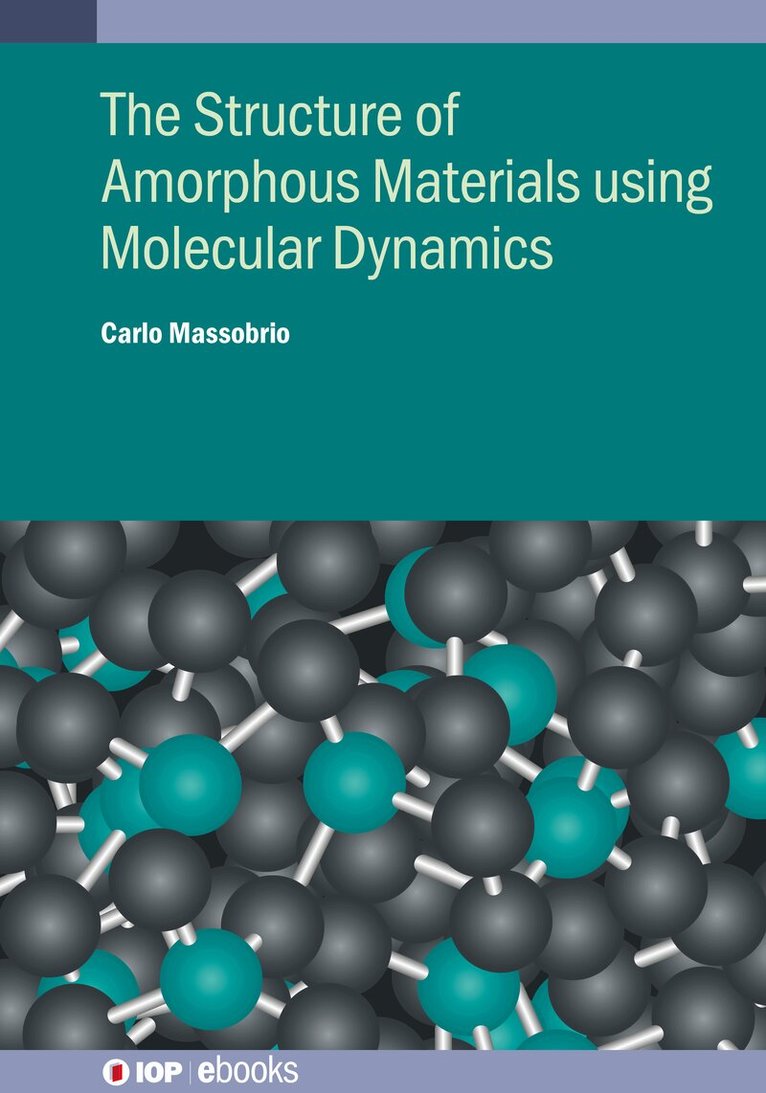
Structure of Amorphous Materials using Molecular Dynamics
Inbunden, 2022
1970 kr
Lägg i varukorg
This reference text demonstrates how molecular dynamics can be used in practice to achieve a precise understanding of structural properties for systems devoid of any order beyond the first interatomic distances. The reader will learn the basic principles underlying molecular dynamics with a special …
Structure of Amorphous Materials using Molecular Dynamics
Methodology and applications
Häftad, 2022
422 kr
Lägg i varukorg
Molecular Dynamics Simulations of Disordered Materials
From Network Glasses to Phase-Change Memory Alloys
Av Carlo Massobrio, Jincheng Du m. fl.
Inbunden, 2015
1639 kr
Lägg i varukorg
This book is a unique reference work in the area of atomic-scale simulation of glasses. For the first time, a highly selected panel of about 20 researchers provides, in a single book, their views, methodologies and applications on the use of molecular dynamics as a tool to describe glassy …
Molecular Dynamics Simulations of Disordered Materials
From Network Glasses to Phase-Change Memory Alloys
Av Philip S. Salmon, Marco Bernasconi m. fl.
E-bok, 2015
2111 kr
Lägg i varukorg
This book is a unique reference work in the area of atomic-scale simulation of glasses. For the first time, a highly selected panel of about 20 researchers provides, in a single book, their views, methodologies and applications on the use of molecular dynamics as a tool to describe glassy …
Molecular Dynamics Simulations of Disordered Materials
From Network Glasses to Phase-Change Memory Alloys
Av Carlo Massobrio, Jincheng Du m. fl.
Häftad, 2016
1639 kr
Lägg i varukorg
This book is a unique reference work in the area of atomic-scale simulation of glasses. For the first time, a highly selected panel of about 20 researchers provides, in a single book, their views, methodologies and applications on the use of molecular dynamics as a tool to describe glassy …
Atomic-Scale Modeling of Nanosystems and Nanostructured Materials
Av Carlo Massobrio, Hervé Bulou m. fl.
Inbunden, 2010
552 kr
Lägg i varukorg
Understanding the structural organization of materials at the atomic scale is a lo- standing challenge of condensed matter physics and chemistry. By reducing the size of synthesized systems down to the nanometer, or by constructing them as collection of nanoscale size constitutive units, …
Atomic-Scale Modeling of Nanosystems and Nanostructured Materials
Av Christine Goyhenex, Herve Bulou m. fl.
E-bok, 2010
712 kr
Lägg i varukorg
Understanding the structural organization of materials at the atomic scale is a lo- standing challenge of condensed matter physics and chemistry. By reducing the size of synthesized systems down to the nanometer, or by constructing them as collection of nanoscale size constitutive units, …
Atomic-Scale Modeling of Nanosystems and Nanostructured Materials
Av Carlo Massobrio, Hervé Bulou m. fl.
Häftad, 2012
551 kr
Lägg i varukorg
Understanding the structural organization of materials at the atomic scale is a lo- standing challenge of condensed matter physics and chemistry. By reducing the size of synthesized systems down to the nanometer, or by constructing them as collection of nanoscale size constitutive units, …