Carlos Domper Lasus – författare
Visar alla böcker från författaren Carlos Domper Lasus. Handla med fri frakt och snabb leverans.
5 produkter
Combining Political History and Political Science
Towards a New Understanding of the Political
Av Giorgia Priorelli, Carlos Domper Lasus
E-bok, 2022
785 kr
Lägg i varukorg
This book shows how a multidisciplinary approach combining conceptual and methodological tools from political history and political science can help to develop a deeper understanding of contemporary political phenomena including democracy, populism, war, and forced migrations, among others. …
Combining Political History and Political Science
Towards a New Understanding of the Political
Av Giorgia Priorelli, Carlos Domper Lasus
E-bok, 2022
760 kr
Lägg i varukorg
This book shows how a multidisciplinary approach combining conceptual and methodological tools from political history and political science can help to develop a deeper understanding of contemporary political phenomena including democracy, populism, war, and forced migrations, among others. …
Combining Political History and Political Science
Towards a New Understanding of the Political
Av Carlos Domper Lasús, Giorgia Priorelli
Inbunden, 2022
2197 kr
Lägg i varukorg
This book shows how a multidisciplinary approach combining conceptual and methodological tools from political history and political science can help to develop a deeper understanding of contemporary political phenomena including democracy, populism, war, and forced migrations, among …
Combining Political History and Political Science
Towards a New Understanding of the Political
Av Carlos Domper Lasús, Giorgia Priorelli
Häftad, 2024
648 kr
Lägg i varukorg
This book shows how a multidisciplinary approach combining conceptual and methodological tools from political history and political science can help to develop a deeper understanding of contemporary political phenomena including democracy, populism, war, and forced migrations, among …
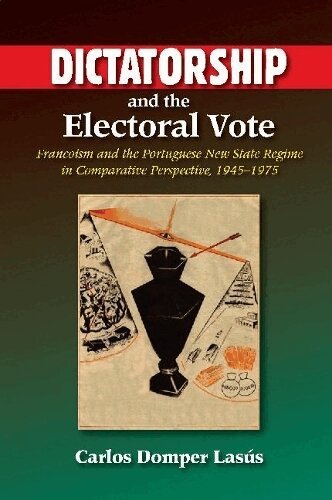
Dictatorship and the Electoral Vote
Francoism and the Portuguese New State Regime in Comparative Perspective, 1945-1975
Inbunden, 2020
1965 kr
Lägg i varukorg
Why do dictatorships have elections? Dictatorship and the Electoral Vote analyses the role of elections in two dictatorships that were born in the Era of Fascism but survived up to the 1970s: the Portuguese New State and Francoism. A comparative study of the electoral vote held by both …