Carlos Evia - Böcker
Visar alla böcker från författaren Carlos Evia. Handla med fri frakt och snabb leverans.
6 produkter
6 produkter
677 kr
Skickas inom 10-15 vardagar
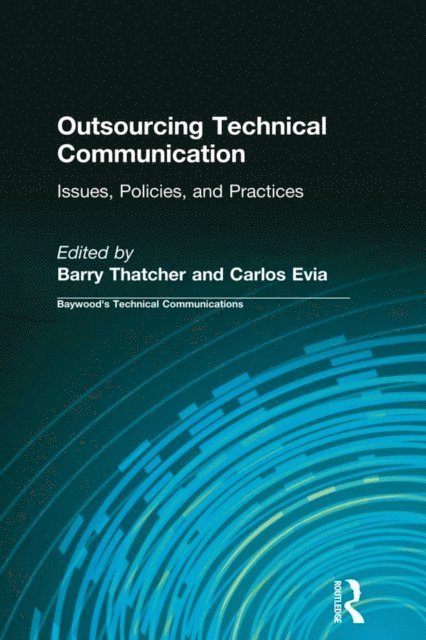
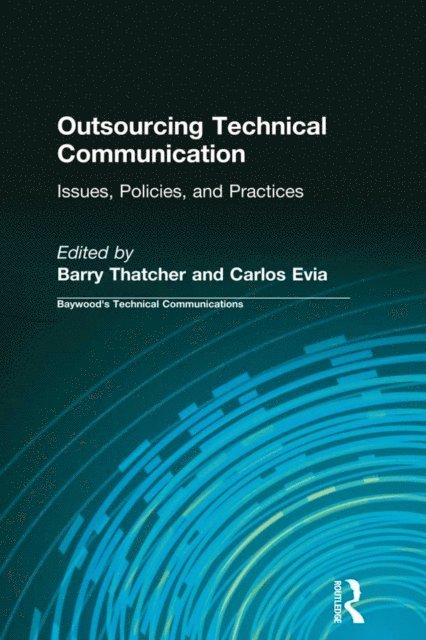
This book examines the impact of outsourcing on the field of technical communication. Aided by new technologies and driven by global market structures, technical communication products that were once developed in the United States or Western Europe are now being developed in Asia, Eastern Europe, and other parts of the world. If technical communication follows other fields, such as information technologies, electronics manufacturing, and even textiles, this 'outsourcing' of technical communication products and jobs will surely influence our profession-but how? What kinds of jobs will remain in the United States? Which jobs are more efficiently handled outside the United States? How can U.S. technical communicators develop a 'comparative advantage' in the global economy? How can collaboration and joint development of information products be managed? What are the ethical, cultural, social, and economic dilemmas created by outsourcing?This collection is designed as a theory/practice book that addresses the needs of graduate students, faculty, and technical communicators who want to teach, practice, or conduct research in this area. It addresses technical communications and outsourcing in six different parts of the world, including the United States. It also explores issues of curriculum, project management, legal considerations, and intercultural communication problems.This title is suitable for: Technical communication professionals in academia and industry; managers, researchers, and teachers of documentation projects who are involved in offshore outsourcing situations and need to find best practices, strategies, or recommendations for being successful; technical writers (freelancers and corporate employees) working with international partners interested in how outsourcing can affect the future of their profession; non-U.S. writers working in outsourcing projects looking to perform satisfactorily in their jobs; undergraduate and graduate professors in universities and community colleges teaching courses in publications management, information design, international communication, and technical writing, and students enrolled in those courses; teachers and students in rhetorical theory and professional communication pedagogy courses; ESL (English as a second language) and ESP (English for specific purposes) readers.
2 289 kr
Skickas inom 10-15 vardagar
Creating Intelligent Content with Lightweight DITA documents the evolution of the Darwin Information Typing Architecture (DITA) – a widely used open standard for structuring technical content. DITA has grown in popularity and features since its origins as an internal grammar for structuring technical documentation at IBM. This book introduces Lightweight DITA (LwDITA, which should be read as "Lightweight DITA") as a proposed version of the DITA standard that reduces its dependence on complex Extensible Markup Language (XML) structures and simplifies its authoring experience. This volume aims to reconcile discrepancies and similarities in methods for authoring content in industry and academia and does so by reporting on DITA’s evolution through the lens of computational thinking, which has been connected in scholarship and media to initiatives for learning to code and programming. Evia’s core argument is that if technical communicators are trained with principles of rhetorical problem solving and computational thinking, they can create structured content in lightweight workflows with XML, HTML5, and Markdown designed to reduce the learning curve associated with DITA and similar authoring methodologies. At the same time, this book has the goal of making concepts of structured authoring and intelligent content easier to learn and teach in humanities-based writing and communication programs. This book is intended for practitioners and students interested in structured authoring or the DITA standard.
630 kr
Skickas inom 10-15 vardagar
Creating Intelligent Content with Lightweight DITA documents the evolution of the Darwin Information Typing Architecture (DITA) – a widely used open standard for structuring technical content. DITA has grown in popularity and features since its origins as an internal grammar for structuring technical documentation at IBM. This book introduces Lightweight DITA (LwDITA, which should be read as "Lightweight DITA") as a proposed version of the DITA standard that reduces its dependence on complex Extensible Markup Language (XML) structures and simplifies its authoring experience. This volume aims to reconcile discrepancies and similarities in methods for authoring content in industry and academia and does so by reporting on DITA’s evolution through the lens of computational thinking, which has been connected in scholarship and media to initiatives for learning to code and programming. Evia’s core argument is that if technical communicators are trained with principles of rhetorical problem solving and computational thinking, they can create structured content in lightweight workflows with XML, HTML5, and Markdown designed to reduce the learning curve associated with DITA and similar authoring methodologies. At the same time, this book has the goal of making concepts of structured authoring and intelligent content easier to learn and teach in humanities-based writing and communication programs. This book is intended for practitioners and students interested in structured authoring or the DITA standard.
2 219 kr
Skickas inom 10-15 vardagar
This book examines the impact of outsourcing on the field of technical communication. Aided by new technologies and driven by global market structures, technical communication products that were once developed in the United States or Western Europe are now being developed in Asia, Eastern Europe, and other parts of the world. If technical communication follows other fields, such as information technologies, electronics manufacturing, and even textiles, this 'outsourcing' of technical communication products and jobs will surely influence our profession-but how? What kinds of jobs will remain in the United States? Which jobs are more efficiently handled outside the United States? How can U.S. technical communicators develop a 'comparative advantage' in the global economy? How can collaboration and joint development of information products be managed? What are the ethical, cultural, social, and economic dilemmas created by outsourcing?This collection is designed as a theory/practice book that addresses the needs of graduate students, faculty, and technical communicators who want to teach, practice, or conduct research in this area. It addresses technical communications and outsourcing in six different parts of the world, including the United States. It also explores issues of curriculum, project management, legal considerations, and intercultural communication problems.This title is suitable for: Technical communication professionals in academia and industry; managers, researchers, and teachers of documentation projects who are involved in offshore outsourcing situations and need to find best practices, strategies, or recommendations for being successful; technical writers (freelancers and corporate employees) working with international partners interested in how outsourcing can affect the future of their profession; non-U.S. writers working in outsourcing projects looking to perform satisfactorily in their jobs; undergraduate and graduate professors in universities and community colleges teaching courses in publications management, information design, international communication, and technical writing, and students enrolled in those courses; teachers and students in rhetorical theory and professional communication pedagogy courses; ESL (English as a second language) and ESP (English for specific purposes) readers.
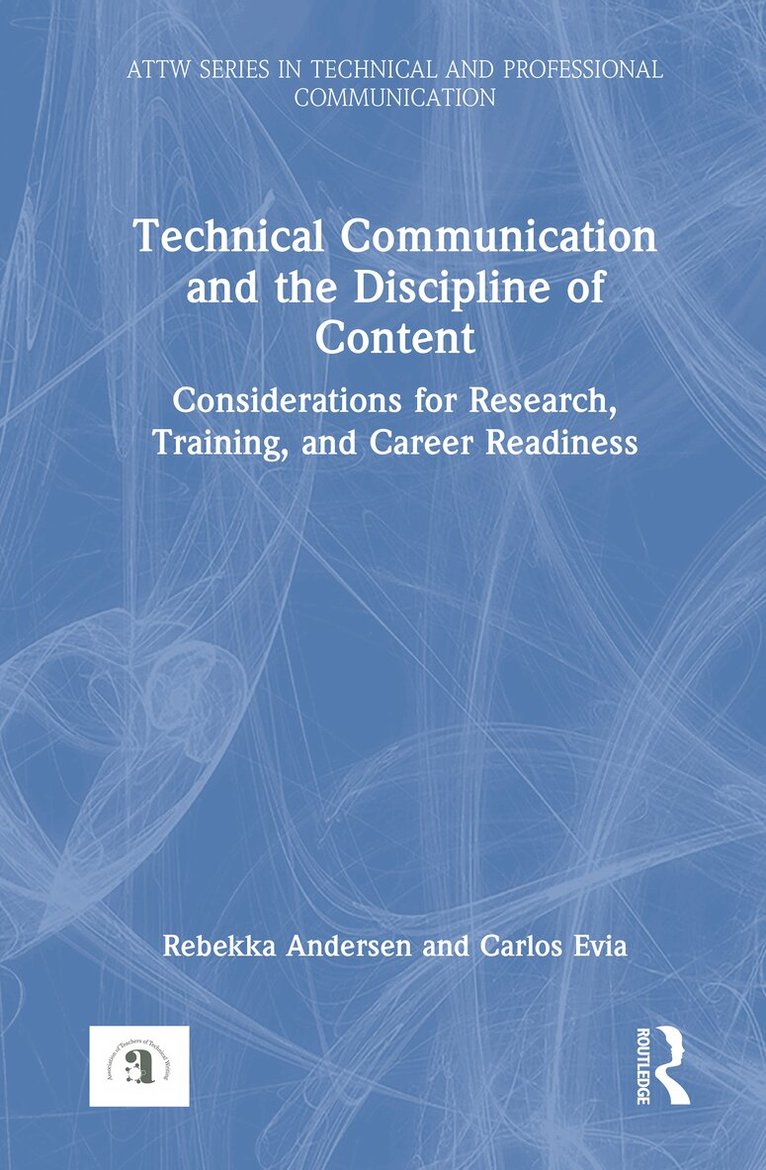
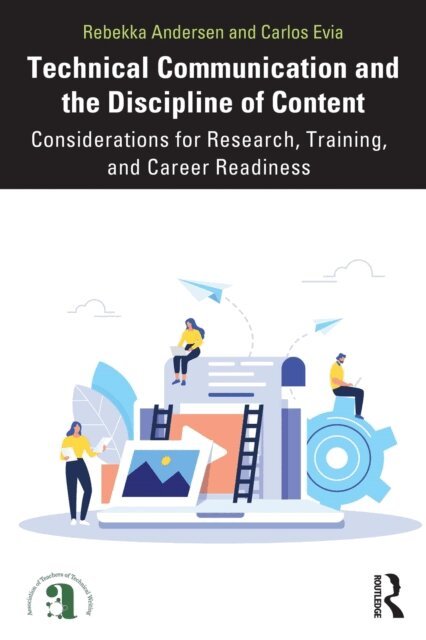
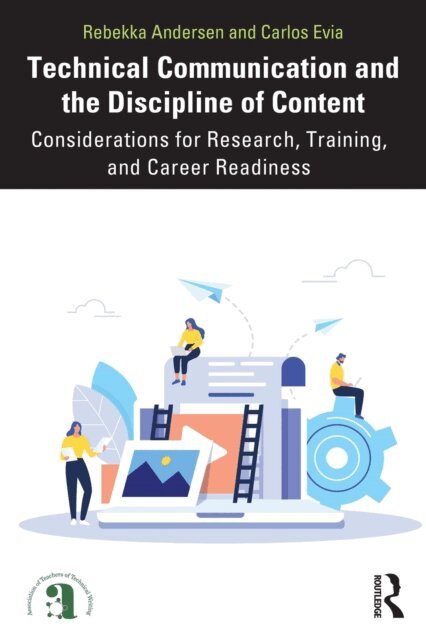
Technical Communication and the Discipline of Content
Considerations for Research, Training, and Career Readiness
Häftad, Engelska, 2025
576 kr
Skickas inom 10-15 vardagar
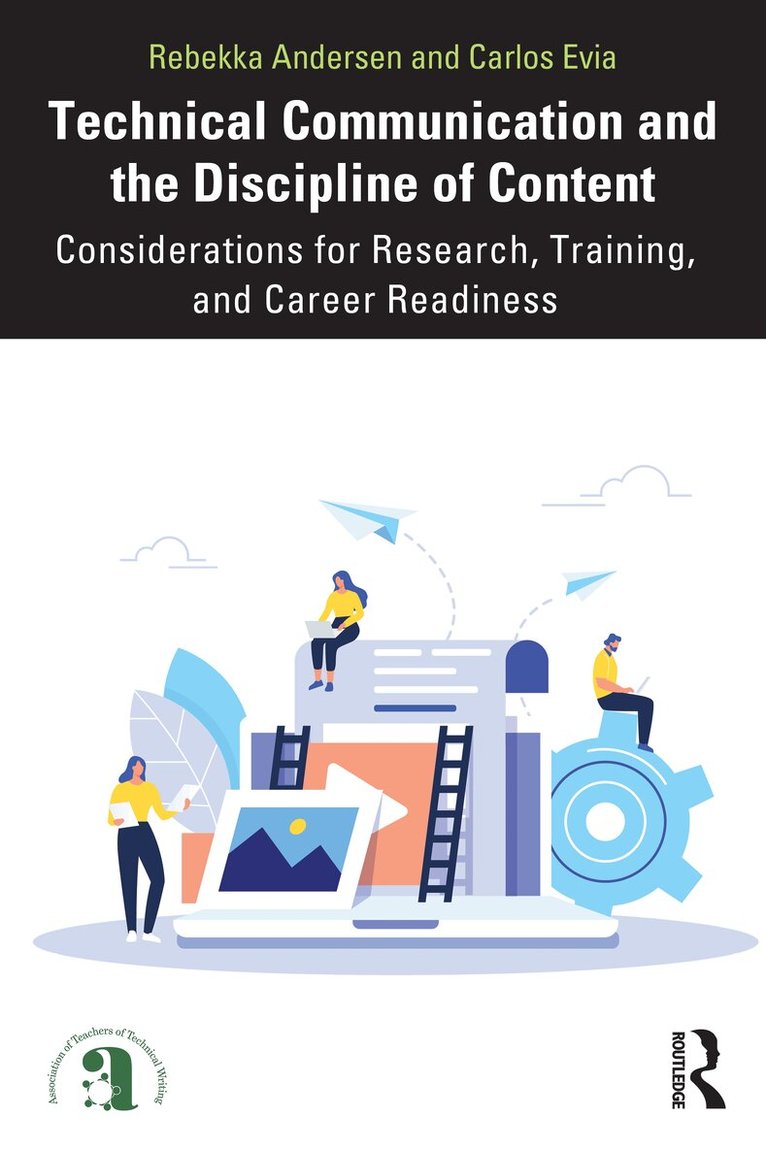
This book explores how workflows and technologies that treat content as computable data are changing the roles, work activities, and outputs of professional technical communicators.It describes how the need for disciplinary approaches to design, manage, and deliver content has given rise to “the discipline of content” – content strategy, content design, content engineering, content operations – that increasingly defines a facet of technical communication work in modern organizations. This book draws on extensive research of the discipline of content and dozens of interviews with industry leaders, hiring managers, and academic administrators, educators, and alumni. These first-hand accounts outline how roles and activities in content organizations are changing, how these changes are impacting hiring needs and practices, and what skills and qualities students and early-career professionals now need to obtain content-related jobs and advance to strategic positions. This book also offers guidance for building curricular pathways that prepare students for work in the discipline of content and offers strategies for enhancing pathways through industry outreach and partnerships.A thorough assessment of the implications of the discipline of content for technical communication, this book will be of interest to students and scholars in the fields of technical writing, professional and public writing, content strategy, content marketing and information design.
Technical Communication and the Discipline of Content
Considerations for Research, Training, and Career Readiness
Inbunden, Engelska, 2025
2 088 kr
Skickas inom 10-15 vardagar
This book explores how workflows and technologies that treat content as computable data are changing the roles, work activities, and outputs of professional technical communicators.It describes how the need for disciplinary approaches to design, manage, and deliver content has given rise to “the discipline of content” – content strategy, content design, content engineering, content operations – that increasingly defines a facet of technical communication work in modern organizations. This book draws on extensive research of the discipline of content and dozens of interviews with industry leaders, hiring managers, and academic administrators, educators, and alumni. These first-hand accounts outline how roles and activities in content organizations are changing, how these changes are impacting hiring needs and practices, and what skills and qualities students and early-career professionals now need to obtain content-related jobs and advance to strategic positions. This book also offers guidance for building curricular pathways that prepare students for work in the discipline of content and offers strategies for enhancing pathways through industry outreach and partnerships.A thorough assessment of the implications of the discipline of content for technical communication, this book will be of interest to students and scholars in the fields of technical writing, professional and public writing, content strategy, content marketing and information design.