Carlos González-Villa – författare
Visar alla böcker från författaren . Handla med fri frakt och snabb leverans.
4 produkter
4 produkter
Inbunden, Engelska, 2021
1 549 kr
Skickas inom 10-15 vardagar
In Researching Yugoslavia and its Aftermath, a common thread is the authors’ path through the time and space context in which fieldwork has taken place. Accordingly, this collection tackles problems that have always existed but have not been dealt with in a single volume. In particular, it examines a range of methodological questions arising from the contributors’ shared concerns, and thus the obstacles and solutions characterising the relationship between researchers and their objects of study. Being an interdisciplinary project, this book brings together highly regarded historians, sociologists, anthropologists, political scientists, cultural and social theorists, as well as experts in architecture and communication studies. They share a belief that the awareness of the researcher’s own position in fieldwork is a precondition of utmost significance to comprehend the evolution of objects of study, and hence to ensure transparency and ultimate credibility of the findings. Moreover, the contributors come from diverse backgrounds, including authors from the former Yugoslavia and others who have made their way to the region after starting their research careers; some from universities in the area, others from institutions in the Global North. Here, they explore cross-cutting issues such as the repercussions of gender, nationality, institutional affiliation and the consequences of their entry into the field. This is examined in terms of the results of the research and the ethical aspect of the relationship with the object of study, as well as the implications of the chosen time framework in the methodological design and the clash between this decision and the interests of the actors studied.
E-bok
Engelska, 20211 891 kr
Läs direkt efter köp
In Researching Yugoslavia and its Aftermath, a common thread is the authors’ path through the time and space context in which fieldwork has taken place. Accordingly, this collection tackles problems that have always existed but have not been dealt with in a single volume. In particular, it examines a range of methodological questions arising from the contributors’ shared concerns, and thus the obstacles and solutions characterising the relationship between researchers and their objects of study. Being an interdisciplinary project, this book brings together highly regarded historians, sociologists, anthropologists, political scientists, cultural and social theorists, as well as experts in architecture and communication studies. They share a belief that the awareness of the researcher’s own position in fieldwork is a precondition of utmost significance to comprehend the evolution of objects of study, and hence to ensure transparency and ultimate credibility of the findings. Moreover, the contributors come from diverse backgrounds, including authors from the former Yugoslavia and others who have made their way to the region after starting their research careers; some from universities in the area, others from institutions in the Global North. Here, they explore cross-cutting issues such as the repercussions of gender, nationality, institutional affiliation and the consequences of their entry into the field. This is examined in terms of the results of the research and the ethical aspect of the relationship with the object of study, as well as the implications of the chosen time framework in the methodological design and the clash between this decision and the interests of the actors studied.
Häftad, Engelska, 2022
1 549 kr
Skickas inom 10-15 vardagar
In Researching Yugoslavia and its Aftermath, a common thread is the authors’ path through the time and space context in which fieldwork has taken place. Accordingly, this collection tackles problems that have always existed but have not been dealt with in a single volume. In particular, it examines a range of methodological questions arising from the contributors’ shared concerns, and thus the obstacles and solutions characterising the relationship between researchers and their objects of study. Being an interdisciplinary project, this book brings together highly regarded historians, sociologists, anthropologists, political scientists, cultural and social theorists, as well as experts in architecture and communication studies. They share a belief that the awareness of the researcher’s own position in fieldwork is a precondition of utmost significance to comprehend the evolution of objects of study, and hence to ensure transparency and ultimate credibility of the findings. Moreover, the contributors come from diverse backgrounds, including authors from the former Yugoslavia and others who have made their way to the region after starting their research careers; some from universities in the area, others from institutions in the Global North. Here, they explore cross-cutting issues such as the repercussions of gender, nationality, institutional affiliation and the consequences of their entry into the field. This is examined in terms of the results of the research and the ethical aspect of the relationship with the object of study, as well as the implications of the chosen time framework in the methodological design and the clash between this decision and the interests of the actors studied.
E-bok
Spanska, 2019153 kr
Läs direkt efter köp
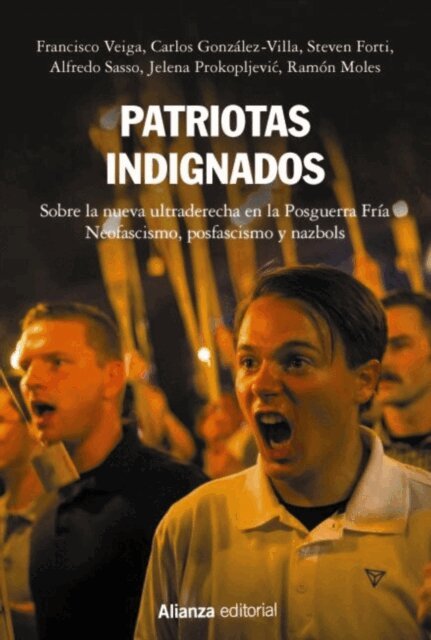
En los últimos treinta años, desde el final de la Guerra Fría ha tenido lugar un llamativo repunte de la ultraderecha y el nacionalismo radical que no siempre conserva las formas o imagen tradicionales de hace casi un siglo, lo cual genera continuas polémicas en medios de comunicación y redes sociales, y mucha confusión en la sociedad. A veces, estos nuevos partidos y movimientos han buscado marcar distancias con los viejos modelos políticos o bien han utilizado elementos del discurso de izquierdas, llegando a gestar nuevos estilos de comunicación, tildados en ocasiones de "populistas". "Patriotas indignados" intenta aportar algo de luz a la confusión reinante para lo que analiza el fenómeno en una doble vertiente. En primer lugar, a partir de un recorrido histórico que se remonta a los años noventa del siglo pasado, cuando acaba la Guerra Fría y se desmorona la Unión Soviética y el bloque del Este, incluyendo las guerras de Yugoslavia y Ucrania; y continúa con los efectos de la Gran Recesión de 2008 en Europa occidental y América, alcanzando un giro ocho años más tarde. En segundo lugar, diseccionando el fenómeno de los actuales Patriotas indignados en sus diversas variantes internacionales, desde el neofascismo al posfascismo pasando por el Movimiento indentitario internacional, la realidad del denominado "gobierno Salvini" en Italia o conceptos menos usuales como los nazbols. No quedan al margen reflejos y recursos del ultranacionalismo actual, como la tendencia al referendismo, el "fascismo antifascista", el rechazo a la inmigración o el euroescepticismo. Un completo viaje, esclarecedor, por el mundo de los "Patriotas indignados", del que no está excluida España.