Carlos Nunes Silva – författare
3 064 kr
Skickas inom 10-15 vardagar
851 kr
Skickas inom 10-15 vardagar
700 kr
Skickas inom 10-15 vardagar
586 kr
Skickas inom 10-15 vardagar
586 kr
Skickas inom 10-15 vardagar
516 kr
Skickas inom 10-15 vardagar
2 796 kr
Skickas
690 kr
Läs direkt efter köp
690 kr
Läs direkt efter köp
690 kr
Läs direkt efter köp
690 kr
Läs direkt efter köp
605 kr
Läs direkt efter köp
605 kr
Läs direkt efter köp
925 kr
Läs direkt efter köp
Cities in Sub-Saharan Africa are unequally confronted with social, economic and environmental challenges, particularly those related with population growth, urban sprawl, and informality. This complex and uneven African urban condition requires an open discussion of past and current urban planning practices and future reforms. Urban Planning in Sub-Saharan Africa gives a broad perspective of the history of urban planning in Sub-Saharan Africa and a critical view of issues, problems, challenges and opportunities confronting urban policy makers.
The book examines the rich variety of planning cultures in Africa, offers a unique view on the introduction and development of urban planning in Sub-Saharan Africa, and makes a significant contribution against the tendency to over-generalize Africa’s urban problems and Africa’s urban planning practices. Urban Planning in Sub-Saharan Africa is written for postgraduate students and advanced undergraduates, researchers, planners and other policy makers in the multidisciplinary field of Urban Planning, in particular for those working in Spatial Planning, Architecture, Geography, and History.
925 kr
Läs direkt efter köp
Cities in Sub-Saharan Africa are unequally confronted with social, economic and environmental challenges, particularly those related with population growth, urban sprawl, and informality. This complex and uneven African urban condition requires an open discussion of past and current urban planning practices and future reforms. Urban Planning in Sub-Saharan Africa gives a broad perspective of the history of urban planning in Sub-Saharan Africa and a critical view of issues, problems, challenges and opportunities confronting urban policy makers.
The book examines the rich variety of planning cultures in Africa, offers a unique view on the introduction and development of urban planning in Sub-Saharan Africa, and makes a significant contribution against the tendency to over-generalize Africa’s urban problems and Africa’s urban planning practices. Urban Planning in Sub-Saharan Africa is written for postgraduate students and advanced undergraduates, researchers, planners and other policy makers in the multidisciplinary field of Urban Planning, in particular for those working in Spatial Planning, Architecture, Geography, and History.
1 407 kr
Skickas inom 10-15 vardagar
1 258 kr
Läs direkt efter köp
This book explores some of the key challenges confronting the governance of cities in Africa, the reforms implemented in the field of urban governance, and the innovative approaches in critical areas of local governance, namely in the broad field of decentralization and urban planning reform, citizen participation, and good governance. The collection also investigates the constraints that continuously hamper urban governments as well as the ability to improve urban governance in African cities through citizen responsive innovations. Decentralization based on the principle of subsidiarity emerges as a critical necessary reform if African cities are to be appropriately empowered to face the challenges created by the unprecedented urban growth rate experienced all over the continent. This requires, among other initiatives, the implementation of an effective local self-government system, the reform of planning laws, including the adoption of new planning models, the development of citizen participation in local affairs, and new approaches to urban informality. The book will be of interest to students, researchers and policy makers in urban studies, and in particular for those interested in urban planning in Africa.
976 kr
Skickas inom 10-15 vardagar
849 kr
Läs direkt efter köp
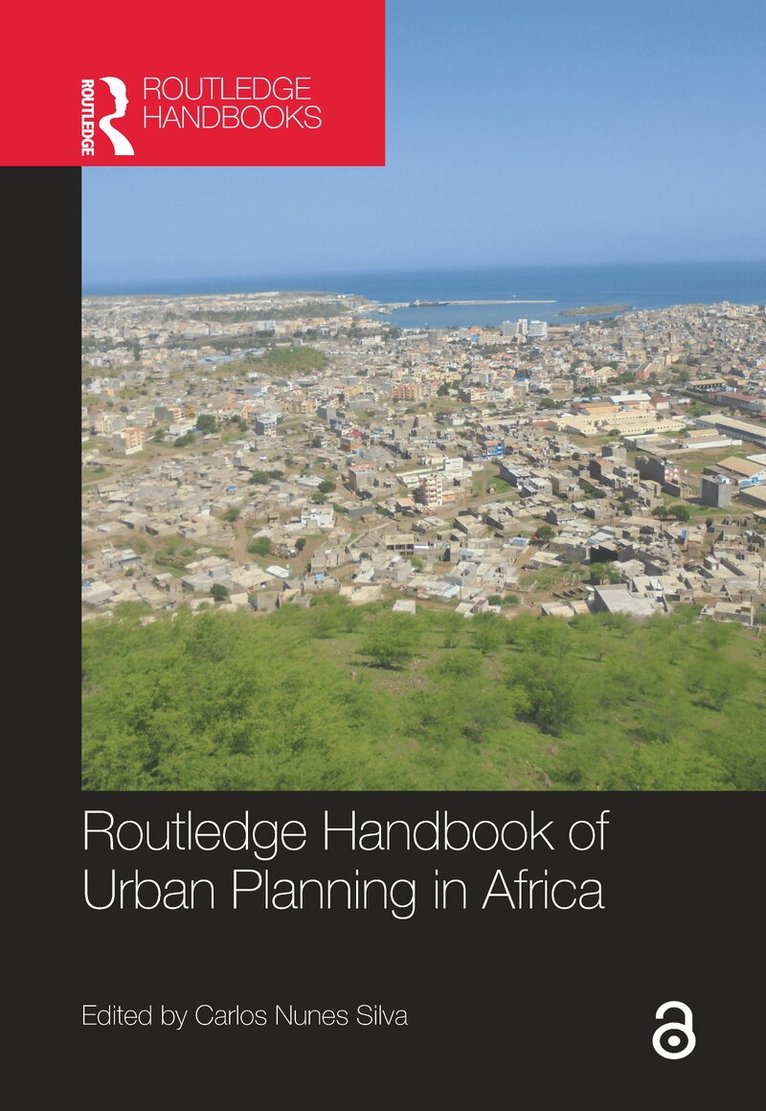
This handbook contributes with new evidence and new insights to the on-going debate on the de-colonization of knowledge on urban planning in Africa.
African cities grew rapidly since the mid-20th century, in part due to rising rural migration and rapid internal demographic growth that followed the independence in most African countries. This rapid urbanization is commonly seen as a primary cause of the current urban management challenges with which African cities are confronted. This importance given to rapid urbanization prevented the due consideration of other dimensions of the current urban problems, challenges and changes in African cities. The contributions to this handbook explore these other dimensions, looking in particular to the nature and capacity of local self-government and to the role of urban governance and urban planning in the poor urban conditions found in most African cities. It deals with current and contemporary urban challenges and urban policy responses, but also offers an historical overview of local governance and urban policies during the colonial period in the late 19th and 20th centuries, offering ample evidence of common features, and divergent features as well, on a number of facets, from intra-urban racial segregation solutions to the relationships between the colonial power and the natives, to the assimilation policy, as practiced by the French and Portuguese and the Indirect Rule put in place by Britain in some or in part of its colonies.
Using innovative approaches to the challenges confronting the governance of African cities, this handbook is an essential read for students and scholars of Urban Africa, urban planning in Africa and African Development.
819 kr
Läs direkt efter köp
This handbook contributes with new evidence and new insights to the on-going debate on the de-colonization of knowledge on urban planning in Africa.
African cities grew rapidly since the mid-20th century, in part due to rising rural migration and rapid internal demographic growth that followed the independence in most African countries. This rapid urbanization is commonly seen as a primary cause of the current urban management challenges with which African cities are confronted. This importance given to rapid urbanization prevented the due consideration of other dimensions of the current urban problems, challenges and changes in African cities. The contributions to this handbook explore these other dimensions, looking in particular to the nature and capacity of local self-government and to the role of urban governance and urban planning in the poor urban conditions found in most African cities. It deals with current and contemporary urban challenges and urban policy responses, but also offers an historical overview of local governance and urban policies during the colonial period in the late 19th and 20th centuries, offering ample evidence of common features, and divergent features as well, on a number of facets, from intra-urban racial segregation solutions to the relationships between the colonial power and the natives, to the assimilation policy, as practiced by the French and Portuguese and the Indirect Rule put in place by Britain in some or in part of its colonies.
Using innovative approaches to the challenges confronting the governance of African cities, this handbook is an essential read for students and scholars of Urban Africa, urban planning in Africa and African Development.
2 152 kr
Skickas inom 5-8 vardagar
2 293 kr
Skickas inom 5-8 vardagar
2 518 kr
Skickas inom 5-8 vardagar
3 178 kr
Läs direkt efter köp
1 491 kr
Skickas inom 10-15 vardagar
2 482 kr
Skickas inom 10-15 vardagar
2 264 kr
Skickas inom 10-15 vardagar
2 609 kr
Skickas inom 5-8 vardagar
3 749 kr
Skickas inom 5-8 vardagar
4 430 kr
Läs direkt efter köp