Carlos Solar – Författare
Visar alla böcker från författaren Carlos Solar. Handla med fri frakt och snabb leverans.
8 produkter
8 produkter
618 kr
Skickas inom 10-15 vardagar
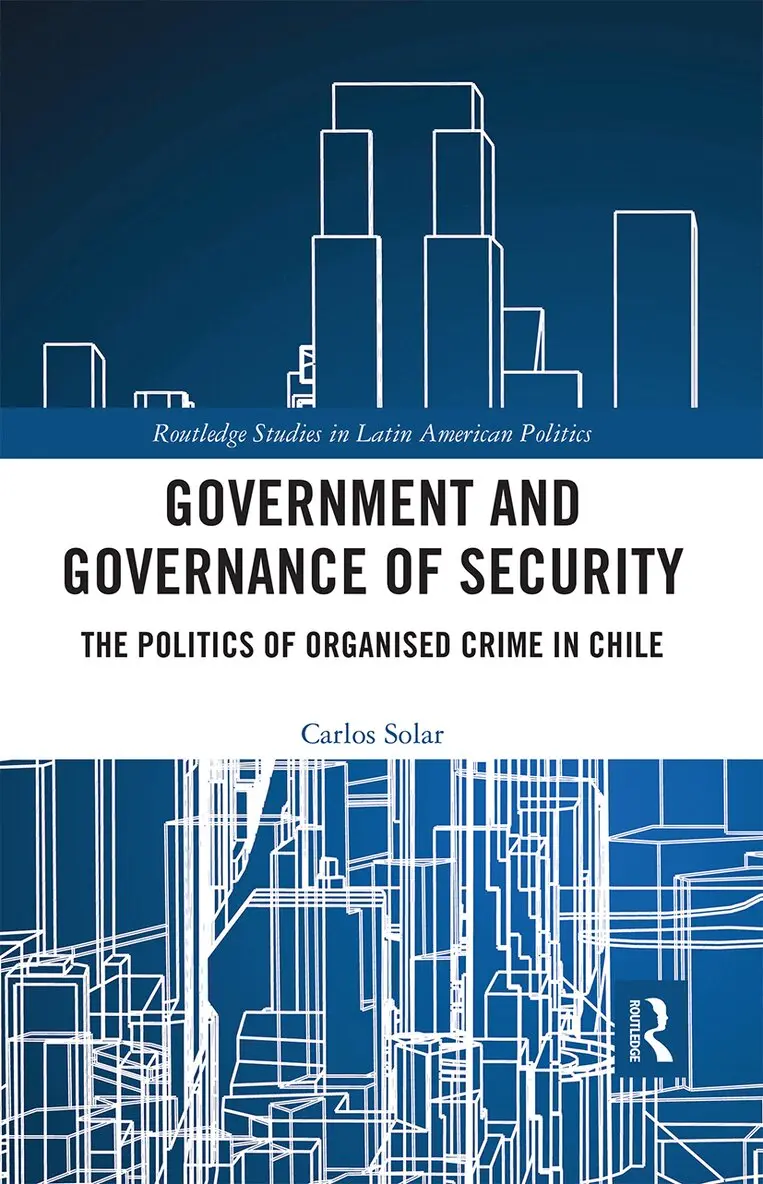
At a time when Latin America is experiencing societal unrest from human rights violations, corruption and weak institutions Government and Governance of Security offers an insightful understanding for the modern steering of crime policies. Using Chile as a case study, the book delivers an untold account of the trade-offs between political, judicial and policing institutions put in practice to confront organised crime since the country’s redemocratisation. In an effort to encompass the academic fields of political science, public policy and criminology, Carlos Solar challenges the current orthodoxies for understanding security and the promotion of the rule of law in developing states. His research aptly illuminates the practicalities of present-day governance and investigates how networks of institutions are formed and sustained across time and, subsequently, how these actors deal with issues of policy consensus and cooperation. To unveil the uniqueness of this on-the-ground action, the analysis is based on an extensive revision of public documents, legislation, media accounts and interviews conducted by the author with the key policy makers and officials dealing with crimes including drug-trafficking, money laundering and human smuggling.Government and Governance of Security will be of interest to scholars of Latin American studies, security and governance and development.
1 756 kr
Skickas inom 10-15 vardagar
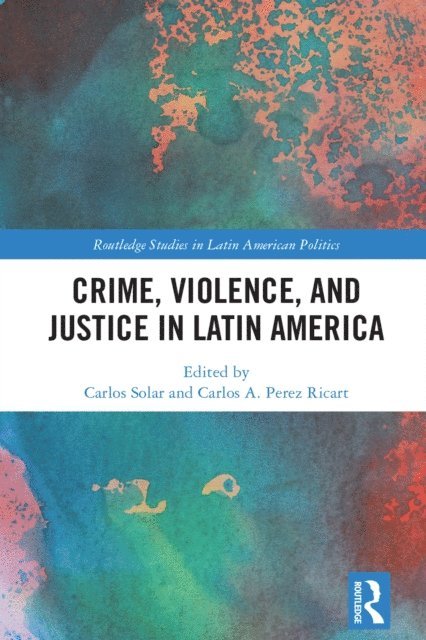
This book asks why crime and violence persist in Latin America at extreme levels and why the states have not been able to more effectively solve this problem that dominates the lives of many millions of Latin Americans.Informed by diverse disciplinary backgrounds, the book brings together a team of regional experts to discuss research-based explanations on some of Latin America’s most pressing criminal and violent issues distressing the rule of law. First, it examines old and new forms of observing crime upon perpetrators and victimized communities. Second, it explores the geographies of urban and rural violence and the entangled politics following organized criminality. Third, it questions how the transfer of policy knowledge and expertise reshapes local security governance, and, more importantly, critically examines the problems in implementing foreign models and paradigms in the Latin American context. Finally, it exposes the everchanging scenario of policy-making and prosecuting crime and homicide.Crime, Violence, and Justice in Latin America provides new themes and novel trends on what crime and violence mean in the eyes of observers, perpetrators, policymakers, governmental officials, and victims. It is an important acquisition for policy makers and academics alike.
578 kr
Skickas inom 10-15 vardagar
This book asks why crime and violence persist in Latin America at extreme levels and why the states have not been able to more effectively solve this problem that dominates the lives of many millions of Latin Americans.Informed by diverse disciplinary backgrounds, the book brings together a team of regional experts to discuss research-based explanations on some of Latin America’s most pressing criminal and violent issues distressing the rule of law. First, it examines old and new forms of observing crime upon perpetrators and victimized communities. Second, it explores the geographies of urban and rural violence and the entangled politics following organized criminality. Third, it questions how the transfer of policy knowledge and expertise reshapes local security governance, and, more importantly, critically examines the problems in implementing foreign models and paradigms in the Latin American context. Finally, it exposes the everchanging scenario of policy-making and prosecuting crime and homicide.Crime, Violence, and Justice in Latin America provides new themes and novel trends on what crime and violence mean in the eyes of observers, perpetrators, policymakers, governmental officials, and victims. It is an important acquisition for policy makers and academics alike.
Government and Governance of Security
The Politics of Organised Crime in Chile
Inbunden, Engelska, 2018
1 909 kr
Skickas inom 10-15 vardagar
At a time when Latin America is experiencing societal unrest from human rights violations, corruption and weak institutions Government and Governance of Security offers an insightful understanding for the modern steering of crime policies. Using Chile as a case study, the book delivers an untold account of the trade-offs between political, judicial and policing institutions put in practice to confront organised crime since the country’s redemocratisation. In an effort to encompass the academic fields of political science, public policy and criminology, Carlos Solar challenges the current orthodoxies for understanding security and the promotion of the rule of law in developing states. His research aptly illuminates the practicalities of present-day governance and investigates how networks of institutions are formed and sustained across time and, subsequently, how these actors deal with issues of policy consensus and cooperation. To unveil the uniqueness of this on-the-ground action, the analysis is based on an extensive revision of public documents, legislation, media accounts and interviews conducted by the author with the key policy makers and officials dealing with crimes including drug-trafficking, money laundering and human smuggling.Government and Governance of Security will be of interest to scholars of Latin American studies, security and governance and development.
594 kr
Skickas inom 3-6 vardagar
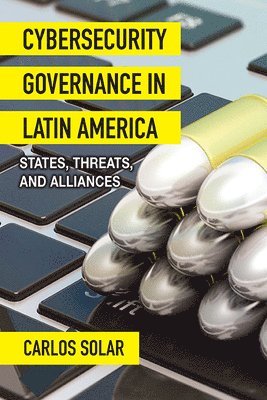
Explores the effects of the cyber revolution for security in the Americas.Cybersecurity Governance in Latin America discusses how the massification of the Internet has exposed emerging democracies' high-tech vulnerabilities to cyber-attacks and questions why states have decided to introduce policies and legislation facilitating the militarization of cyberspace. Carlos Solar offers a comparative analysis using the cases of Argentina, Brazil, Chile, Colombia, Mexico, and Venezuela to help navigate the changing security landscape and the growing risks found in the digital domain. His analysis includes a review of civilian and military preparedness emphasizing the ongoing alliances with the world's superpowers to finally debate what are the side effects for peace and development in the Americas from the current cybersecurity rivalry between the United States and China. Providing a much-needed account of state-technology affairs in the global south Cybersecurity Governance in Latin America challenges scholars and policymakers to rethink the protection of cyberspace to avoid unnecessarily sacrificing rights and freedoms in the name of national security.
1 456 kr
Skickas inom 3-6 vardagar
Explores the effects of the cyber revolution for security in the Americas.Cybersecurity Governance in Latin America discusses how the massification of the Internet has exposed emerging democracies' high-tech vulnerabilities to cyber-attacks and questions why states have decided to introduce policies and legislation facilitating the militarization of cyberspace. Carlos Solar offers a comparative analysis using the cases of Argentina, Brazil, Chile, Colombia, Mexico, and Venezuela to help navigate the changing security landscape and the growing risks found in the digital domain. His analysis includes a review of civilian and military preparedness emphasizing the ongoing alliances with the world's superpowers to finally debate what are the side effects for peace and development in the Americas from the current cybersecurity rivalry between the United States and China. Providing a much-needed account of state-technology affairs in the global south Cybersecurity Governance in Latin America challenges scholars and policymakers to rethink the protection of cyberspace to avoid unnecessarily sacrificing rights and freedoms in the name of national security.
1 159 kr
Skickas
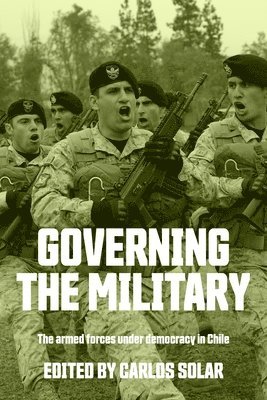
Governing the military combines the study of governance, democratisation, and policymaking to explore how military politics have unfolded since the return to democracy in Chile. The book offers timely research to understand the rocky road to overcome the civil-military tension of the 1990s and the challenges presented by novel security demands in the twenty-first century, including the militarisation of urban crime and pandemics, and its consequences on human rights. The book will also introduce the reader to failed policies, lack of attention to governance, and decaying democratic practices.The volume examines eight themes considered fundamental to understand the modern governance of the armed forces: the state of civil-military relations, political transition and military subordination, roles and missions, military effectiveness, fiscal spending, inter-agency challenges, international engagements, and transparency and corruption.
346 kr
Kommande
Governing the military combines the study of governance, democratisation, and policymaking to explore how military politics have unfolded since the return to democracy in Chile. The book offers timely research to understand the rocky road to overcome the civil-military tension of the 1990s and the challenges presented by novel security demands in the twenty-first century, including the militarisation of urban crime and pandemics, and its consequences on human rights. The book will also introduce the reader to failed policies, lack of attention to governance, and decaying democratic practices.The volume examines eight themes considered fundamental to understand the modern governance of the armed forces: the state of civil-military relations, political transition and military subordination, roles and missions, military effectiveness, fiscal spending, inter-agency challenges, international engagements, and transparency and corruption.