Carmen Fought – författare
Visar alla böcker från författaren Carmen Fought. Handla med fri frakt och snabb leverans.
9 produkter
9 produkter
E-bok
Engelska, 20041 202 kr
Läs direkt efter köp
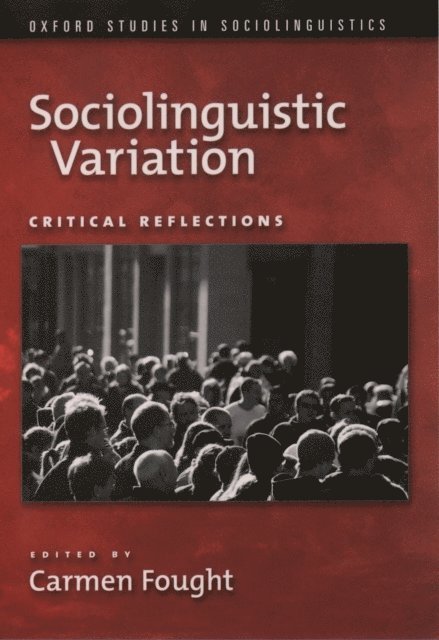
Sociolinguistic Variation brings together a group of leading scholars in the field of language variation and change to address the directions that sociolinguistic research is taking in the new millennium. Among the main themes of the volume are the construction of identity, the nature of "place" as distinct from "community", and the role of attitudes in language variation. These themes are explored through a variety of types of data, from traditional sources such as narratives, to relatively new sources, such as postings on the Internet or television documentaries. Combining the voices of established scholars in the field with the perspectives of promising younger scholars this volume provides crucial guidance for anyone interested in doing research on sociolinguistic variation. Contributors include Guy Bailey, Penelope Eckert, Barbara Johnstone, William Labov, Ronald Macaulay, Lesley Milroy, Dennis Preston, John Rickford, Gillian Sankoff, Natalie Schilling-Estes, Jan Tillery, and Walt Wolfram.
Inbunden, Engelska, 2004
2 137 kr
Skickas inom 5-8 vardagar
This volume contains previously unpublished articles by the most prominent sociolinguists working in the study of language variation today, which when taken together both highlight this new direction, as well as critique conventional wisdom in this growing and vital field of study. The book is divided into four sections: methodology; place (the role of context); adult speech; and attitudes and ideologies.
E-bok
PDF, Engelska, 20041 202 kr
Läs direkt efter köp
Sociolinguistic Variation brings together a group of leading scholars in the field of language variation and change to address the directions that sociolinguistic research is taking in the new millennium. Among the main themes of the volume are the construction of identity, the nature of "place" as distinct from "community", and the role of attitudes in language variation. These themes are explored through a variety of types of data, from traditional sources such as narratives, to relatively new sources, such as postings on the Internet or television documentaries. Combining the voices of established scholars in the field with the perspectives of promising younger scholars this volume provides crucial guidance for anyone interested in doing research on sociolinguistic variation. Contributors include Guy Bailey, Penelope Eckert, Barbara Johnstone, William Labov, Ronald Macaulay, Lesley Milroy, Dennis Preston, John Rickford, Gillian Sankoff, Natalie Schilling-Estes, Jan Tillery, and Walt Wolfram.
Häftad, Engelska, 2006
633 kr
Skickas inom 7-10 vardagar
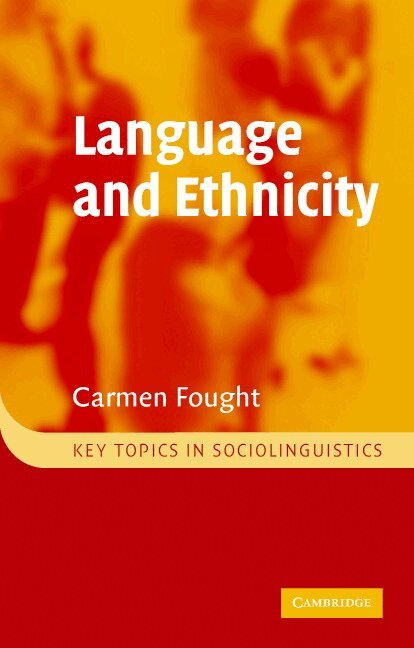
What is ethnicity? Is there a 'white' way of speaking? Why do people sometimes borrow features of another ethnic group's language? Why do we sometimes hear an accent that isn't there? This lively overview, first published in 2006, reveals the fascinating relationship between language and ethnic identity, exploring the crucial role it plays in both revealing a speaker's ethnicity and helping to construct it. Drawing on research from a range of ethnic groups around the world, it shows how language contributes to the social and psychological processes involved in the formation of ethnic identity, exploring both the linguistic features of ethnic language varieties and also the ways in which language is used by different ethnic groups. Complete with discussion questions and a glossary, Language and Ethnicity will be welcomed by students and researchers in sociolinguistics, as well as anybody interested in ethnic issues, language and education, inter-ethnic communication, and the relationship between language and identity.
Inbunden, Engelska, 2006
1 010 kr
Skickas inom 7-10 vardagar
What is ethnicity? Is there a 'white' way of speaking? Why do people sometimes borrow features of another ethnic group's language? Why do we sometimes hear an accent that isn't there? This lively overview, first published in 2006, reveals the fascinating relationship between language and ethnic identity, exploring the crucial role it plays in both revealing a speaker's ethnicity and helping to construct it. Drawing on research from a range of ethnic groups around the world, it shows how language contributes to the social and psychological processes involved in the formation of ethnic identity, exploring both the linguistic features of ethnic language varieties and also the ways in which language is used by different ethnic groups. Complete with discussion questions and a glossary, Language and Ethnicity will be welcomed by students and researchers in sociolinguistics, as well as anybody interested in ethnic issues, language and education, inter-ethnic communication, and the relationship between language and identity.
Häftad, Engelska, 2022
327 kr
Skickas inom 7-10 vardagar
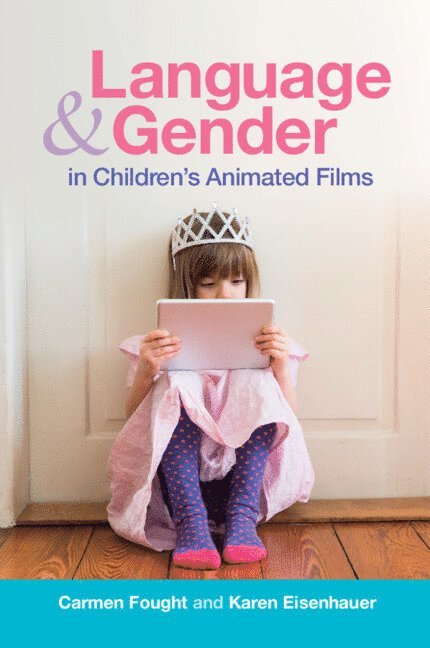
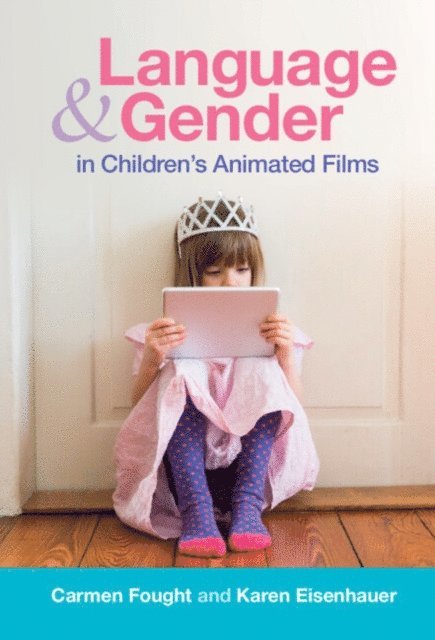
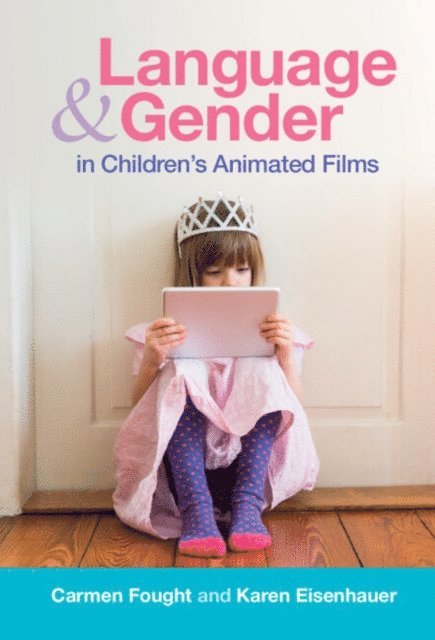
Disney and Pixar films are beloved by children and adults alike. However, what linguistic messages, both positive and negative, do these films send to children about gender roles? How do characters of different genders talk, and how are they talked about? And do patterns of representation change over time? Using an accessible mix of statistics and in-depth qualitative analysis, the authors bring their expertise to the study of this very popular media behemoth. Looking closely at five different language features - talkativeness, compliments, directives, insults, and apologies - the authors uncover the biases buried in scripted language, and explore how language is used to construct tropes of femininity, masculinity, and queerness. Working with a large body of films reveals wide-scale patterns that might fly under the radar when the films are viewed individually, as well as demonstrating how different linguistic tools and techniques can be used to better understand popular children's media.
Inbunden, Engelska, 2022
1 036 kr
Skickas inom 7-10 vardagar
Disney and Pixar films are beloved by children and adults alike. However, what linguistic messages, both positive and negative, do these films send to children about gender roles? How do characters of different genders talk, and how are they talked about? And do patterns of representation change over time? Using an accessible mix of statistics and in-depth qualitative analysis, the authors bring their expertise to the study of this very popular media behemoth. Looking closely at five different language features - talkativeness, compliments, directives, insults, and apologies - the authors uncover the biases buried in scripted language, and explore how language is used to construct tropes of femininity, masculinity, and queerness. Working with a large body of films reveals wide-scale patterns that might fly under the radar when the films are viewed individually, as well as demonstrating how different linguistic tools and techniques can be used to better understand popular children's media.
E-bok
Engelska, 2022394 kr
Läs direkt efter köp
Disney and Pixar films are beloved by children and adults alike. However, what linguistic messages, both positive and negative, do these films send to children about gender roles? How do characters of different genders talk, and how are they talked about? And do patterns of representation change over time? Using an accessible mix of statistics and in-depth qualitative analysis, the authors bring their expertise to the study of this very popular media behemoth. Looking closely at five different language features – talkativeness, compliments, directives, insults, and apologies – the authors uncover the biases buried in scripted language, and explore how language is used to construct tropes of femininity, masculinity, and queerness. Working with a large body of films reveals wide-scale patterns that might fly under the radar when the films are viewed individually, as well as demonstrating how different linguistic tools and techniques can be used to better understand popular children''s media.
E-bok
PDF, Engelska, 2022394 kr
Läs direkt efter köp
Disney and Pixar films are beloved by children and adults alike. However, what linguistic messages, both positive and negative, do these films send to children about gender roles? How do characters of different genders talk, and how are they talked about? And do patterns of representation change over time? Using an accessible mix of statistics and in-depth qualitative analysis, the authors bring their expertise to the study of this very popular media behemoth. Looking closely at five different language features – talkativeness, compliments, directives, insults, and apologies – the authors uncover the biases buried in scripted language, and explore how language is used to construct tropes of femininity, masculinity, and queerness. Working with a large body of films reveals wide-scale patterns that might fly under the radar when the films are viewed individually, as well as demonstrating how different linguistic tools and techniques can be used to better understand popular children''s media.