Carmen Rueda Ramos – författare
Visar alla böcker från författaren Carmen Rueda Ramos. Handla med fri frakt och snabb leverans.
4 produkter
4 produkter
Inbunden, Engelska, 2006
1 165 kr
Skickas inom 10-15 vardagar
I first used the Internet in fall 1993, as a Fulbright Scholar at Charles University in Prague. I immediately recognized that the Internet would radically transform second language teaching and learning, and within a year had written my first book on the topic, E-Mail for English Teaching. The book galvanized a wave of growing interest in the relationship of the Internet to language learning, and was soon followed by many more books on the topic by applied linguists or educators. This volume, though, represents one of the first that specifically analyzes the relationship of new technologies to the teaching of languages for specific purposes (LSP), and, in doing so, makes an important contribution. The overall impact of information and communication technology (ICT) on second language learning can be summarized in two ways, both of which have special significance for teaching LSP. First, ICT has transformed the context of language learning. The stunning growth of the Internet—resulting in 24 trillion email messages sent in 2005, and more than 600 billion Web pages and 50 million blogs online in the same year—has helped make possible the development of English as the world's first global language.
E-bok
PDF, Engelska, 20061 046 kr
Läs direkt efter köp
I first used the Internet in fall 1993, as a Fulbright Scholar at Charles University in Prague. I immediately recognized that the Internet would radically transform second language teaching and learning, and within a year had written my first book on the topic, E-Mail for English Teaching. The book galvanized a wave of growing interest in the relationship of the Internet to language learning, and was soon followed by many more books on the topic by applied linguists or educators. This volume, though, represents one of the first that specifically analyzes the relationship of new technologies to the teaching of languages for specific purposes (LSP), and, in doing so, makes an important contribution. The overall impact of information and communication technology (ICT) on second language learning can be summarized in two ways, both of which have special significance for teaching LSP. First, ICT has transformed the context of language learning. The stunning growth of the Internet—resulting in 24 trillion email messages sent in 2005, and more than 600 billion Web pages and 50 million blogs online in the same year—has helped make possible the development of English as the world''s first global language.
Del 7 - Educational Linguistics
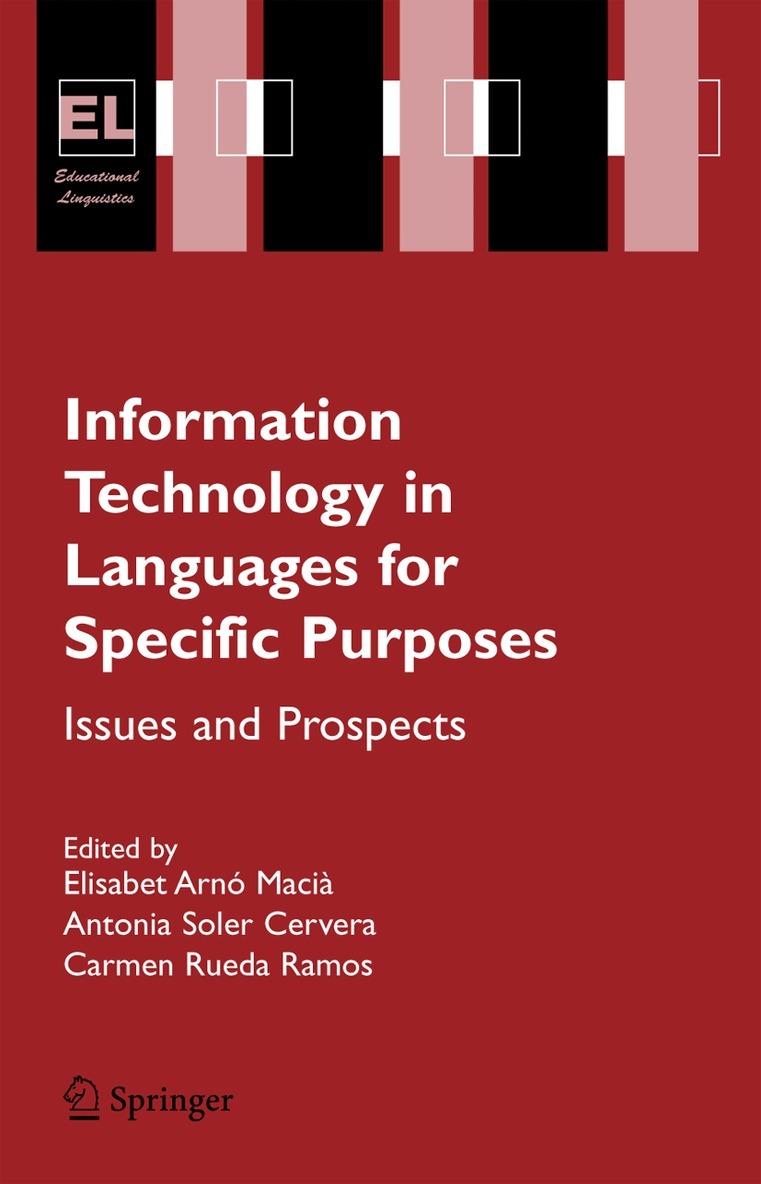
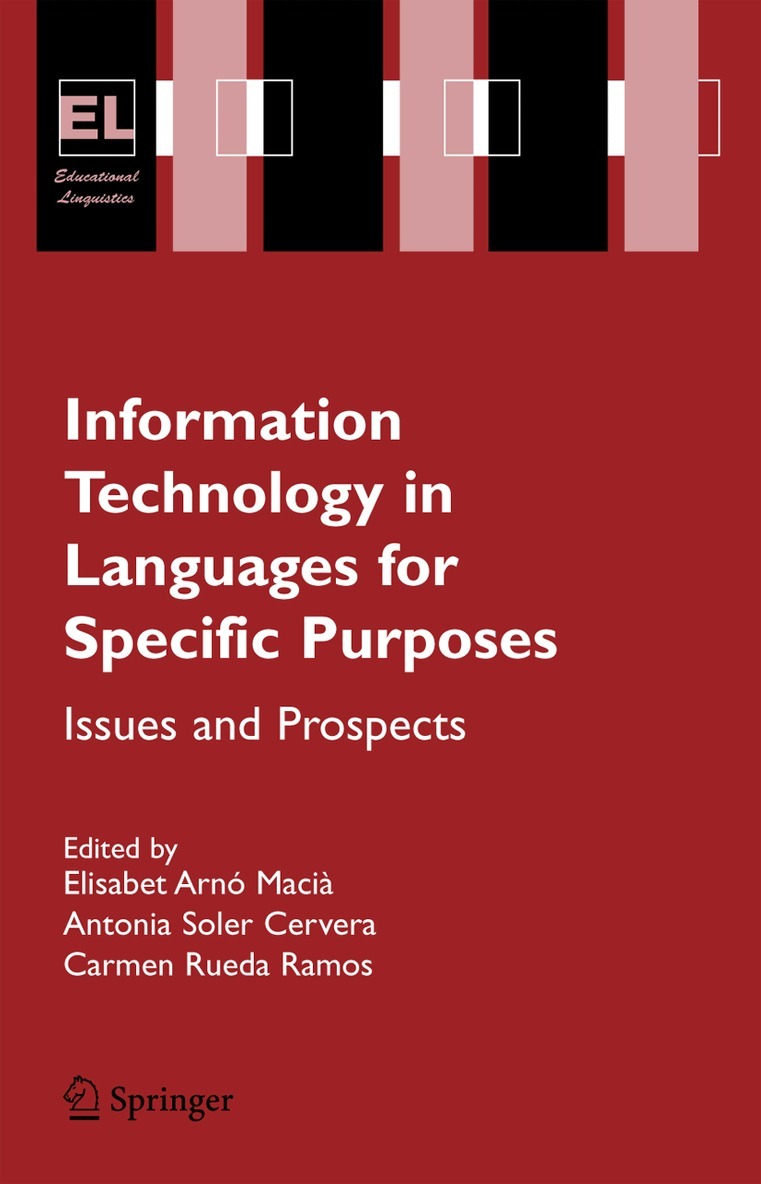
Information Technology in Languages for Specific Purposes
Issues and Prospects
Häftad, Engelska, 2010
849 kr
Skickas inom 10-15 vardagar
I first used the Internet in fall 1993, as a Fulbright Scholar at Charles University in Prague. I immediately recognized that the Internet would radically transform second language teaching and learning, and within a year had written my first book on the topic, E-Mail for English Teaching. The book galvanized a wave of growing interest in the relationship of the Internet to language learning, and was soon followed by many more books on the topic by applied linguists or educators. This volume, though, represents one of the first that specifically analyzes the relationship of new technologies to the teaching of languages for specific purposes (LSP), and, in doing so, makes an important contribution. The overall impact of information and communication technology (ICT) on second language learning can be summarized in two ways, both of which have special significance for teaching LSP. First, ICT has transformed the context of language learning. The stunning growth of the Internet—resulting in 24 trillion email messages sent in 2005, and more than 600 billion Web pages and 50 million blogs online in the same year—has helped make possible the development of English as the world's first global language.
E-bok
PDF, Engelska, 201186 kr
Läs direkt efter köp
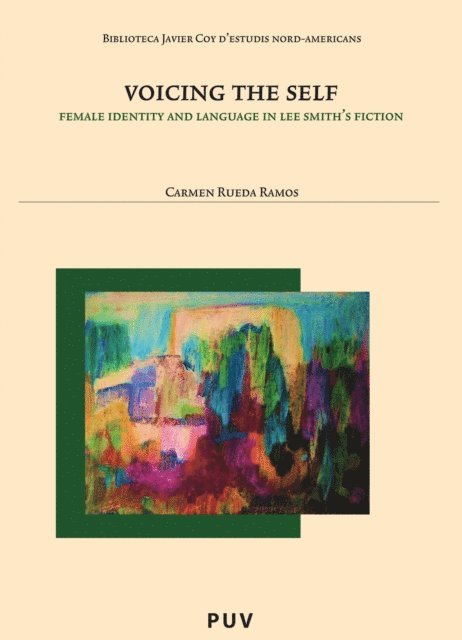
This book examines how Lee Smith has given voice to all aspects of her experience both as a woman-artist living in contemporary America and as a native of Appalachia, a southern region that still retains a strong sense of oral tradition and community ties. Smith revisits and alters the language and myths that have conditioned their quests for identity and silenced their voices. In doing so, she explores the relationship between female heroism and women's creativity as distinct from that of men. In their struggle, Smith's heroines reflect the writer's personal and artistic development. Her female characters' conflicted relationship to self-affirmation and to the world of Appalachia reveals Smith's own ambivalent feelings towards the concept of individuality and towards her cultural roots.