Carmen Sirianni – författare
Visar alla böcker från författaren . Handla med fri frakt och snabb leverans.
8 produkter
8 produkter
Häftad, Engelska, 2001
416 kr
Skickas inom 5-8 vardagar
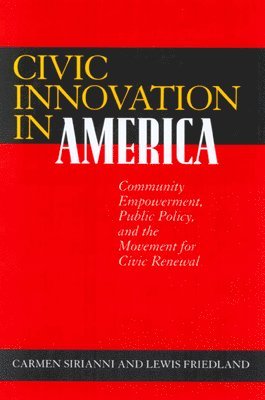
In this book, two leading experts on community action provide the first scholarly examination of the civic renewal movement that has emerged in the United States in recent decades. Sirianni Friedland examine civic innovation since the 1960s as social learning in four arenas (community organizing/development, civic environmentalism, community health, and public journalism), and they link local efforts to broader networks and to the development of 'public policy for democracy'. They also explore the emergence of a movement for civic renewal that builds upon the civic movements in these four arenas. In contrast to some recent studies that stress broad indicators of civic decline, this study analyzes innovation as a long process of social learning within specific institutional and policy domains with complex challenges and cross-currents.It draws upon analytical frameworks of social capital, policy learning, organizational learning, regulatory culture, democratic theory, and social movement theory. The study is based upon interviews with more than 400 innovative practitioners, as well as extensive field observation, case study, action research, and historical analysis.
Häftad, Engelska, 2020
415 kr
Skickas inom 5-8 vardagar
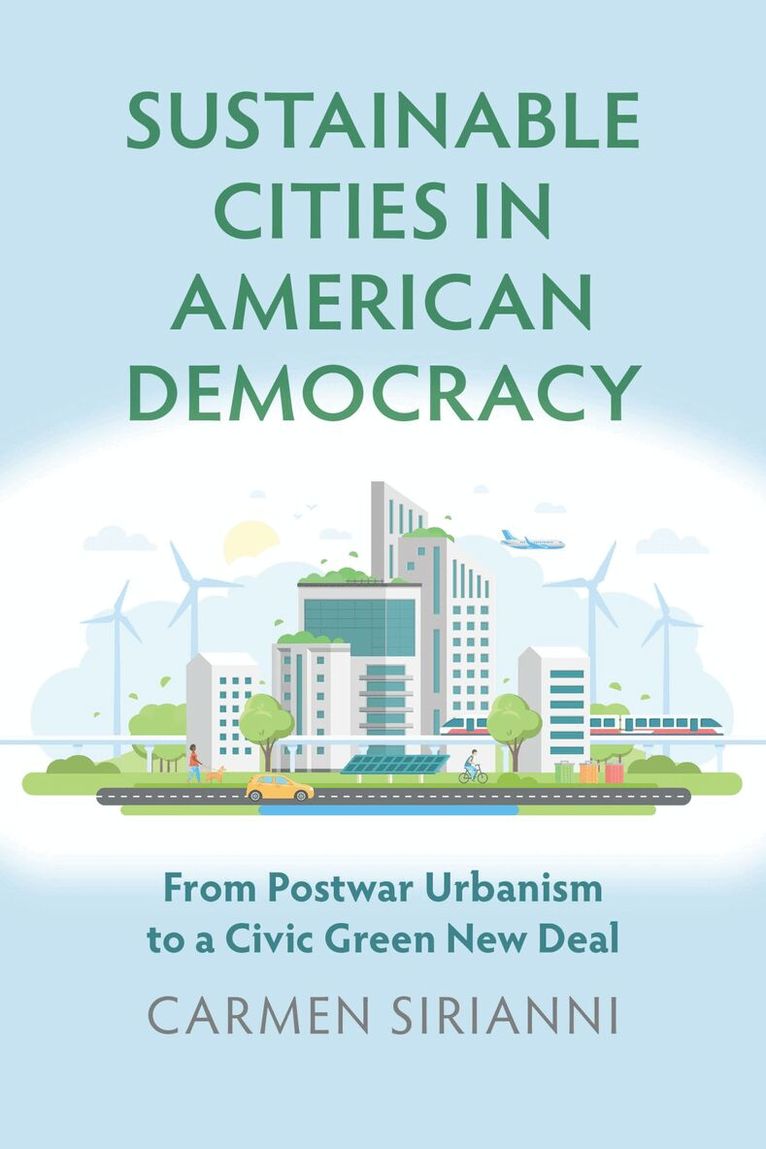
We face two global threats: the climate crisis and a crisis of democracy. Located at the crux of these crises, sustainable cities build on the foundations and resources of democracy to make our increasingly urban world more resilient and just. Sustainable Cities in American Democracy focuses on this effort as it emerged and developed over the past decades in the institutional field of sustainable cities - a vital response to environmental degradation and climate change that is shaped by civic and democratic action.Carmen Sirianni shows how various kinds of civic associations and grassroots mobilizing figure in this story, especially as they began to explicitly link conservation to the future of our democracy and then develop sustainable cities as a democratic project. These organizations are national, local, or multitiered, from the League of Women Voters to the Natural Resources Defense Council to bicycle and watershed associations. Some challenge city government agencies contentiously, while others seek collaboration; many do both at some point. Sirianni uses a range of analytic approaches - from scholarly disciplines, policy design, urban governance, social movements, democratic theory, public administration, and planning - to understand how such diverse civic and professional associations have come to be both an ecology of organizations and a systemic and coherent project.The institutional field of sustainable cities has emerged with some core democratic norms and civic practices but also with many tensions and trade-offs that must be crafted and revised strategically in the face of new opportunities and persistent shortfalls. Sirianni's account draws ambitious yet pragmatic and hopeful lessons for a 'Civic Green New Deal'a policy design for building sustainable and resilient cities on much more robust foundations in the decades ahead while also addressing democratic deficits in our polarized political culture.
E-bok
Engelska, 2020496 kr
Läs direkt efter köp
We face two global threats: the climate crisis and a crisis of democracy. Located at the crux of these crises, sustainable cities build on the foundations and resources of democracy to make our increasingly urban world more resilient and just. Sustainable Cities in American Democracy focuses on this effort as it emerged and developed over the past decades in the institutional field of sustainable cities—a vital response to environmental degradation and climate change that is shaped by civic and democratic action.Carmen Sirianni shows how various kinds of civic associations and grassroots mobilizing figure in this story, especially as they began to explicitly link conservation to the future of our democracy and then develop sustainable cities as a democratic project. These organizations are national, local, or multitiered, from the League of Women Voters to the Natural Resources Defense Council to bicycle and watershed associations. Some challenge city government agencies contentiously, while others seek collaboration; many do both at some point. Sirianni uses a range of analytic approaches—from scholarly disciplines, policy design, urban governance, social movements, democratic theory, public administration, and planning—to understand how such diverse civic and professional associations have come to be both an ecology of organizations and a systemic and coherent project.The institutional field of sustainable cities has emerged with some core democratic norms and civic practices but also with many tensions and trade-offs that must be crafted and revised strategically in the face of new opportunities and persistent shortfalls. Sirianni’s account draws ambitious yet pragmatic and hopeful lessons for a “Civic Green New Deal”a policy design for building sustainable and resilient cities on much more robust foundations in the decades ahead while also addressing democratic deficits in our polarized political culture.
Häftad, Engelska, 2009
368 kr
Skickas inom 10-15 vardagar
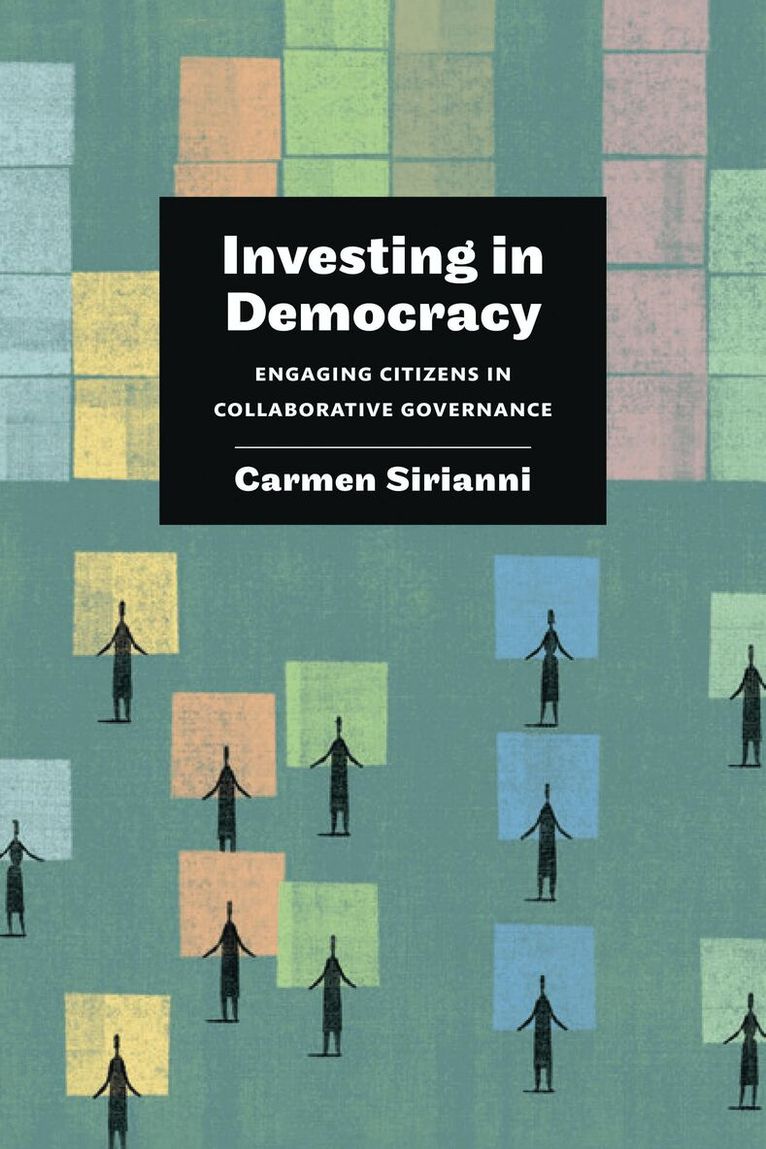
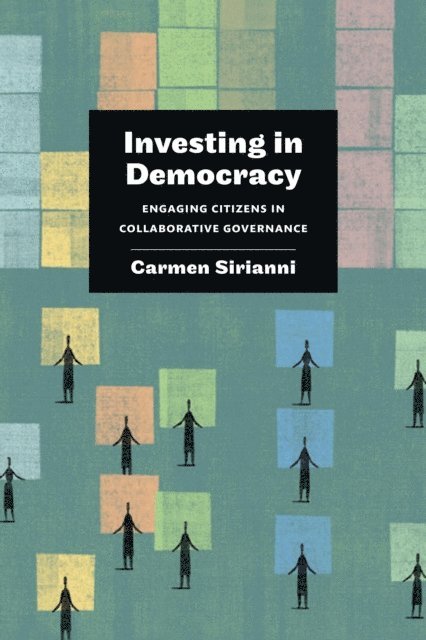
The health of American democracy ultimately depends on our willingness and ability to work together as citizens and stakeholders in our republic. Government policies often fail to promote such collaboration. But if designed properly, they can do much to strengthen civic engagement. That is the central message of Carmen Sirianni's eloquent new book.Rather than encourage citizens to engage in civic activity, government often puts obstacles in their way. Many agencies treat citizens as passive clients rather than as community members, overlooking their ability to mobilize assets and networks to solve problems. Many citizen initiatives run up against rigid rules and bureaucratic silos, causing all but the most dedicated activists to lose heart. The unfortunateand unnecessaryresult is a palpable decline in the quality of civic life.Fortunately, growing numbers of policymakers across the country are figuring out how government can serve as a partner and catalyst for collaborative problem solving. Investing in Democracy details three such success stories: neighborhood planning in Seattle; youth civic engagement programs in Hampton, Virginia; and efforts to develop civic environmentalism at the U.S. Environmental Protection Agency. The book explains what measures were taken and why they succeeded. It distills eight core design principles that characterize effective collaborative governance and concludes with concrete recommendations for federal policy.
E-bok
PDF, Engelska, 2010380 kr
Läs direkt efter köp
The health of American democracy ultimately depends on our willingness and ability to work together as citizens and stakeholders in our republic. Government policies often fail to promote such collaboration. But if designed properly, they can do much to strengthen civic engagement. That is the central message of Carmen Sirianni's eloquent new book.Rather than encourage citizens to engage in civic activity, government often puts obstacles in their way. Many agencies treat citizens as passive clients rather than as community members, overlooking their ability to mobilize assets and networks to solve problems. Many citizen initiatives run up against rigid rules and bureaucratic silos, causing all but the most dedicated activists to lose heart. The unfortunateand unnecessaryresult is a palpable decline in the quality of civic life.Fortunately, growing numbers of policymakers across the country are figuring out how government can serve as a partner and catalyst for collaborative problem solving. Investing in Democracy details three such success stories: neighborhood planning in Seattle; youth civic engagement programs in Hampton, Virginia; and efforts to develop civic environmentalism at the U.S. Environmental Protection Agency. The book explains what measures were taken and why they succeeded. It distills eight core design principles that characterize effective collaborative governance and concludes with concrete recommendations for federal policy.
Inbunden, Engelska, 2014
1 439 kr
Skickas inom 5-8 vardagar
In this collection of original essays, empirical analysts and theorists across disciplines turn a critical eye to a variety of recent institutional forms and styles of innovation. They examine lived reality and theoretical underpinning, promise and accomplishment, but also the pitfalls and capacity-building challenges that face virtually all attempts to bring citizen voice, knowledge, and skill to the center of public problem solving. Their analyses are both hopeful and hard-headed and are guided by commitments to help understand appropriate fit and realistic sustainability. Cases include face-to-face deliberation, online networking and citizen journalism, policy forums, and community and stakeholder planning sessions across local, state and federal contexts. Policy issues run a broad gamut from community and regional economic development and environmental sustainability to minority rights and gay marriage.
Häftad, Engelska, 2014
584 kr
Skickas inom 5-8 vardagar
In this collection of original essays, empirical analysts and theorists across disciplines turn a critical eye to a variety of recent institutional forms and styles of innovation. They examine lived reality and theoretical underpinning, promise and accomplishment, but also the pitfalls and capacity-building challenges that face virtually all attempts to bring citizen voice, knowledge, and skill to the center of public problem solving. Their analyses are both hopeful and hard-headed and are guided by commitments to help understand appropriate fit and realistic sustainability. Cases include face-to-face deliberation, online networking and citizen journalism, policy forums, and community and stakeholder planning sessions across local, state and federal contexts. Policy issues run a broad gamut from community and regional economic development and environmental sustainability to minority rights and gay marriage.
E-bok
Engelska, 2020169 kr
Läs direkt efter köp
Recent scholarship has rediscovered the genuinely mass character of the Bolshevik-led revolution that toppled Russian absolutism in 1917. In this major study, Carmen Sirianni undertakes a comprehensive study of the forms of popular power that emerged in the course of the struggle against Tsarist, and their destiny in the formative years of the new Soviet state. He successively discusses the factory committee movement, the attitudes of the trade unions and the left parties towards workers control, the unfolding of dual power, the tole of the peasantry, and the organization of labour and industry in the civil war.The developing theme of these chapters - the unsettled, often antagonistic relationship between working-class and peasant initiatives and demands and Bolshevik political and economic conceptions - is subjected to theoretical examination in the second part of the book. Here Sirianni analyses the particular constitution of Lenin''s Marxism, and discerns in it a ''productivist evolutionism'' which, he maintains, adversely affected the Bolsheviks'' appreciation of working-class self-organization both in industry and in the exercise of political power, and vitiated their perception of the rural masses.Finally, Sirianni sets Russian policy and experience in its international context, considering the different, but also limited, views of Gramsci and Pannekoek, and the ''councilist'' movements of Western Europe. He concludes with a reflection on the subsequent course of the revolutionary state and the options available to its leaders, as the defeat of the Left Opposition and then of Bukharin prepared the triumph of Stalinism.Workers Control and Socialist Democracy unites historical, political and theoretical judgement to make a fundamental contribution to our understanding, both of the Russian Revolution and of central unresolved issues of socialism in the twentieth century.