Carolin Goerzig - Böcker
Visar alla böcker från författaren Carolin Goerzig. Handla med fri frakt och snabb leverans.
6 produkter
6 produkter
752 kr
Skickas inom 10-15 vardagar
This book examines the doctrine of giving no concessions to terrorists, and uses empirical research to establish whether there is any link between negotiating with such groups and the spread of violence.The logic of the no-concessions doctrine is based on the argument that other terrorist groups multiply when they realize that terrorism succeeds in achieving political goals. Proponents of the no-concessions doctrine have argued that there is a pattern in terrorist contagion which results from giving in to their demands. Statistical evidence for terrorist contagion is not convincing enough, however, as depicting an increase in terrorist incidences as a consequence of concessions could merely imply a flawed causality. Without an explanation for such correlations we are left wondering whether other reasons could be decisive in the increase in terrorist actions.Based on field research in four countries and interviews with current and former members of several different terrorist groups, this book establishes a qualitative relationship between concessions to terrorists on the one hand and (non-)contagion of other terrorist groups on the other. The deterrence effect, intended by the imperative never to concede, is seriously challenged. In fact, it can be precisely through concessions that groups mentalities and actions are called into question. The book will be of great interest to students of terrorism and political violence, war and conflict studies, security studies and IR/politics.Carolin Goerzig is a Post-Doctoral Fellow at the EU Institute for Security Studies in Paris and has a PhD in Political Science from Ludwig-Maximilians-University of Munich.
2 155 kr
Skickas inom 10-15 vardagar
This book examines the doctrine of giving no concessions to terrorists, and uses empirical research to establish whether there is any link between negotiating with such groups and the spread of violence.The logic of the no-concessions doctrine is based on the argument that other terrorist groups multiply when they realize that terrorism succeeds in achieving political goals. Proponents of the no-concessions doctrine have argued that there is a pattern in terrorist contagion which results from giving in to their demands. Statistical evidence for terrorist contagion is not convincing enough, however, as depicting an increase in terrorist incidences as a consequence of concessions could merely imply a flawed causality. Without an explanation for such correlations we are left wondering whether other reasons could be decisive in the increase in terrorist actions.Based on field research in four countries and interviews with current and former members of several different terrorist groups, this book establishes a qualitative relationship between concessions to terrorists on the one hand and (non-)contagion of other terrorist groups on the other. The deterrence effect, intended by the imperative never to concede, is seriously challenged. In fact, it can be precisely through concessions that groups mentalities and actions are called into question. The book will be of great interest to students of terrorism and political violence, war and conflict studies, security studies and IR/politics.Carolin Goerzig is a Post-Doctoral Fellow at the EU Institute for Security Studies in Paris and has a PhD in Political Science from Ludwig-Maximilians-University of Munich.
Radicalization in Western Europe
Integration, Public Discourse and Loss of Identity among Muslim Communities
Inbunden, Engelska, 2014
2 222 kr
Skickas inom 10-15 vardagar
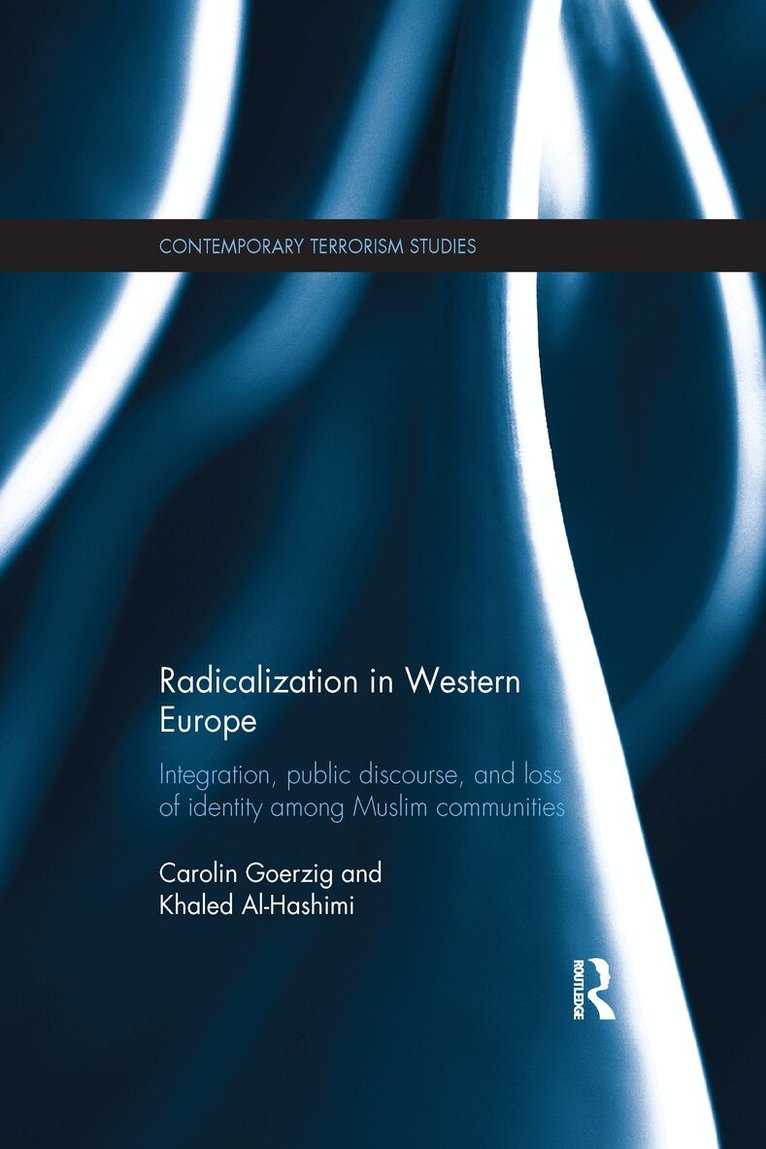
Employing a theoretical framework based on the concept of identity loss, this book seeks to understand why increased integration has stimulated greater radicalization among the Muslim populations in Western Europe.Through extensive field research in four European countries – the UK, the Netherlands, Germany and France – the authors investigate three key questions: 1) Why are 2nd and 3rd generations of Muslims in Europe more radical than their parents?; 2) Why does Europe experience more "home-grown terrorism" today than thirty or forty years ago?; 3) Why do some European countries feature more radical Muslim communities than others? The book reveals that these three puzzling questions can be solved when analyzing the loss of individuality if the face of integration and identification with European society. While Individualist and structural approaches fail to explain radicalization of Muslims in Europe, this study, by framing radicalization through coupling the public discourse with identity loss, provides a much needed insight into the process of radicalization. Explaining radicalization and gaining an understanding of the drivers of radicalization is crucial to prevent and mitigate intercultural alienation, to further develop immigration policies, redress integration failures as well as to avoid dangerous oversimplifications. This book contributes not only to understanding why greater integration is matched by increasing radicalization, but its insights also contribute to developing ideas about how radicalization can be prevented or overcome and integration policies can be enhanced.This book will be of much interest to students of terrorism and counter-terrorism, radical Islam, war and conflict studies, European politics, IR and security studies.
2 088 kr
Skickas inom 10-15 vardagar
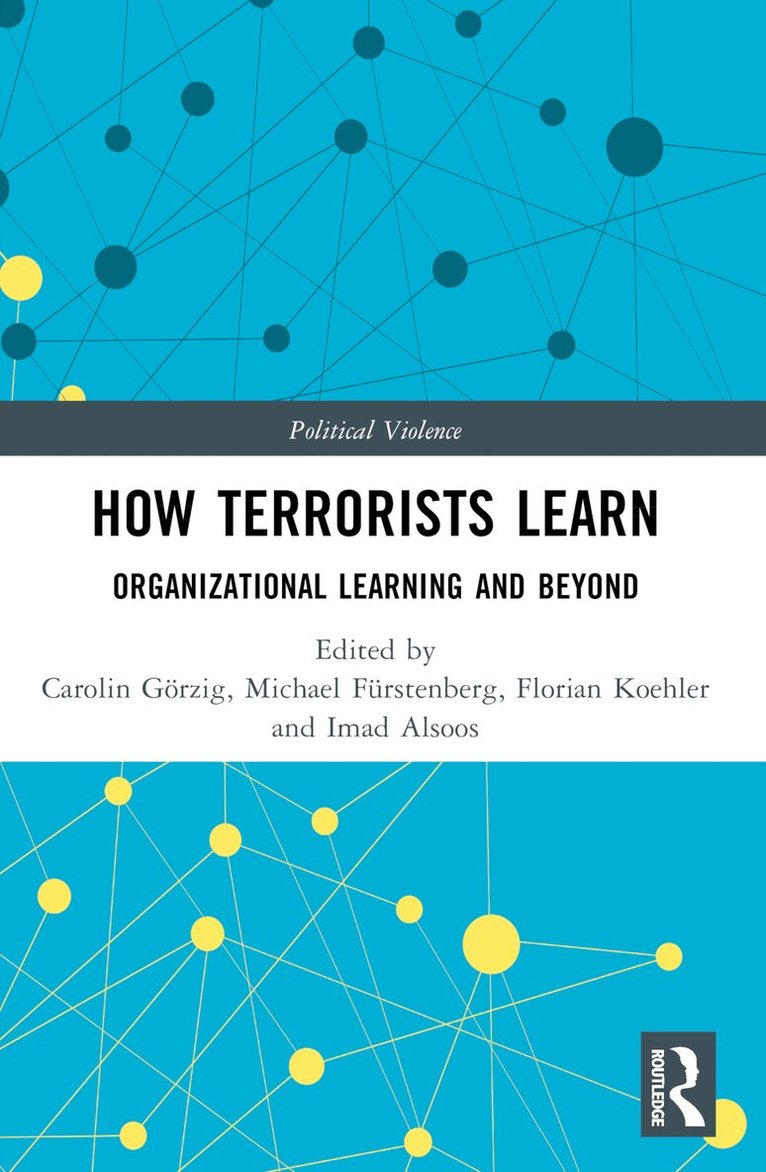
This volume helps us understand the transformations of terrorist organisations, and the conflicts they are involved in, by broadening the perspective on what is considered terrorist learning.Using a variety of methodological approaches and empirical data, the volume offers a look at the clandestine inner lives of groups from different continents and ideological backgrounds in order to explore from whom they learn and how, and what the outcomes are. Their internal and external interactions are examined within their socio-political contexts to illuminate how they adapt to challenges or fail to do so. Unpacking the question of ‘how do terrorists learn’ helps us to grasp not only changes of violent means of action but also of operational and strategic approaches and, ultimately, even transformations of the ends pursued. The chapters demonstrate that terrorist learning is not principally different from that of other human organisations. The contributors draw on conceptual frameworks of organizational learning, but also broaden the scope beyond the organizational framework to acknowledge the variety of forms of informal and decentralized learning characteristic of much contemporary terrorism.This book will be of much interest to students of terrorism studies, violent extremism, organisational studies and International Relations.
576 kr
Skickas inom 10-15 vardagar
This volume helps us understand the transformations of terrorist organisations, and the conflicts they are involved in, by broadening the perspective on what is considered terrorist learning.Using a variety of methodological approaches and empirical data, the volume offers a look at the clandestine inner lives of groups from different continents and ideological backgrounds in order to explore from whom they learn and how, and what the outcomes are. Their internal and external interactions are examined within their socio-political contexts to illuminate how they adapt to challenges or fail to do so. Unpacking the question of ‘how do terrorists learn’ helps us to grasp not only changes of violent means of action but also of operational and strategic approaches and, ultimately, even transformations of the ends pursued. The chapters demonstrate that terrorist learning is not principally different from that of other human organisations. The contributors draw on conceptual frameworks of organizational learning, but also broaden the scope beyond the organizational framework to acknowledge the variety of forms of informal and decentralized learning characteristic of much contemporary terrorism.This book will be of much interest to students of terrorism studies, violent extremism, organisational studies and International Relations.
Radicalization in Western Europe
Integration, Public Discourse and Loss of Identity among Muslim Communities
Häftad, Engelska, 2016
671 kr
Skickas inom 10-15 vardagar
Employing a theoretical framework based on the concept of identity loss, this book seeks to understand why increased integration has stimulated greater radicalization among the Muslim populations in Western Europe.Through extensive field research in four European countries – the UK, the Netherlands, Germany and France – the authors investigate three key questions: 1) Why are 2nd and 3rd generations of Muslims in Europe more radical than their parents?; 2) Why does Europe experience more "home-grown terrorism" today than thirty or forty years ago?; 3) Why do some European countries feature more radical Muslim communities than others? The book reveals that these three puzzling questions can be solved when analyzing the loss of individuality if the face of integration and identification with European society. While Individualist and structural approaches fail to explain radicalization of Muslims in Europe, this study, by framing radicalization through coupling the public discourse with identity loss, provides a much needed insight into the process of radicalization. Explaining radicalization and gaining an understanding of the drivers of radicalization is crucial to prevent and mitigate intercultural alienation, to further develop immigration policies, redress integration failures as well as to avoid dangerous oversimplifications. This book contributes not only to understanding why greater integration is matched by increasing radicalization, but its insights also contribute to developing ideas about how radicalization can be prevented or overcome and integration policies can be enhanced.This book will be of much interest to students of terrorism and counter-terrorism, radical Islam, war and conflict studies, European politics, IR and security studies.