Carolin Müller-Spitzer – författare
2 077 kr
Skickas inom 5-8 vardagar
1 811 kr
Läs direkt efter köp
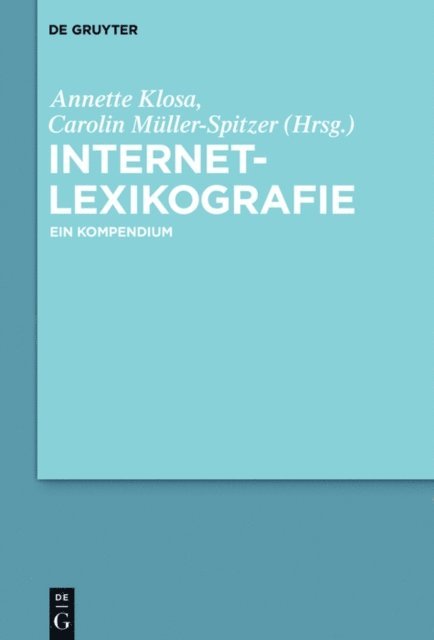
Das Internet ist mittlerweile das zentrale Medium für Datenaustausch und Datenrecherche. Auch für Wörterbücher ist es die zentrale Publikationsplattform. Aus dieser tiefgreifenden Veränderung der Wörterbuchlandschaft ergeben sich eine ganze Bandbreite neuer Fragen für die lexikografische Praxis und die Wörterbuchforschung, z. B. zur Datenmodellierung für Internetwörterbücher, zur Vernetzung von Wörterbuchinhalten, zu den Navigations- und Zugriffsmöglichkeiten, zur automatischen Gewinnung von lexikografischen Angaben, zum lexikografischen Prozess sowie zu neuen Möglichkeiten der Benutzerbeobachtung und -interaktion. Um diese Forschungsfragen zu diskutieren, förderte die Deutsche Forschungsgemeinschaft über drei Jahre hinweg ein wissenschaftliches Netzwerk Internetlexikografie, an dem Vertreterinnen und Vertreter wichtiger deutscher und europäischer Institutionen beteiligt waren. Ergebnis dieser Netzwerkarbeit ist der vorliegende Band, der in die zentralen Arbeitsfelder der Internetlexikografie erstmals gesammelt einführt und den aktuellen Stand der wissenschaftlichen Forschung und lexikografischen Praxis vorstellt.
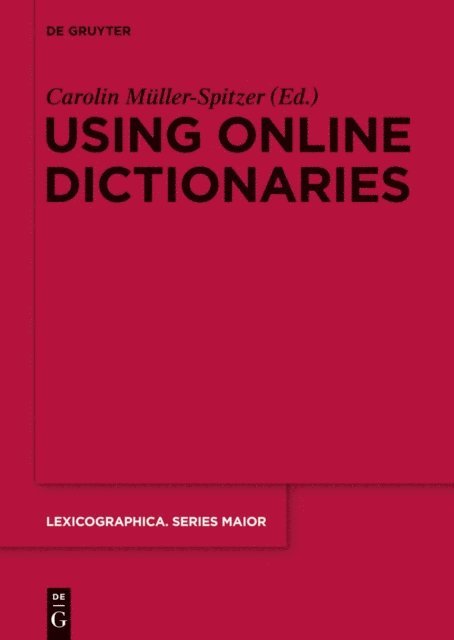
Using Online Dictionaries
1 962 kr
Skickas inom 5-8 vardagar
1 982 kr
Läs direkt efter köp
Until now, there has been very little research into the use of online dictionaries. In contrast, the market for online dictionaries is increasing both for academic lexicography and for commercial lexicography, with sales figures for printed reference works in continual decline. This has led to a demand for reliable empirical information on how online dictionaries are actually being used and how they could be made more user-friendly. The volume Using Online Dictionaries makes a substantial contribution to closing this research gap. It is divided into four parts: The first part contains articles on fundamental issues: a research review of the empirical studies on digital dictionaries which have already been carried out, and a brief methodological guideline for lexicographical researchers who are interested in conducting their own empirical research. The second part contains the results of two studies that focus on general questions about the use of online dictionaries. It presents empirical data on contexts of dictionary use, on expectations and demands regarding online dictionaries. Furthermore, innovative features, such as the use of multimedia elements or the option of a user-adaptive interface and questions of design were assessed empirically. The third part of this volume comprises more specific studies of online dictionaries: an eye-tracking study evaluating the new web design of the dictionary portal OWID and a log file study which tries to get to the bottom of the following question: Do dictionary users look up frequent words, or put differently, is there a connection between how often a word is looked up and how often it appears in a corpus? In the last chapter of this thematic section, the question of how users judge the combination of a written paraphrase and an additional illustration in illustrated online dictionaries is addressed. The last part focuses on the use of monolingual dictionaries, in particular the German online dictionary elexiko. In this context, two online questionnaire-based studies were carried out. The empirical studies were conducted in the form of online surveys combining questionnaires and experimental elements and in the form of laboratory studies using eye-tracking technology as well as using observational methods such as log file analyses. Regarding the comprehensive research framework, this volume can be relevant to lexicographers, metalexicographers and linguists who are interested in the use of (online) dictionaries and in the development and exploration of lexicographical data for the internet, as well as linguists interested in empirical methods. It addresses a broad expert audience by presenting an academic subject which is currently the focus of much discussion.
1 982 kr
Läs direkt efter köp
Until now, there has been very little research into the use of online dictionaries. In contrast, the market for online dictionaries is increasing both for academic lexicography and for commercial lexicography, with sales figures for printed reference works in continual decline. This has led to a demand for reliable empirical information on how online dictionaries are actually being used and how they could be made more user-friendly. The volume Using Online Dictionaries makes a substantial contribution to closing this research gap. It is divided into four parts: The first part contains articles on fundamental issues: a research review of the empirical studies on digital dictionaries which have already been carried out, and a brief methodological guideline for lexicographical researchers who are interested in conducting their own empirical research. The second part contains the results of two studies that focus on general questions about the use of online dictionaries. It presents empirical data on contexts of dictionary use, on expectations and demands regarding online dictionaries. Furthermore, innovative features, such as the use of multimedia elements or the option of a user-adaptive interface and questions of design were assessed empirically. The third part of this volume comprises more specific studies of online dictionaries: an eye-tracking study evaluating the new web design of the dictionary portal OWID and a log file study which tries to get to the bottom of the following question: Do dictionary users look up frequent words, or put differently, is there a connection between how often a word is looked up and how often it appears in a corpus? In the last chapter of this thematic section, the question of how users judge the combination of a written paraphrase and an additional illustration in illustrated online dictionaries is addressed. The last part focuses on the use of monolingual dictionaries, in particular the German online dictionary elexiko. In this context, two online questionnaire-based studies were carried out. The empirical studies were conducted in the form of online surveys combining questionnaires and experimental elements and in the form of laboratory studies using eye-tracking technology as well as using observational methods such as log file analyses. Regarding the comprehensive research framework, this volume can be relevant to lexicographers, metalexicographers and linguists who are interested in the use of (online) dictionaries and in the development and exploration of lexicographical data for the internet, as well as linguists interested in empirical methods. It addresses a broad expert audience by presenting an academic subject which is currently the focus of much discussion.
1 811 kr
Läs direkt efter köp
Das Internet ist mittlerweile das zentrale Medium für Datenaustausch und Datenrecherche. Auch für Wörterbücher ist es die zentrale Publikationsplattform. Aus dieser tiefgreifenden Veränderung der Wörterbuchlandschaft ergeben sich eine ganze Bandbreite neuer Fragen für die lexikografische Praxis und die Wörterbuchforschung, z. B. zur Datenmodellierung für Internetwörterbücher, zur Vernetzung von Wörterbuchinhalten, zu den Navigations- und Zugriffsmöglichkeiten, zur automatischen Gewinnung von lexikografischen Angaben, zum lexikografischen Prozess sowie zu neuen Möglichkeiten der Benutzerbeobachtung und -interaktion. Um diese Forschungsfragen zu diskutieren, förderte die Deutsche Forschungsgemeinschaft über drei Jahre hinweg ein wissenschaftliches Netzwerk Internetlexikografie, an dem Vertreterinnen und Vertreter wichtiger deutscher und europäischer Institutionen beteiligt waren. Ergebnis dieser Netzwerkarbeit ist der vorliegende Band, der in die zentralen Arbeitsfelder der Internetlexikografie erstmals gesammelt einführt und den aktuellen Stand der wissenschaftlichen Forschung und lexikografischen Praxis vorstellt.
415 kr
Skickas inom 5-8 vardagar
884 kr
Läs direkt efter köp
664 kr
Skickas inom 3-6 vardagar
16 kr
Läs direkt efter köp