
Carolina LA³pez-Ruiz – författare
Visar alla böcker från författaren Carolina LA³pez-Ruiz. Handla med fri frakt och snabb leverans.
3 produkter
3 produkter
E-bok
Engelska, 2019460 kr
Läs direkt efter köp
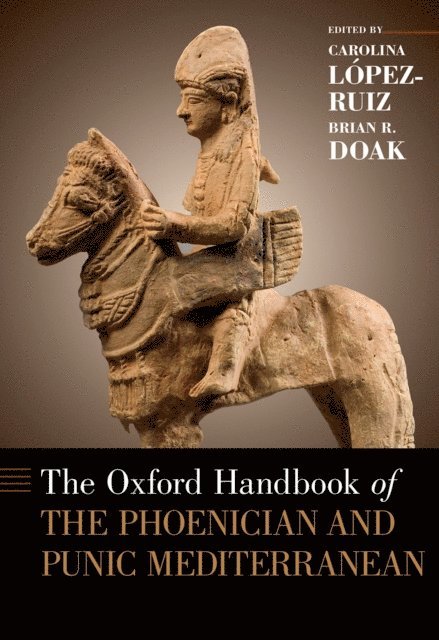
The Phoenicians created the Mediterranean world as we know it--yet they remain a shadowy and poorly understood group. The academic study of the Phoenicians has come to an important crossroads; the field has grown in sheer content, sophistication of analysis, and diversity of interpretation, and we now need a current overview of where the study of these ancient seafarers and craftsman stands, and where it is going. Moreover, the field of Phoenician studies is particularly fragmented and scattered. While there is growing interest in all things Phoenician and Punic, the latest advances are mostly published in specialized journals and conference volumes in a plethora of languages.This Handbook is the first of its type to appear in over two decades, and the first ever to appear in English. In these chapters, written by a wide range of prominent and promising scholars from across Europe, North America, Australia, and the Mediterranean world, readers will find summary studies on key historical moments (such as the history of Carthage); areas of culture (organized around language, religion, and material culture); regional studies and areas of contact (spanning from the Levant and the Aegean to Iberia and North Africa); and the reception of the Phoenicians as an idea, entangled with the formation of other cultural identities, both ancient and modern.
E-bok
PDF, Engelska, 2019460 kr
Läs direkt efter köp
The Phoenicians created the Mediterranean world as we know it--yet they remain a shadowy and poorly understood group. The academic study of the Phoenicians has come to an important crossroads; the field has grown in sheer content, sophistication of analysis, and diversity of interpretation, and we now need a current overview of where the study of these ancient seafarers and craftsman stands, and where it is going. Moreover, the field of Phoenician studies is particularly fragmented and scattered. While there is growing interest in all things Phoenician and Punic, the latest advances are mostly published in specialized journals and conference volumes in a plethora of languages.This Handbook is the first of its type to appear in over two decades, and the first ever to appear in English. In these chapters, written by a wide range of prominent and promising scholars from across Europe, North America, Australia, and the Mediterranean world, readers will find summary studies on key historical moments (such as the history of Carthage); areas of culture (organized around language, religion, and material culture); regional studies and areas of contact (spanning from the Levant and the Aegean to Iberia and North Africa); and the reception of the Phoenicians as an idea, entangled with the formation of other cultural identities, both ancient and modern.
E-bok
PDF, Engelska, 20161 840 kr
Läs direkt efter köp
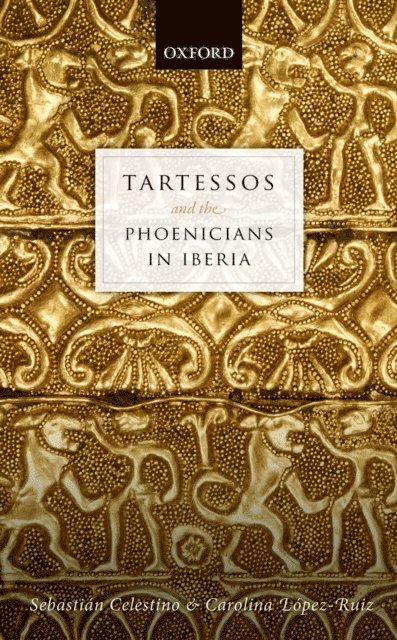
This is the first book in English about the earliest historical civilization in the western Mediterranean, known as "Tartessos."Endowed with extraordinary wealth in metals and strategically positioned between the Atlantic and Mediterranean trading routes at the time of Greek and Phoenician colonial expansion, Tartessos flourished in the eight-seventh centuries BCE. Tartessos became a literate, sophisticated, urban culture in southwestern Iberia (today''s Spain and Portugal), enriched by commercial contacts with the Aegean and the Levant since at least the ninth century. In its material culture (architecture, grave goods, sanctuaries, plastic arts), we see how native elements combined with imported "orientalizing" innovations introduced by the Phoenicians. Historians of the rank of Herodotos and Livy, geographers such as Strabo and Pliny, Greek and Punic periploi and perhaps even Phoenician and Hebrew texts, testify to the power, wealth, and prominence of this westernmost Mediterranean civilization. Archaeologists, in turn, have demonstrated the existence of a fascinating complex society with both strong local roots and international flare. Yet for still-mysterious reasons, Tartessos did not attain a "Classical" period like its peer emerging cultures did at the same time (Etruscans, Romans, Greeks). This book combines the expertise of its two authors in archaeology, philology, and cultural history to present a comprehensive, coherent, theoretically up-to-date, and informative overview of the discovery, sources, and debates surrounding this puzzling culture of ancient Iberia and its complex hybrid identity vis-à-vis the western Phoenicians. This book will be of great interest to students of the classics, archaeology and ancient history, Phoenician-Punic studies, colonization and cultural contact.