Caroline Voet - Böcker
Visar alla böcker från författaren Caroline Voet. Handla med fri frakt och snabb leverans.
4 produkter
4 produkter
743 kr
Skickas inom 5-8 vardagar
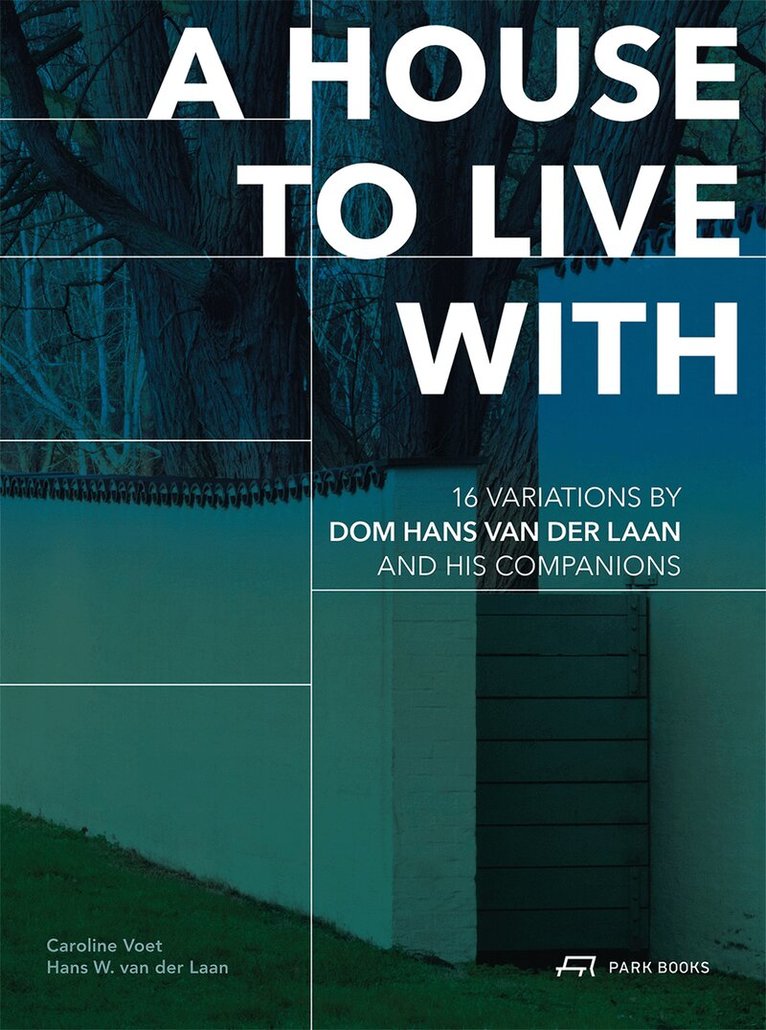
Today, Dom Hans van der Laan (1904–91) is something of a cult figure of European post-World War II architecture. The Dutch Benedictine monk and architect dedicated his life to the search for fundamental principles of architecture, and his thoughts on numerical relationships and dimensional systems were highly influential in mid-20th-century architectural theory.A House to Live With is the first book to comprehensively explore van der Laan’s residential buildings. Sixteen of them, built between 1966 and 1985, are featured in full detail through photographs and plans newly produced for this book, and analysed with regard to their compositional and design principles. Essays examine the mathematical relationships of numbers and volumes that are fundamental to van der Laan’s designs, alongside discussion of how he was influenced by ancient Roman architecture. Light is shed also on the interplay of house and garden and house and patio, and the positioning of the one large table in the house, which to van der Laan was of key significance.Thoroughly researched and highly readable, this volume introduces Hans van der Laan’s architectural ideas and housing designs in full, thus forming a rich and useful source for contemporary architects.
458 kr
Kommande
Autonomous Architecture in Flanders
The Early Works of Marie-José Van Hee, Christian Kieckens, Marc Dubois, and Paul Robbrecht & Hilde Daem
Häftad, Engelska, 2016
497 kr
Tillfälligt slut
The influence and position of the ‘Generation 74’ in Flemish and international architecture. Five well-known architects who studied together in Ghent, Marie-José Van Hee, Christian Kieckens, Marc Dubois, Paul Robbrecht and Hilde Daem, can be considered as leading protagonists of their generation. From their education at Sint-Lucas Institute and the Academy of Fine Arts to the present day, their professional careers and legacy have been of great importance to the development of Flemish architecture. In their early works and writings, they established a distinct architectural language, rooted in historical knowledge and with a reflection to art and craftsmanship. Architecture was singled out as a spatial phenomenon with an autonomous logic grounded in inhabitation and experience. This generation represents a significant turn towards architectural autonomy in Flanders which resonated with similar international developments in the late 1970s. Moreover they played a decisive role in the emancipation and professionalization of the architectural culture in Flanders. This publication is GPRC-labeled (Guaranteed Peer-Reviewed Content). Contributors: Birgit Cleppe (Ghent University), Sofie De Caigny (CVAa), Maarten Delbeke (Ghent University), Fredie Floré (KU Leuven / Ghent University), William Mann, Yves Schoonjans (KU Leuven), Eireen Schreurs (TU Delft), Lara Schrijver (University of Antwerp), Dirk Somers (Ghent University), Sven Sterken (KU Leuven), Mechthild Stuhlmacher (TU Delft), Hera van Sande (VUB / KU Leuven), Katrien Vandermarliere, Caroline Voet (KU Leuven) With statements of Kristoffel Boghaert, Patrick Van Caeckenbergh, Adam Caruso, Els Claessens and Tania Vandenbussche, An Fonteyne, Tony Fretton, Pieter D’haeseleer, Hilde Heynen, Cristina Iglesias, Francis Strauven, Peter Swinnen, Koen Van Synghel, Paul Vermeulen, Jacques De Visscher.
821 kr
Skickas inom 3-6 vardagar