Carolyn A. Conley – författare
Visar alla böcker från författaren Carolyn A. Conley. Handla med fri frakt och snabb leverans.
5 produkter
5 produkter
E-bok
PDF, Engelska, 20201 309 kr
Läs direkt efter köp
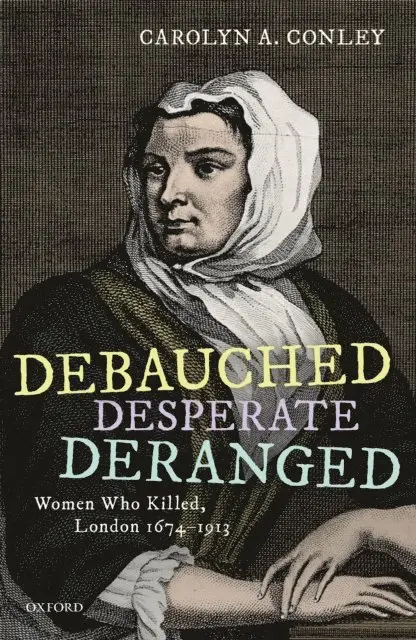
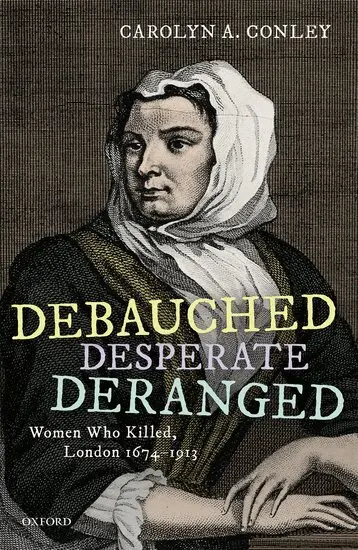
Contemporary studies have concluded that women are far less likely to kill than men and that when women do kill, they do so within the family. Debauched, Desperate, Deranged: Women Who Killed, London 1674-1913 examines the evolution of this pattern in the over 1400 trials in which women were prosecuted for homicide in London from the late seventeenth century until just before the First World War. Which deaths were considered homicides and in what circumstances women were culpable illustrates profound changes in the prevailing assumptions about women. The outcomes of trials and the portrayals of these women in the press illuminate changes in perceptions of women''s status and their physical and mental limitations. Debauched, Desperate, Deranged breaks new ground in existing studies of gender and homicide, using a long time frame to discern which trends are brief anomalies and which represent significant change or continuity. Debauched, Desperate, Deranged is the first empirical, quantitatively as well as qualitatively based study of women and homicide from the seventeenth century to the twentieth. It presents new and significant conclusions on changing incidence of maternal homicides and the remarkable constancy of spousal homicides.
E-bok
Engelska, 20201 321 kr
Läs direkt efter köp
Contemporary studies have concluded that women are far less likely to kill than men and that when women do kill, they do so within the family. Debauched, Desperate, Deranged: Women Who Killed, London 1674-1913 examines the evolution of this pattern in the over 1400 trials in which women were prosecuted for homicide in London from the late seventeenth century until just before the First World War. Which deaths were considered homicides and in what circumstances women were culpable illustrates profound changes in the prevailing assumptions about women. The outcomes of trials and the portrayals of these women in the press illuminate changes in perceptions of women''s status and their physical and mental limitations. Debauched, Desperate, Deranged breaks new ground in existing studies of gender and homicide, using a long time frame to discern which trends are brief anomalies and which represent significant change or continuity. Debauched, Desperate, Deranged is the first empirical, quantitatively as well as qualitatively based study of women and homicide from the seventeenth century to the twentieth. It presents new and significant conclusions on changing incidence of maternal homicides and the remarkable constancy of spousal homicides.
Inbunden, Engelska, 1991
2 403 kr
Skickas inom 5-8 vardagar
In the 1870s, a Kentish woman who had been repeatedly beaten by her lover retaliated by blinding him with sulphuric acid. The judge sentenced her to five years in prison. In contrast, a man who put out the eyes of a woman who left him was sentenced to only four months after telling the judge that he `was regularly drove to do it from her aggravation'. Making innovative use of court and police records, Carolyn Conley has written a lively account of criminal justice in Victorian England. She examines the gap between the formal laws and the unwritten law of the community, as well as the ways in which judges, juries, and police officers acted as mediators between the two. The book analyses the treatment of lawbreakers according to class, gender, and community status, and in so doing presents a vivid portrait of standards of propriety and justice at the time.
E-bok
PDF, Engelska, 19911 362 kr
Läs direkt efter köp
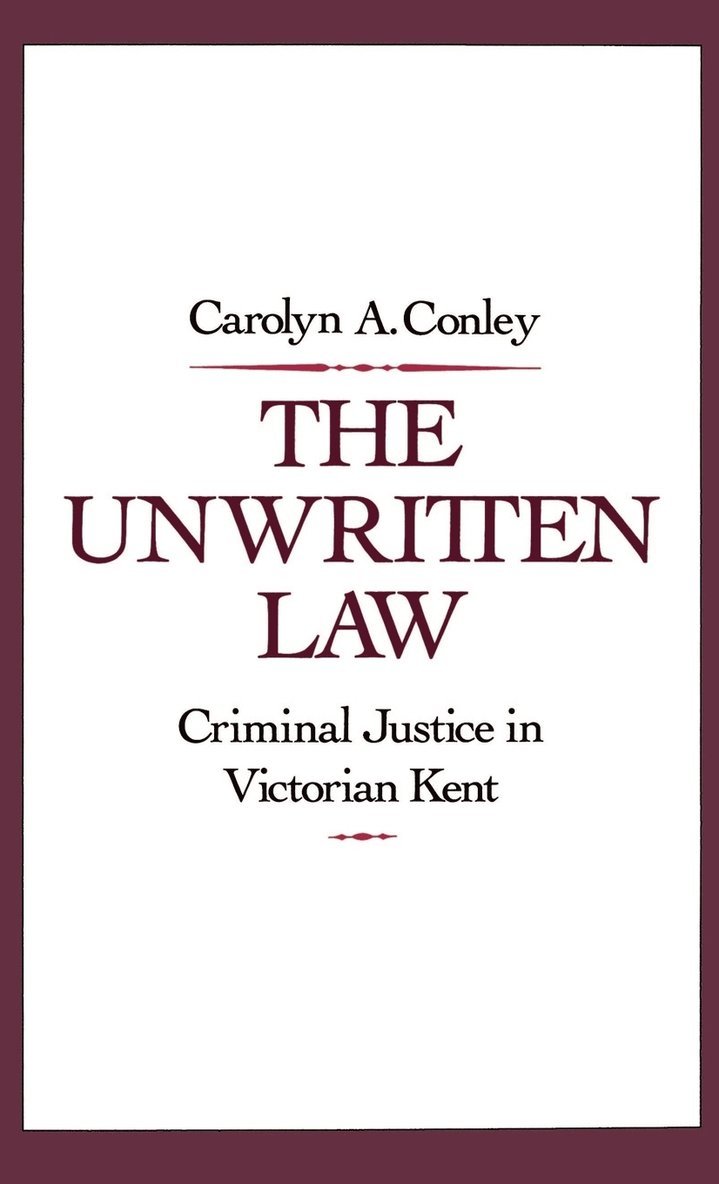
The Unwritten Law examines the values and assumptions of mid-Victorian England as revealed in the actual workings of the criminal justice system. The working definitions of criminality and justice were often influenced more by certain tacit assumptions than by the written law. Through a careful study of the ways that the status and circumstances of victims and suspects influenced judicial decisions, Conley provides important new insights into Victorian attitudes toward violence, women, children, community, and the all-important concept of respectability. She also addresses issues that continue to be of concern in today''s society: How can equal justice be preserved when social and economic conditions and expectations are not equal? How can the rights of the accused be reconciled with those of victims--especially children? Can and should the courts interfere with the traditions of family and community? What standards can determine the criminality of a particular act and the justice and efficacy of punishment? This original analysis will hold special interest for students and scholars of British history, social history, and criminality and the law.
Inbunden, Engelska, 2020
1 521 kr
Skickas inom 5-8 vardagar
Contemporary studies have concluded that women are far less likely to kill than men and that when women do kill, they do so within the family. Debauched, Desperate, Deranged: Women Who Killed, London 1674-1913 examines the evolution of this pattern in the over 1400 trials in which women were prosecuted for homicide in London from the late seventeenth century until just before the First World War. Which deaths were considered homicides and in what circumstances women were culpable illustrates profound changes in the prevailing assumptions about women. The outcomes of trials and the portrayals of these women in the press illuminate changes in perceptions of women's status and their physical and mental limitations. Debauched, Desperate, Deranged breaks new ground in existing studies of gender and homicide, using a long time frame to discern which trends are brief anomalies and which represent significant change or continuity. Debauched, Desperate, Deranged is the first empirical, quantitatively as well as qualitatively based study of women and homicide from the seventeenth century to the twentieth. It presents new and significant conclusions on changing incidence of maternal homicides and the remarkable constancy of spousal homicides.